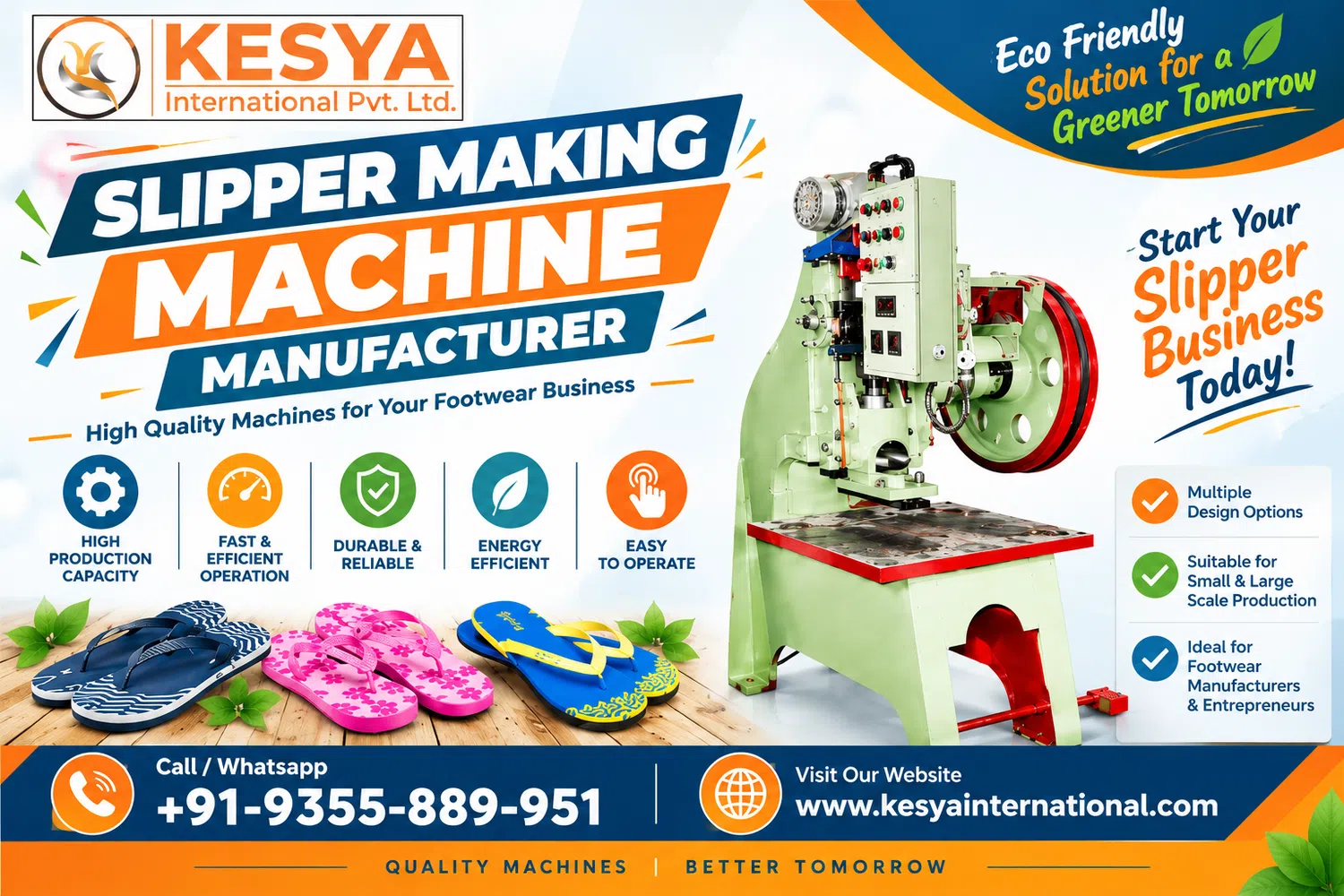
Slipper Making Machine Manufacturer | Improve Production Efficiency with Kesya International
Choosing the right slipper making machine manufacturer is an important step for businesses planning to improve production efficiency, maintain product quality, and meet changing customer demands. Whether you are starting a new slipper manufacturing unit or upgrading an existing workshop, selecting suitable machinery can help you organize daily operations and manage production costs more effectively. Kesya International is a relevant name for businesses researching slipper making machinery and planning their manufacturing setup.
Why Production Efficiency Matters in Slipper Manufacturing
Production efficiency affects the number of slippers a business can manufacture, the time required for each order, and the amount of material used during production. An organized manufacturing process can reduce unnecessary delays and help businesses maintain consistent output. The right slipper making machine should match the production requirements, available workspace, product designs, and operating budget of the business.
Before purchasing machinery, manufacturers should evaluate their current requirements and future plans. A machine selected according to actual production needs can support a more manageable workflow without creating unnecessary operating expenses.
Understanding Different Slipper Making Machine Requirements
Slipper manufacturing requirements vary according to product design, material, sole thickness, and expected production volume. Some businesses focus on basic everyday slippers, while others manufacture different sizes, colours, and designs for wholesalers or retailers. These differences influence the type of machinery and supporting equipment required.
A suitable slipper making machine manufacturer should help buyers understand which machine configuration fits their intended products. Buyers should also confirm the machine's working process, operating requirements, available adjustments, and compatibility with the materials they plan to use.
Production Planning Before Buying Machinery
Production planning should begin before a business invests in equipment. Manufacturers need to estimate the number of pairs they expect to produce, identify their target customers, and calculate the time required to complete regular orders. These estimates can help determine whether a basic setup or a more developed production arrangement is appropriate.
Workspace planning is equally important. The manufacturing area should provide enough room for machinery, raw materials, finished slippers, packaging supplies, and safe movement between workstations. A well-arranged workspace can make production easier to manage and reduce avoidable interruptions.
How the Manufacturing Workflow Affects Output
A typical slipper manufacturing process may include material preparation, sole cutting or shaping, strap fitting, finishing, inspection, and packaging. The exact workflow depends on the slipper design and the equipment used. Each stage should be organized so that materials move smoothly from one operation to the next.
When one workstation is consistently slower than the others, it can delay the entire production process. Manufacturers should therefore assess the capacity of each stage instead of focusing only on the machine's advertised output. A balanced workflow can help reduce waiting time and improve order completion.
Quality Control for Consistent Slipper Production
Consistent quality helps manufacturers build trust with distributors, retailers, and end customers. Slippers should be checked for correct dimensions, clean edges, secure strap fitting, suitable flexibility, and an acceptable overall finish. Products should also be inspected for visible defects before packaging.
Businesses can establish simple quality checkpoints at different stages of production. Checking materials before processing, inspecting components during assembly, and examining finished pairs can help identify problems earlier. This approach may reduce rework, material waste, and customer complaints.
The Importance of Machine Maintenance
Machine maintenance is essential for businesses that want reliable production over time. Dust, material residue, loose components, worn parts, and incorrect adjustments can affect machine performance. Regular cleaning and inspection help manufacturers identify potential problems before they cause extended downtime.
Operators should follow the manufacturer's maintenance instructions and use the recommended procedures for cleaning, lubrication, adjustment, and replacement of parts. Any electrical or mechanical repair should be handled by a qualified person when required. Keeping a record of maintenance activities can also help businesses understand recurring problems and plan servicing more effectively.
Workplace Safety and Operator Training
A productive manufacturing unit also needs a safe working environment. Operators should understand the correct machine controls, operating sequence, emergency procedures, and restrictions associated with moving or cutting components. Appropriate protective equipment should be used according to the machine's instructions and the risks involved in each operation.
Workers should never bypass safety features or attempt adjustments while machinery is running. Training new operators before independent use can reduce operating mistakes and help maintain consistent production practices. Clear work instructions are especially useful when several employees share responsibility for the same machine.
Slipper Making Machine Price in India
The slipper making machine price in India depends on several factors, including machine type, production capacity, automation level, construction, included accessories, and the supplier's terms. A basic machine may suit a small operation, while a business handling larger or more varied orders may need additional equipment.
Buyers should compare quotations carefully rather than selecting a machine based only on the lowest price. The total investment may also include transportation, installation where applicable, electrical arrangements, tooling, raw materials, operator training, and routine maintenance. Requesting a detailed quotation helps businesses understand the actual setup cost.
Selecting a Reliable Slipper Making Machine Manufacturer
When comparing manufacturers and suppliers, buyers should review the machine specifications, operating demonstrations, warranty terms, spare-parts availability, and after-sales support. It is also helpful to ask how the equipment handles the intended slipper designs and whether the supplier can explain routine maintenance requirements.
Kesya International can be considered by buyers researching slipper making machinery for their manufacturing plans. Before placing an order, businesses should discuss their product requirements, expected output, workspace, and budget to identify an appropriate solution. Confirming specifications and service terms in writing can make the purchasing process clearer.
Managing Orders and Raw Materials
Good inventory management helps prevent production delays. Manufacturers should track the materials needed for upcoming orders and maintain suitable stock levels without tying up too much working capital. Keeping records of material consumption and finished-product quantities can improve purchasing decisions over time.
Order scheduling also matters. Businesses serving multiple wholesalers or retailers should plan production according to delivery deadlines, product sizes, and design requirements. A clear production schedule makes it easier to allocate machine time and organize packaging and dispatch.
Business Opportunities in the Slipper Manufacturing Industry
Slippers are used in homes, workplaces, hotels, hospitals, and many other settings. Demand varies by region, price segment, season, and customer preference. Manufacturers may explore opportunities through wholesale distributors, footwear retailers, local markets, institutional buyers, and suitable online sales channels.
Before expanding production, businesses should research their target market, competitor pricing, preferred designs, and expected order volumes. Starting with a manageable product range can help a new manufacturer understand customer preferences before investing in additional machinery or inventory.
Frequently Asked Questions
What should I check before buying a slipper making machine?
Review the machine specifications, material compatibility, intended product designs, production capacity, operating requirements, warranty, and availability of service support.
What determines slipper making machine price in India?
Price depends on machine type, capacity, automation, accessories, construction, and supplier terms. Installation, transportation, tooling, and maintenance may add to the total investment.
Is slipper manufacturing suitable for a small business?
It may be suitable when the business has researched local demand, calculated operating costs, arranged an appropriate workspace, and selected machinery that fits its budget and production targets.
How can manufacturers reduce production downtime?
Regular maintenance, operator training, correct machine settings, timely replacement of worn parts, and organized raw-material planning can help reduce avoidable interruptions.
Why is quality inspection important?
Quality inspection helps identify defects, maintain consistent product dimensions and finishing, reduce waste, and improve customer confidence.
Conclusion
Selecting the right slipper making machine manufacturer involves more than comparing machine prices. Businesses should consider production requirements, workflow, maintenance, operator safety, quality control, and long-term operating costs. With careful planning and suitable machinery, manufacturers can establish a more organized production process and prepare for changing customer requirements. Kesya International is a name buyers can explore while researching slipper making machine options for their business.
Visit: Automatic & Manual Slipper Making Machine Manufacturer | Chappal Making Machine