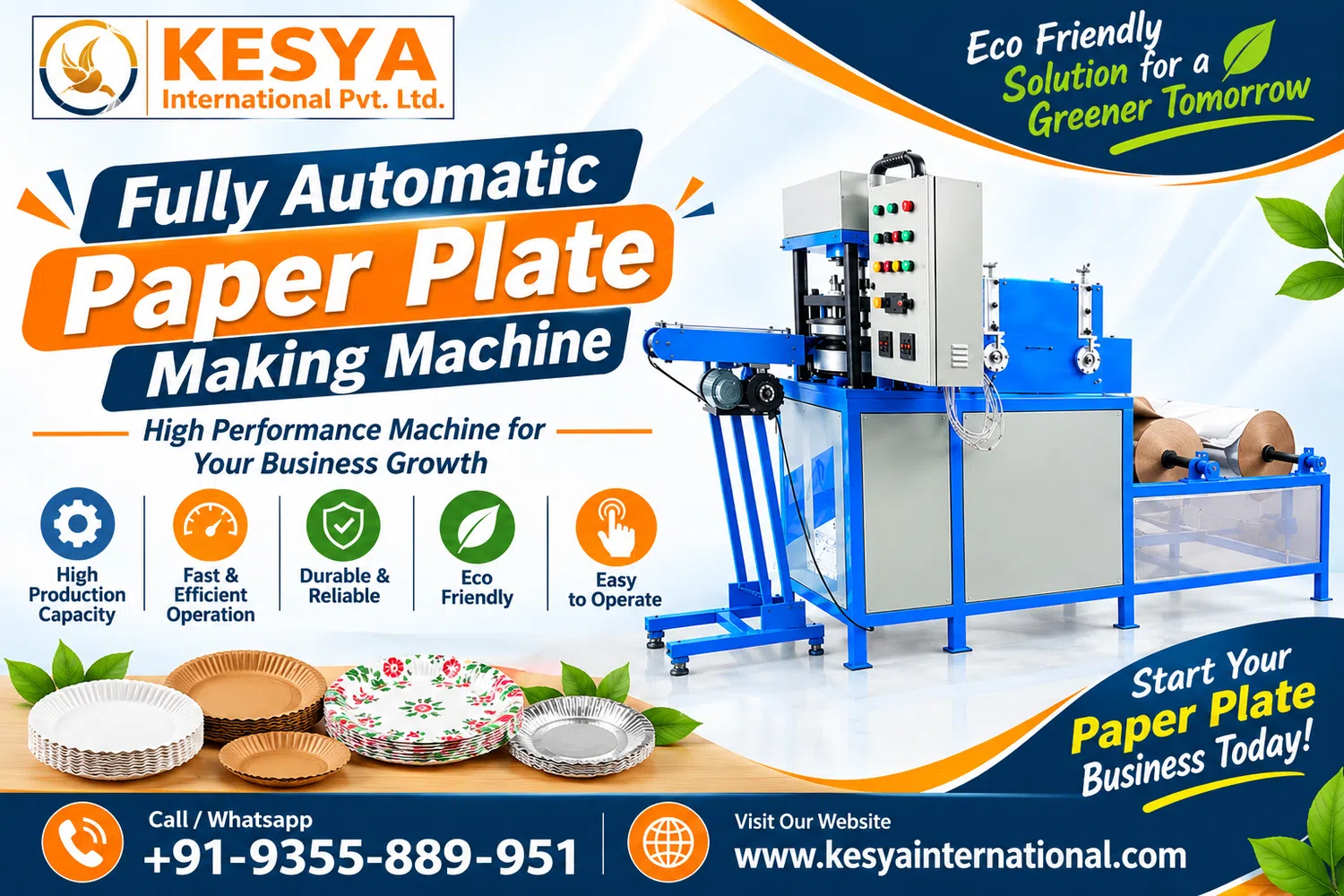
Paper Plate Making Machine Supplier | Kesya International
Paper Plate Making Machine Supplier for Indian Businesses
Choosing a suitable Paper Plate Making Machine Supplier is an important decision for entrepreneurs planning to start or expand a disposable paper plate manufacturing business. The right machine should match the required plate designs, production targets, available investment and manufacturing conditions.
Paper plates are used by food stalls, restaurants, catering companies, event organisers, wholesalers and disposable-product distributors. Businesses entering this market need machinery that supports their planned production requirements and offers suitable mould compatibility.
Kesya International helps buyers explore paper plate machinery options and understand important considerations before purchasing equipment.
What Should You Expect from a Paper Plate Machine Supplier?
A machinery supplier should provide clear information about machine configurations, technical specifications and operating requirements.
Buyers should understand the functions included in the machine, the available mould options and the type of raw material it supports. They should also ask about electrical requirements, installation, maintenance and applicable service conditions.
A detailed quotation and practical machine demonstration can help buyers make a more informed decision.
Which Paper Plate Making Machine Should You Purchase?
Paper plate machines are available in different operating configurations, including manual, semi-automatic and fully automatic options.
Manual machines generally require more direct operator involvement. Semi-automatic configurations combine mechanical operations with certain manual tasks. Fully automatic machines are designed to automate more stages of the production process, depending on their features.
The selection should depend on production requirements, available manpower, investment capacity and expected customer demand.
What Is the Paper Plate Making Machine Price?
The price of a paper plate making machine depends on its configuration, automation level, production capacity, mould arrangement and construction.
Additional costs may include raw materials, electrical installation, transportation, premises, packaging and working capital.
Buyers should request a written quotation that clearly lists the machine specifications, included accessories and applicable delivery or service terms.
How Does Paper Plate Manufacturing Work?
Paper plate manufacturing generally involves supplying suitable paper material to a forming machine. The machine uses a pressing mechanism and compatible mould to shape the material into the required plate design.
The finished plates are then removed or collected through the machine's delivery arrangement.
The feeding method, pressing process and collection system vary according to machine design. Buyers should understand these operations through a practical demonstration before purchasing.
Which Paper Plate Sizes Can a Supplier Provide Machinery For?
The available plate sizes depend on the machine's design and compatible moulds.
Manufacturers may want to produce smaller plates for snacks, medium-sized plates for regular food serving and larger plates for catering or commercial use.
Buyers should share their preferred dimensions with the supplier and confirm the supported size range. Different sizes and designs may require separate moulds.
What Raw Material Is Required for Disposable Paper Plates?
Suitable paper material is used as the main raw material. Its thickness, stiffness, coating and quality should match the machine's forming process and the intended product.
The correct material helps maintain plate shape and forming consistency. Buyers should confirm the recommended paper specifications with the supplier and test samples before ordering in bulk.
Can One Machine Manufacture Multiple Plate Designs?
Some machines support multiple plate designs through compatible moulds and appropriate adjustments.
Depending on the machine, manufacturers may explore round, square or compartment plate designs. However, buyers should not assume that every machine supports all designs.
Confirm mould availability, additional mould costs and the procedure for changing designs before placing an order.
How Can You Verify Machine Production Capacity?
Production capacity depends on machine configuration, plate size, material quality, mould design and operating conditions.
Buyers should request a demonstration using the intended raw material and plate design. They should also ask whether the stated output represents theoretical machine speed or practical production under normal operating conditions.
Understanding realistic output helps businesses plan raw material purchases, labour and customer deliveries.
What Electrical Requirements Should Buyers Check?
Electrical requirements depend on the machine's motor, pressing arrangement and automation features.
Before purchasing, ask the supplier for rated power, voltage and phase requirements. This information is useful for arranging electrical connections and estimating monthly operating expenses.
How Do You Calculate the Investment for a Paper Plate Business?
The total investment includes more than the machine price. Entrepreneurs should consider machinery, moulds, raw materials, electrical setup, premises, labour, packing material, transportation and working capital.
They should also research local wholesale rates and identify potential buyers before estimating monthly revenue.
A realistic financial calculation helps business owners understand the production volume required to cover operating expenses.
What Should You Ask Before Ordering a Paper Plate Machine?
Before confirming an order, buyers should ask for complete machine specifications and details of the included accessories.
Important questions include:
Which plate sizes and designs does the machine support?
What paper specifications are recommended?
What is the practical production capacity?
How many moulds are included?
What are the electrical requirements?
What installation and maintenance support is available?
What are the delivery terms and applicable service conditions?
These details help buyers compare suppliers and understand what they are purchasing.
How Can You Find Customers for Paper Plates?
Manufacturers can approach local wholesalers, restaurants, sweet shops, caterers, food stalls, event organisers and disposable-product distributors.
Customer requirements may vary by plate size, design, order quantity and price. Businesses should research local demand and plan their product range accordingly.
Maintaining consistent quality, suitable pricing and dependable delivery can help manufacturers build long-term customer relationships.
Why Explore Paper Plate Machinery with Kesya International?
Kesya International helps buyers understand paper plate machinery requirements and explore suitable configurations for their manufacturing plans.
Buyers can discuss their preferred plate designs, expected production volume and investment range. This information helps them evaluate machine features, mould compatibility and other important purchasing considerations.
Frequently Asked Questions About Paper Plate Machine Suppliers
1. How do I find a Paper Plate Making Machine Supplier in India?
Compare machinery suppliers based on technical information, machine demonstrations, mould options, quotations and applicable service conditions.
2. What is the price of a paper plate making machine in India?
The price varies according to machine type, automation, production capacity, moulds and included accessories.
3. Which machine is suitable for a new paper plate business?
Manual, semi-automatic and fully automatic machines serve different production needs. Select according to budget, demand and expected output.
4. Can a supplier provide different paper plate moulds?
Mould availability depends on the machine configuration and supplier's product range. Confirm the available designs before ordering.
5. What paper is used for making disposable plates?
Suitable paper material compatible with the machine and intended plate application is required.
6. How can I check the actual production capacity?
Request a machine demonstration using the intended paper and plate size, and clarify practical production figures.
7. Can one machine make round and square plates?
This depends on machine compatibility and available moulds. Confirm the supported designs with the supplier.
8. What is the difference between manual and automatic paper plate machines?
Manual machines require more direct operator participation, while automatic configurations perform more production operations automatically.
9. What information should I provide when requesting a quotation?
Share your preferred plate sizes, product designs, expected output, automation preference and delivery location.
10. Does the paper plate machine require regular maintenance?
Yes. Cleaning, inspection, lubrication and mould care should follow the manufacturer's instructions.
11. Is paper plate manufacturing profitable?
Profitability depends on raw material prices, local demand, selling rates, production efficiency and operating expenses.
12. Can beginners start a disposable paper plate business?
Beginners can explore this business after researching the market, calculating investment and selecting machinery suited to their requirements.
13. What affects the quality of finished paper plates?
Paper specifications, mould condition, machine settings and consistent operating practices affect product quality.
14. Are installation and service included in the machine price?
This varies by supplier and quotation. Buyers should confirm installation, transportation and applicable service terms in writing.
15. Where can I discuss paper plate machinery requirements?
You can contact Kesya International to discuss machine configurations, mould requirements and suitable machinery options.
More Info: Fully Automatic Paper Plate Making Machine Manufacturer | Manual Paper Plate Making Machine