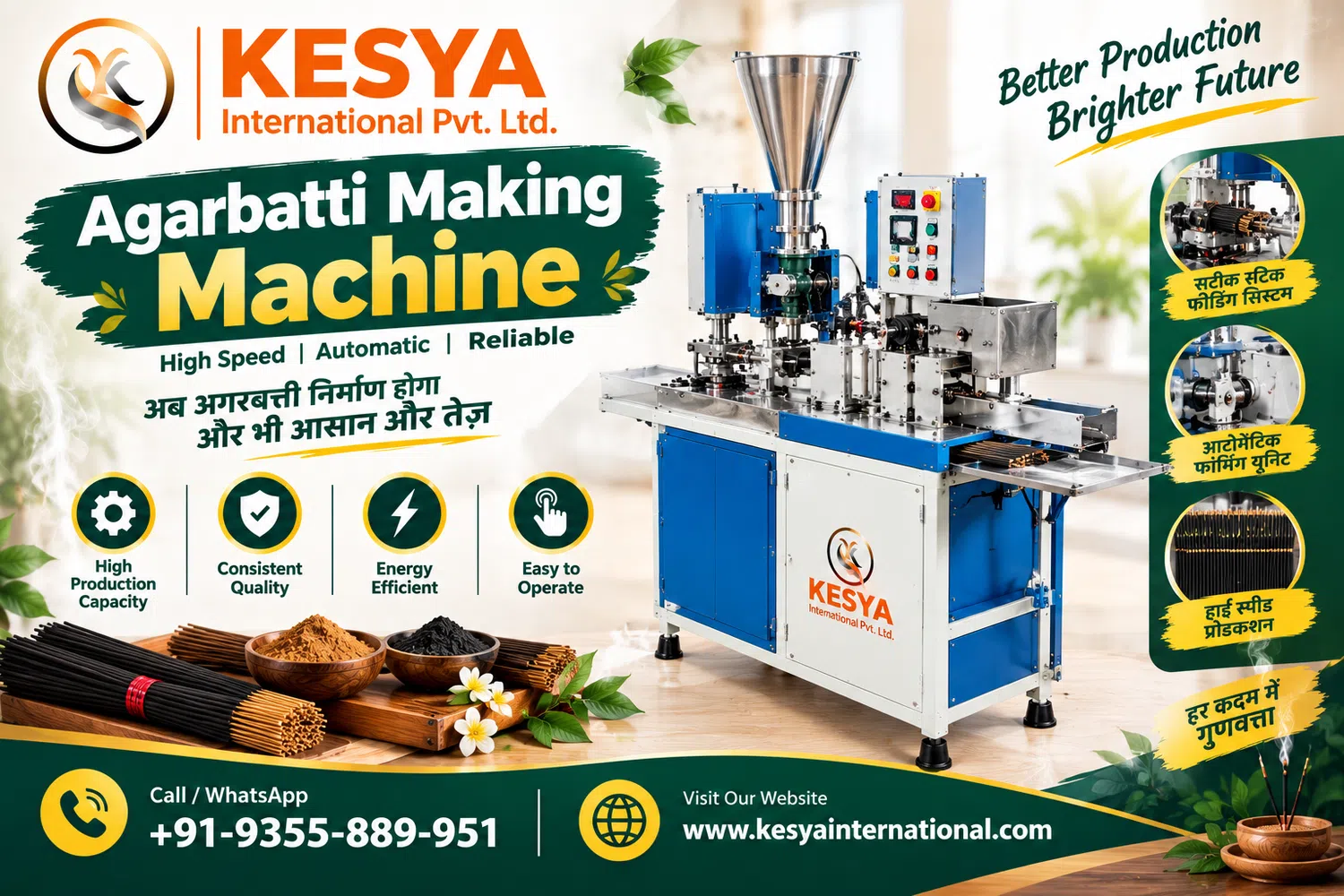
Which Agarbatti Making Machine Is Right for Your Business?
Choosing an Agarbatti Making Machine is not simply a matter of selecting the newest or most advanced model. The right machine depends on how much you want to produce, how much manual work you are comfortable handling, what kind of workspace you have and how you expect the business to grow.
For one manufacturer, a manual machine may fit the business perfectly. Another may need an automatic setup because the production requirement is different. Understanding this difference before buying can help avoid an unnecessary investment and make daily manufacturing easier.
Why Does Machine Selection Matter in Agarbatti Manufacturing?
An Agarbatti Making Machine becomes part of the everyday production process. Once the machine is installed, its operating method affects how raw material is handled, how much operator involvement is needed and how the production workflow is organised.
Choosing a machine only because it is popular or because someone else is using it may not be the right approach. Every business has different production targets and working conditions.
The better starting point is to understand your own requirement and then compare machines that fit that requirement.
When Can a Manual Agarbatti Making Machine Make Sense?
A manual Agarbatti Making Machine can be considered by entrepreneurs who are starting on a smaller scale or prefer a production process with more direct operator involvement.
The operator generally has a greater role in feeding materials, managing the sticks and monitoring production. This can make the setup easier to understand for someone who is new to the manufacturing process.
A manual machine may also be suitable when the initial production requirement is limited and the business wants to begin with a simpler arrangement before expanding.
When Should You Consider an Automatic Machine?
An Automatic Agarbatti Making Machine may be more suitable when the business has a regular production requirement and wants to reduce certain repetitive manual activities.
Automation can help organise the production process, but it does not mean that the machine can simply be installed and left unattended. Operators are still needed for monitoring, material handling, cleaning, maintenance and other activities.
Businesses considering an automatic machine should therefore look at the complete workflow rather than focusing only on the word “automatic”.
Is a More Automated Machine Always the Better Choice?
Not necessarily. Automation is useful when it matches the production requirement. If a small business has limited demand, purchasing equipment designed for a much larger operation may increase the investment without providing a practical advantage.
On the other hand, if demand is already consistent and production requirements are increasing, a more automated machine may provide a better fit for the planned workflow.
The important question is not which machine has more features, but which features are actually useful for the business.
How Should You Compare Manual and Automatic Machines?
The comparison should begin with operator involvement. A manual machine generally requires more direct human participation, while an automatic machine is designed to handle more of the repetitive forming process.
The next point is production planning. Buyers should understand how the machine fits their expected workload rather than relying on general capacity claims.
Maintenance is another consideration. Both manual and automatic machines require cleaning, inspection and proper handling. An automatic machine may have additional components that need attention, so understanding the maintenance procedure before purchase is useful.
What Role Does Workspace Play in Machine Selection?
The available workspace should be considered before purchasing machinery. The machine needs enough room for operation, but the manufacturing area also has to accommodate raw materials, bamboo sticks, drying arrangements and finished products.
A machine that looks suitable on paper may become inconvenient if the workspace is too restricted for the complete production process.
Planning the layout before installation can make movement and material handling much easier.
Does the Type of Raw Material Affect the Choice?
Raw material consistency matters for machine operation. The material used for forming agarbatti should be prepared appropriately for the selected machine and production process.
Before buying, the manufacturer or supplier should be informed about the intended production requirements. This allows the buyer to understand whether the selected machine is appropriate for the planned raw material and operating method.
The machine alone cannot guarantee consistent production if the input material is poorly prepared.
What Should You Know About Maintenance?
Regular maintenance is part of owning any manufacturing machine. Cleaning, checking moving parts and following the manufacturer's operating instructions can help keep the equipment ready for production.
The maintenance requirements may differ between machine models. Buyers should ask about routine maintenance, commonly required spare parts and technical support before finalising the purchase.
This information becomes especially useful when the machine is going to be used regularly.
How Important Is the Manufacturer?
The manufacturer can make a significant difference to the overall purchasing experience. A machine is a long-term production asset, so buyers may require assistance even after installation.
A reliable manufacturer or supplier should be able to explain machine specifications, operating procedures, maintenance requirements and available support.
Kesya International provides machinery solutions for businesses looking at manufacturing equipment. When choosing an Agarbatti Making Machine, discussing the production requirement with the supplier can help identify a suitable manual or automatic option.
What About Agarbatti Machine Price?
Price varies according to machine type, specifications, automation level and other factors. A manual machine and an automatic machine should not be compared only by their quoted prices because their operating methods and intended applications may be different.
The complete budget should also include transportation, installation, electrical requirements, raw materials and other production needs.
A practical comparison considers what the machine provides for the intended business rather than simply selecting the lowest quotation.
Which Machine Is Suitable for a Growing Business?
A business expecting gradual growth may want to think beyond its current production requirement. Starting with a machine that is too small can create limitations if demand increases quickly, while buying equipment that is unnecessarily large can tie up capital.
A balanced approach is to consider current demand, realistic expansion plans and available resources. The manufacturer can then help explain which machine specifications are relevant.
What Should You Check Before Making the Final Decision?
Before purchasing an Agarbatti Making Machine, understand the machine type, operating method, production suitability, power requirement, maintenance process, spare-parts availability and after-sales support.
Also ask whether the machine is appropriate for your intended raw material and product requirements. If possible, understand the complete production workflow rather than evaluating the machine from photographs or price quotations alone.
A clear understanding of these points can make the buying decision more practical.
How Can You Choose With Confidence?
The right Agarbatti Making Machine is the one that fits the actual needs of your manufacturing business. Manual machines can suit certain smaller operations, while automatic machines may be considered for businesses with more regular production requirements.
There is no universal machine that is perfect for every manufacturer. The best starting point is to define your production target, available space, budget and expected growth, then compare suitable machinery.
For businesses searching for an Agarbatti Making Machine manufacturer or supplier in India, Kesya International can help buyers explore machinery according to their production requirements and business plans.
Visit : Agarbatti Making Machine | Manual Agarbatti Making Machine