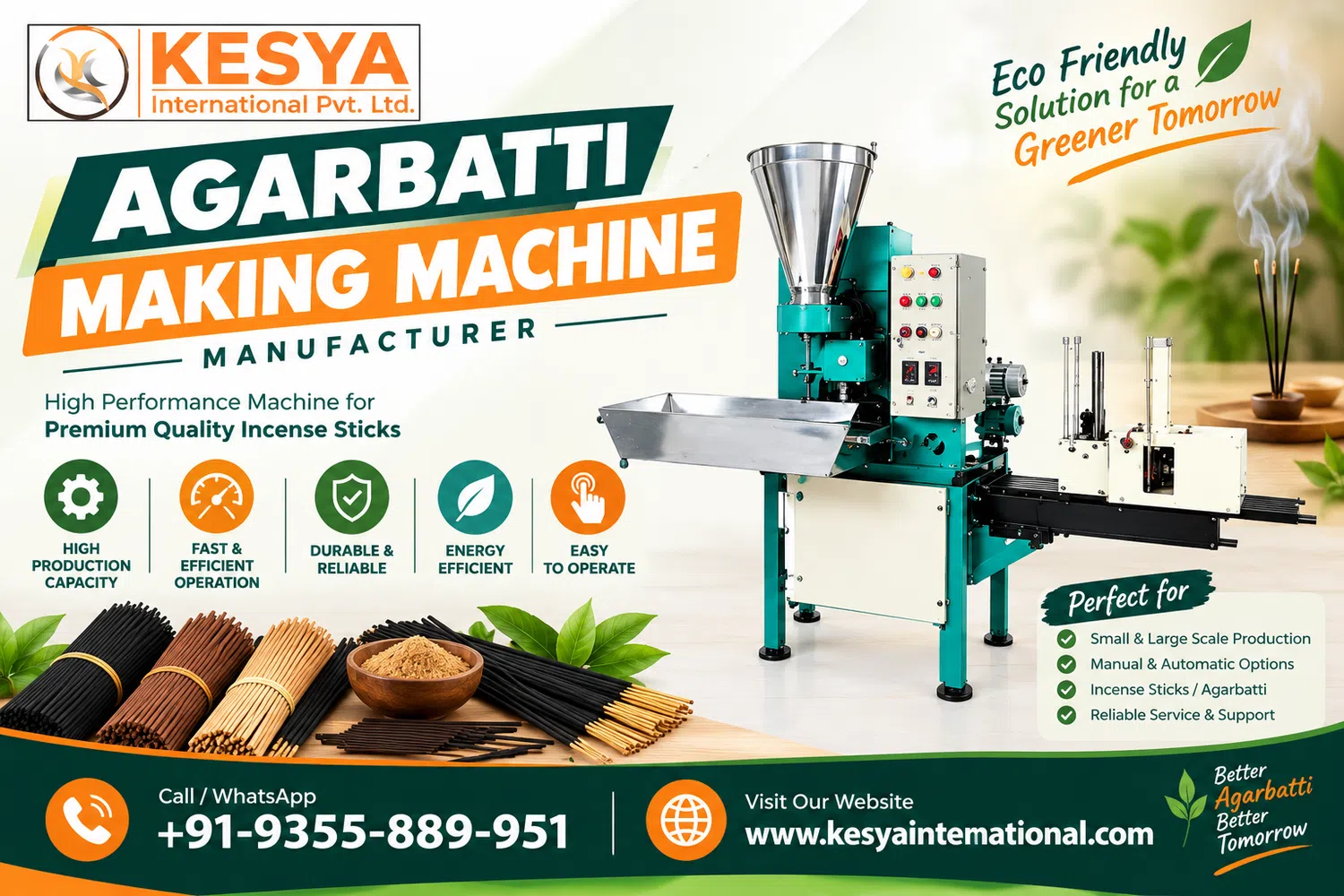
Agarbatti Making Machine Manufacturer in India | Production Technology, Quality & Reliable Supplier – Kesya International
Introduction
The incense stick manufacturing industry provides business opportunities for entrepreneurs who want to enter the growing fragrance and devotional products market. Agarbatti is commonly used in homes, temples, offices, meditation centres, and religious establishments. Its regular use creates opportunities for manufacturers to supply different fragrances, sizes, and packaging varieties.
For businesses planning to enter this sector, selecting a suitable Agarbatti Making Machine is an important investment decision. The right machinery can help organise production, reduce repetitive manual activities, and maintain consistency across manufacturing batches.
Kesya International can be considered by entrepreneurs researching an Agarbatti Making Machine manufacturer and supplier in India. Before investing, buyers should understand the production process, machine requirements, operating expenses, and market opportunities.
Understanding Modern Agarbatti Manufacturing
Agarbatti manufacturing involves several stages, beginning with raw material preparation and ending with packaging the finished incense sticks. Each stage contributes to the appearance, fragrance, and overall quality of the product.
The production process generally includes preparing the required mixture, feeding the material into the machine, forming incense sticks, drying the finished sticks, and preparing them for packaging.
A suitable machine helps manufacturers manage the stick-forming stage more systematically. However, the final product quality also depends on raw material consistency, operator skills, machine settings, and proper drying arrangements.
Importance of Selecting Suitable Machinery
Every manufacturing unit has different requirements. A startup may need equipment suitable for a limited production target, while an established business may require machinery for regular bulk orders.
Before selecting an Agarbatti Making Machine, consider your expected daily output, available investment, electricity supply, workspace, and workforce.
You should also understand the machine's operating mechanism and the manufacturer's recommended maintenance procedure. Request complete technical details rather than making a decision based only on photographs or advertised production figures.
The objective should be to purchase machinery that matches your actual business requirements.
Features to Evaluate Before Purchasing
When comparing agarbatti manufacturing machinery, buyers should pay attention to the following considerations.
Machine Construction: Examine the overall construction and components to understand whether the machine is appropriate for your intended working conditions.
Production Capacity: Confirm the expected output and ask how actual production may vary with material quality, operator experience, and operating conditions.
Operating Requirements: Understand electricity consumption, machine handling, workspace requirements, and the number of operators needed.
Maintenance: Ask about cleaning, lubrication, routine inspection, and replacement of important components.
Spare Parts: Confirm the availability of commonly required spare parts and the process for obtaining replacements.
Supplier Assistance: Discuss delivery, installation, operating instructions, and after-sales support before finalising the purchase.
These checks can help entrepreneurs compare manufacturers more confidently.
Raw Materials and Consistent Production
Raw material quality is one of the most important factors in incense stick manufacturing. The prepared mixture should have suitable consistency for smooth machine operation and proper stick formation.
Manufacturers should monitor the quality of incoming materials and follow a consistent preparation process. Differences in material composition can affect coating, stick strength, drying behaviour, and finished-product appearance.
Fragrance selection also matters because customers often have different preferences. Businesses can study local demand and introduce suitable fragrance varieties according to their target market.
Regular quality inspections can help identify production issues before large quantities are manufactured.
Agarbatti Making Machine Price and Investment Planning
The price of an Agarbatti Making Machine depends on its configuration, construction, specifications, production capacity, and supplier terms. Therefore, buyers should request a current quotation based on their requirements.
The complete business investment may also include raw materials, electricity, labour, drying arrangements, packaging, storage, transportation, and marketing.
Entrepreneurs should calculate the estimated manufacturing cost per packet before deciding their selling price. This helps them understand possible margins and plan their working capital.
A low initial machine price does not necessarily mean a lower overall business cost. Maintenance, downtime, material wastage, and operating expenses should also be considered.
Choosing the Best Agarbatti Making Machine Manufacturer and Supplier
Finding a suitable manufacturer is an important step in establishing a reliable production unit. A good supplier should provide clear information about the machinery and explain its practical operating requirements.
When searching for the best Agarbatti Making Machine manufacturer in India, compare more than one supplier. Review technical specifications, construction details, quotations, delivery arrangements, spare-part availability, and service conditions.
Businesses looking for a top company should also verify the manufacturer's product information and discuss their specific requirements before making a purchase.
Kesya International is a company that buyers can consider during their search for an Agarbatti Making Machine manufacturer and supplier. Prospective customers should contact the company directly to verify current models, machine specifications, prices, and applicable support arrangements.
Building a Profitable Agarbatti Manufacturing Business
Machinery is only one part of a successful manufacturing business. Entrepreneurs also need to understand their customers, competitors, distribution channels, and pricing strategy.
Local retailers, wholesale distributors, religious product shops, supermarkets, and online sellers can provide potential sales opportunities.
Businesses can develop different fragrance varieties and packet sizes to reach customers with different purchasing preferences. Attractive packaging and consistent product quality can help create a recognisable market presence.
It is also useful to maintain relationships with distributors and retailers through regular communication and dependable order fulfilment.
Maintenance and Long-Term Machine Performance
Routine maintenance helps keep production organised and reduces the chances of unexpected operational interruptions.
Operators should follow the manufacturer's instructions for cleaning, lubrication, inspection, and safe operation. Machine settings should be checked regularly, particularly when production materials or operating conditions change.
Maintaining records of production, material consumption, maintenance activities, and downtime can help identify recurring issues.
Training operators properly is equally important. Correct machine handling can support consistent output and reduce avoidable wastage.
Why Consider Kesya International?
When selecting an Agarbatti Making Machine supplier, businesses should focus on clear product information, suitable machinery, transparent commercial terms, and practical assistance.
Kesya International can be included in the research process for entrepreneurs exploring incense stick manufacturing machinery. Buyers should explain their expected production requirements and investment plans to understand which available machine configuration may be appropriate.
Comparing specifications and confirming all purchasing conditions directly with the manufacturer can help businesses make an informed decision.
Frequently Asked Questions
1. What is the main purpose of an Agarbatti Making Machine?
It is used to form incense sticks by applying a prepared mixture to suitable stick material, helping manufacturers organise the production process.
2. How can I choose an Agarbatti Making Machine for a new business?
Consider your investment budget, production target, workspace, electricity requirements, operating procedure, and maintenance arrangements.
3. What determines the price of an Agarbatti Making Machine?
Price can vary according to machine configuration, specifications, construction, production capacity, and supplier terms.
4. Can agarbatti manufacturing be started on a small scale?
Yes. Entrepreneurs can evaluate a small-scale setup according to their available investment, workspace, local demand, and production requirements.
5. How can I maintain consistent incense stick quality?
Use consistent raw materials, prepare the mixture carefully, monitor machine settings, maintain suitable drying conditions, and inspect finished products.
6. What should I ask an agarbatti machine supplier?
Ask about technical specifications, production capacity, electricity requirements, machine operation, spare parts, maintenance, delivery, and after-sales support.
7. Where can I research an Agarbatti Making Machine manufacturer in India?
You can include Kesya International in your supplier research and directly verify its available machinery, pricing, specifications, and purchasing conditions.
Conclusion
Establishing an agarbatti manufacturing unit requires careful planning, suitable machinery, consistent raw materials, and a clear understanding of the market. An appropriate Agarbatti Making Machine can help manufacturers organise production and work towards consistent product quality.
Whether you are a new entrepreneur or an existing manufacturer planning to expand, evaluate machine specifications and operating costs before investing. For businesses searching for an Agarbatti Making Machine manufacturer, supplier, best company, or top company in India, Kesya International can be considered as part of the supplier evaluation process.