Embarking on a journey towards a cochlear implant is a profound decision that represents a commitment to reconnecting with the world of audible communication. In the Singaporean medical context, this pathway begins with a structured and multidisciplinary candidacy evaluation designed to provide a clear understanding of a patient’s health and auditory requirements. This systematic assessment involves a team of various specialists who work in a collaborative manner to review medical fitness and personal communication objectives. By establishing such a formal framework, clinical teams can ensure that the technology is a suitable match for the individual before any surgical intervention takes place. While it may seem like a lot of paperwork, this careful approach ensures that the technology serves the person, rather than the other way around.
It is helpful to recognise that this assessment is significantly more detailed than a standard hearing test performed in a routine setting. The evaluation acts as a thorough review of an individual’s unique auditory profile, encompassing their general physical health and their specific lifestyle needs. This process creates a personalised pathway forward, allowing clinicians to tailor the restoration strategy to the patient’s real-world environment. Ultimately, the goal is to provide a safe and effective transition into a new phase of sensory awareness while maintaining a high standard of clinical safety throughout the candidacy period. Think of it as a custom-tailored suit for your senses; it needs to fit perfectly to function well.
Key Takeaways:
- Structured multidisciplinary teams evaluate medical, audiological, and lifestyle suitability.
- Detailed pitch and speech tests determine if standard hearing aids provide sufficient benefit.
- Surgical readiness involves anatomical imaging of the inner ear and clearing existing infections.
- Endocrine and throat health are monitored to ensure metabolic stability before major surgery.
- Family support and educational needs are prioritised for paediatric candidates during the assessment.
Initial Audiological Diagnostic Procedures
The primary phase of the evaluation focuses on obtaining a precise understanding of the nature and the severity of the sensory impairment. Led by audiologists at a dedicated ear clinic, this stage involves a series of detailed examinations meant to establish a clinical baseline. One of the fundamental tools used is pure tone audiometry, which measures the softest sounds a person can perceive across a range of different pitches. This specific test allows the medical team to define the degree and the type of impairment, which is essential for determining if a surgical solution is warranted.
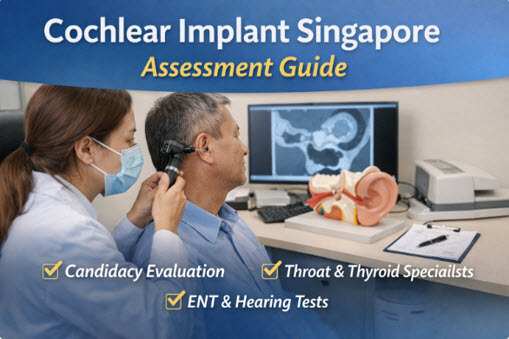
Further testing includes speech perception assessments, which evaluate how effectively a person can understand words and sentences in both quiet rooms and noisy social settings. These diagnostic steps are vital because daily life often involves complex acoustic environments where background noise is present. Advanced procedures such as tympanometry may also be utilised to gain information about eardrum function and middle ear pressure. If these results indicate that advanced hearing aids are no longer providing adequate benefit, an implant might be recommended as the primary course for hearing loss Singapore treatment. By gathering this extensive data, the team can justify the transition from external aids to internal sensory technology.
Surgical Suitability and Medical Review
Once the audiological data has been collected, the candidate’s case is transferred to a surgical team for a thorough medical review. This step involves a physical examination by an ENT specialist who holds sub-speciality training in the field of otology. The physician reviews the patient’s overall health and examines the ear, nose, and throat structures to ensure there are no active medical issues that might complicate a procedure. This medical oversight is a core reason why patients are encouraged to seek the expertise of a specialised head and neck surgeon who understands the complexities of ear surgery.
A significant part of the surgical review involves the use of imaging scans to evaluate the internal structure of the cochlea and the surrounding bone. These images allow the surgeon to confirm that the anatomical pathways can safely accommodate the implant hardware. Furthermore, the clinician must ensure that any active infections or related ENT disorders are fully resolved before the operation is scheduled. This thoroughness helps to manage symptoms like giddiness or balance issues, which are often closely linked to the health of the inner ear system. By addressing these physiological factors early, the team reduces the risk of complications and supports a more predictable recovery period.
Exploring Throat and Endocrine Health Factors
In certain cases, the clinical assessment extends beyond the ear to include the throat and the neck region. A throat specialist may be consulted to evaluate vocal cord function or the patient’s ability to swallow effectively, ensuring that all related biological functions are stable. This level of care is important because the structures in the neck are closely interconnected, and the surgical team must have a full picture of the patient's upper respiratory health. If there are concerns about airway management or chronic throat irritation, these are often addressed prior to any final decision regarding candidacy.
The endocrine system also plays a role in the evaluation process, with monitoring often performed through a thyroid doctor Singapore clinic. The function of the thyroid gland is reviewed because it is located in the neck and its stability is vital for general metabolic health and healing. Thyroid disorders can sometimes present with symptoms that overlap with general ear, nose, and throat health, making it necessary to ensure hormone levels are balanced before major surgery. This collaborative approach between surgeons and endocrine experts is a hallmark of the integrated medical care offered in notable clinical centres. By managing these systemic factors, the clinical team ensures that the patient’s body is in a suitable state for the physical demands of surgery and rehabilitation.
Personalised Lifestyle and Developmental Factors
The evaluation process eventually shifts to focus on the individual patient’s specific communication needs and their daily lifestyle. For younger candidates, the assessment emphasises language development milestones, educational requirements, and the level of support available from the family. Early intervention is a primary goal, and teams often include auditory-verbal therapists who assess a child’s potential to develop listening and spoken language skills with the aid of an implant. Specialised clinics aim to make these paediatric services as child-friendly as possible to ensure that both the young patient and their parents feel supported throughout the journey.
For adult candidates, the impact of the sensory impairment on their professional career and social interactions is discussed in great detail. The medical team considers the patient’s personal motivation and their realistic expectations for life with an implant as key factors in the final recommendation. It is also standard practice to explore all available alternatives, which might include advanced hearing aid technology or referrals to other specialists for related nasal or sinus issues. This thorough discussion allows the patient to make an informed decision that aligns with their personal well-being and their long-term communication goals. Taking the time to chat about these human factors ensures the technology becomes a bridge back to society rather than a confusing gadget.
The Multi-Specialist Consensus and Final Decision
After all individual tests and reviews are complete, the findings from the audiologists, surgeons, and other specialists are compiled for a multidisciplinary team meeting. This collaborative forum ensures that every aspect of the patient’s case—from their inner ear anatomy to their thyroid stability—is considered collectively. By bringing together diverse specialist perspectives, the team can make a robust and well-founded recommendation that prioritises the patient’s safety and future auditory outcomes. This structured approach reduces the likelihood of individual bias and provides a thorough view of the patient’s suitability for the technology.
Once the team has reached a consensus, a final consultation is held with the patient and their family to explain the results in detail. This is an opportunity for the patient to ask remaining questions and for the clinical team to outline the next steps regarding the surgery and the activation of the device. If the recommendation is to proceed, the team will also describe the essential auditory rehabilitation programme that must follow the procedure. Embarking on this pathway is a proactive step towards improved sensory health, and understanding this patient-centred process allows individuals to engage with their medical team with confidence. It is the clinical equivalent of checking the weather, the engine, and the navigation before a long flight; a bit tedious, but it makes for a much smoother landing.
Read another Article: Approaches to Paediatric ENT & Auditory Wellness