Securing the right support for a child with hearing difficulties is a multi-stage process that requires coordination between parents, audiologists, and medical specialists. In Singapore, the healthcare system is structured to provide seamless transitions from initial newborn screenings to advanced rehabilitative interventions. For many families, the primary objective is to ensure that a child has consistent access to the speech sounds necessary for language development. This journey involves a combination of diagnostic assessments, trial periods with amplification, and, in specific cases, surgical procedures. By understanding these clinical pathways, families can navigate the complexities of hearing health with confidence and ensure their child reaches their full potential.
Key Takeaways:
- Newborn screening is the first line of defence in identifying congenital hearing issues within weeks of birth.
- Diagnostic assessments determine whether hearing loss is conductive, sensorineural, or a combination of both.
- Hearing aid trials are mandatory to evaluate how much a child can benefit from non-surgical amplification.
- When hearing aids are insufficient for profound loss, the discussion may move toward a cochlear implant Singapore evaluation.
- Long-term success is heavily dependent on consistent post-operative therapy and family-led listening activities.
The diagnostic journey following an initial hearing screening
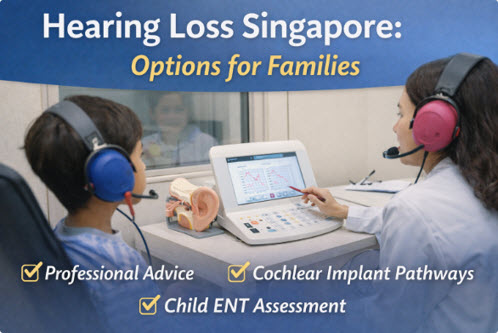
When a child is referred for further testing after a newborn screening, the focus shifts to obtaining a precise measurement of their hearing levels. Diagnostic testing is more comprehensive than a screening and often requires multiple sessions. Audiologists use objective tests like Auditory Brainstem Response (ABR) to measure how the hearing nerve reacts to sound while the child is asleep. These results provide a detailed map of the child’s hearing across different frequencies, allowing specialists to determine the severity of the loss.
In addition to objective tests, as the child grows, behavioural observations become a vital part of the diagnostic process. Visual Reinforcement Audiometry (VRA) and Play Audiometry allow the clinical team to see how the child actively responds to sound in a controlled environment. This combination of objective data and behavioural evidence ensures that the final diagnosis is accurate. For families, this phase is about gathering the necessary information to choose the most appropriate intervention path, whether that involves medical treatment for temporary issues or long-term support for permanent conditions.
Exploring non-surgical interventions and hearing aid technology
For the majority of children with permanent hearing loss, the first clinical intervention is the fitting of digital hearing aids. These devices are sophisticated computers that can be finely tuned to amplify only the specific frequencies where the child has a deficit. In Singapore, audiologists work closely with families to select devices that are robust enough for an active child’s lifestyle. The goal is to provide the "auditory brain" with as much information as possible to facilitate speech development.
The success of hearing aids relies on a concept known as "brain plasticity." Because a child’s brain is highly adaptable, consistent use of amplification allows the neural pathways for hearing to strengthen. Parents are encouraged to ensure their child wears their devices during all waking hours. Regular follow-up appointments are scheduled to adjust the settings as the child provides more feedback and as their ear canals grow. If, after several months of consistent use, the child is not meeting expected auditory milestones, the medical team may begin to discuss more advanced options.
The transition to surgical solutions for profound hearing loss
In cases where a child has a profound sensorineural hearing loss, traditional hearing aids may not provide enough clarity for the brain to understand speech. This is when the medical team may introduce the concept of a cochlear implant Singapore surgery. This procedure involves the placement of an internal electrode array into the cochlea, which stimulates the auditory nerve directly, bypassing the damaged hair cells of the inner ear.
The evaluation for a cochlear implant is a thorough process that looks beyond just the hearing test results. Surgeons and audiologists assess the child's inner ear anatomy through imaging, while speech therapists evaluate the child’s current communication skills. The family’s readiness to commit to a rigorous rehabilitation schedule is also a key factor in the candidacy process. In Singapore, the focus is on early implantation, often around the age of one, to take advantage of the critical period for language learning.
The role of rehabilitation and auditory training
Surgery is only one component of the journey toward better hearing. The true work begins after the device is activated, roughly three to four weeks following the procedure. At this stage, the child hears sounds, but their brain does not yet know what those sounds mean. Rehabilitation through Auditory-Verbal Therapy (AVT) is essential for teaching the child how to listen and eventually how to speak.
During AVT sessions, the therapist works with the parents to turn everyday activities into listening opportunities. The focus is on encouraging the child to rely on their hearing rather than visual cues like lip-reading. This intensive training helps the child bridge the gap between their "hearing age" and their chronological age. With the right support and consistent practice, many children who receive implants are able to develop speech and language skills that are on par with their hearing peers, allowing them to participate fully in mainstream social and educational settings.
Navigating educational support and mainstream integration
As children with hearing impairment reach school age, the focus of their care expands to include educational support. The Singapore Ministry of Education provides various resources to help these students succeed in mainstream schools. This often includes the use of FM systems or Remote Microphone technology, where the teacher wears a microphone that streams their voice directly into the student’s hearing aids or cochlear implant. This technology is vital for overcoming background noise and distance in a classroom environment.
For some families, a specialised school environment may be more appropriate, particularly if the child has additional learning needs or relies on visual communication. However, the advancement in early intervention and technology has made mainstream integration a reality for many more students than in previous generations. The transition to school is managed through close collaboration between the clinical team, the school's special educational needs coordinator, and the parents. This ensures that the child has the necessary accommodations to thrive both academically and socially.
Looking toward a future of auditory success
The journey of managing hearing loss in a child is a marathon, not a sprint. It requires persistence, a strong support network, and access to modern medical expertise. In Singapore, families are fortunate to have a wealth of resources at their disposal, from world-class surgical centres to dedicated therapy clinics. As research continues to improve the quality of sound processing and the ease of rehabilitation, the outcomes for children with hearing loss continue to improve.
The ultimate goal for any family is to see their child grow into an independent, confident communicator. By following the recommended clinical pathways and staying engaged with the rehabilitative process, parents can help their children overcome the barriers of hearing impairment. Whether the path involves hearing aids or a cochlear implant Singapore procedure, the focus remains on the child’s ability to connect with the world through sound. With early intervention and a commitment to long-term care, the future for these children is filled with opportunity.
Read another Article: Navigating the landscape of paediatric hearing health and support in Singapore