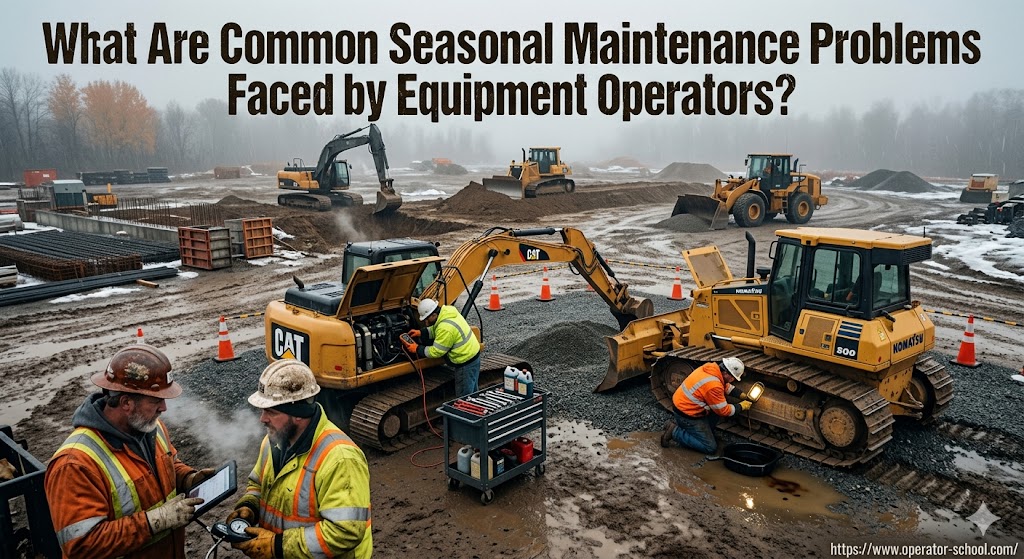
Every equipment operator knows this feeling — you show up to a job site, and something's wrong with the machine. An overheated engine in July. A dead battery in January. A hydraulic leak after weeks of rain.
Most of these problems are predictable. They happen because of seasonal stress on equipment. Understanding the most common ones helps you spot them early and fix them before they take a machine out of service.
1. Battery Failure in Cold Weather
Cold weather drains batteries faster than anything. When temperatures drop, battery capacity drops with it. A battery that works fine in October might not start a machine in December.
This is one of the most common winter problems on job sites. Operators check battery terminals for corrosion, test charge levels before the cold season hits, and keep spare batteries or jump packs on hand. A battery that's more than three years old should be replaced before winter — not after it fails.
2. Hydraulic System Problems Caused by Temperature Changes
Hydraulic systems are sensitive to temperature. In summer, fluid thins out and pressure drops. In winter, thick fluid moves slowly and puts strain on pumps and hoses.
Using the wrong grade of hydraulic fluid for the season is a very common mistake. Operators who know their equipment switch to season-appropriate fluids and always let machines warm up before putting the hydraulic system under full load.
Hose cracking is also common in winter. Cold makes rubber brittle, and hoses that have small cracks will fail faster once temperatures drop hard. Inspecting hoses in fall is the smartest preventive step you can take.
3. Overheating in Summer
Heat is hard on engines. Clogged radiators, dirty coolant, and blocked air filters are the top causes of overheating — and they're all preventable with regular maintenance.
On summer job sites, dust and debris get sucked into air intakes constantly. Operators check and clean air filters more often than the manual recommends because job site conditions are far worse than what manufacturers test for.
Cooling systems also need a flush at the start of summer. Old coolant loses its ability to transfer heat efficiently, which means even a clean radiator won't do its job properly.
4. Fuel System Contamination in Winter
Water in fuel is a year-round risk, but it becomes a much bigger problem in winter. Water in the fuel system freezes and blocks fuel lines. This kills machines in the middle of a cold morning.
The fix is simple: drain fuel filters regularly, keep fuel tanks as full as possible to reduce condensation inside, and use anti-gel additives in diesel fuel during freezing temperatures. Experienced operators make this part of their weekly routine once fall arrives.
5. Track and Undercarriage Wear from Mud and Wet Ground
Spring is the hardest season for tracks and undercarriages. Soft, muddy ground packs into every joint and link. The mud acts like sandpaper over time, wearing down components much faster than dry conditions.
Operators working in spring mud clean undercarriages at the end of every shift when possible. Letting mud dry and harden overnight makes it much harder to remove and causes more wear during the next day's operation.
6. Electrical System Problems from Moisture
Rain and moisture cause corrosion on electrical connections, sensor failures, and short circuits. These problems show up most in spring and fall when wet weather is constant.
Operators inspect connectors and wiring harnesses regularly and use dielectric grease on electrical connections to keep moisture out. Catching a corroded connector early is a five-minute fix. Ignoring it can mean a full electrical failure that takes a machine out of service for days.
The Bottom Line
Seasonal maintenance problems don't come out of nowhere. They follow patterns — and operators who know those patterns stay ahead of breakdowns instead of reacting to them.
The foundation of that knowledge is solid equipment training. When you understand how a machine works, you understand why it fails — and how to prevent it.
ATS trains operators on real equipment in real conditions. Learn more about Heavy Equipment Training and Crane Operator Training at operator-school.com.
Want to build a career where you actually know your equipment? Contact ATS today or apply online to get started.