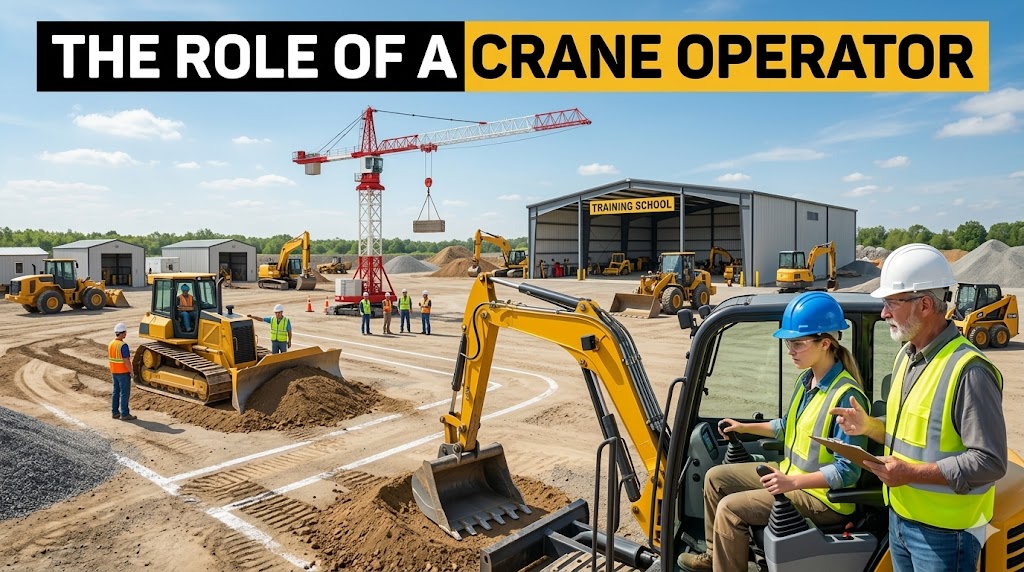
If you've ever watched a skyscraper go up or seen a bridge being built, you've seen crane operators at work. They're the people in the cab, hundreds of feet in the air, moving massive loads with precision — sometimes in tight spaces, often in challenging weather, always with safety on the line.
But what exactly does a crane operator do day to day? And why is it such a specialized and well-respected trade? Here's a plain-language breakdown.
The Core Job: Moving Things Safely
At its most basic level, a crane operator's job is to lift, move, and lower loads on a construction site. Those loads might be steel beams, concrete sections, heavy equipment, building materials, or anything else that can't be moved by hand or forklift.
But "moving things" doesn't begin to capture how much skill and knowledge that actually requires. A crane operator has to calculate load weights, understand the limits of their machine, read the terrain and conditions around them, and communicate constantly with the rigging and signal crew on the ground. One wrong decision can be catastrophic — which is exactly why trained and certified operators are so highly valued.
Types of Cranes Used on Construction Sites
Not all cranes are the same, and operators are typically trained and certified on specific types. The two most common on construction sites are mobile cranes and tower cranes.
Mobile cranes can be driven to a site and set up relatively quickly. They're used on a wide range of projects — from commercial buildings to utility work to oil and gas. Mobile crane training covers safe operation, load charts, setup, and the certification process through the NCCCO.
Tower cranes are fixed cranes you typically see on large urban construction projects — high-rises, hospitals, major infrastructure. They stay in place for the duration of a project and can lift enormous loads at great heights. Tower crane training is more specialized and typically builds on mobile crane experience.
Daily Responsibilities on the Job Site
A crane operator's day doesn't start when they climb into the cab. Before any lift happens, operators are expected to do a thorough pre-operation inspection of the crane — checking hydraulics, brakes, cables, hooks, and outriggers for any signs of wear or damage. If something isn't right, the lift doesn't happen.
Once work begins, operators spend their day executing planned lifts in coordination with riggers and signalpersons. They have to account for wind speed and direction, the weight and balance of each load, overhead obstacles like power lines and other structures, and the stability of the ground underneath the crane.
Communication is a huge part of the job. Operators work closely with the rigging crew, site supervisors, and sometimes engineers. Clear communication — especially in noisy, busy environments — is what keeps everyone safe.
Why Certification Matters
Crane operation is one of the most regulated trades in construction. In most states and on most job sites, operators are required to hold NCCCO certification — a nationally recognized credential issued by the National Commission for the Certification of Crane Operators.
Getting certified means passing both written and practical exams that test your knowledge of equipment, load charts, safety standards, and hands-on operation. It's not something you can fake your way through. Employers know that an NCCCO-certified operator has been independently tested and verified.
Training programs like those offered at Associated Training Services are specifically designed to prepare students for these exams — covering everything from the technical knowledge needed for the written test to real hands-on time in the seat for the practical.
The Career Path and Earning Potential
Crane operators are among the highest-paid tradespeople in construction. Entry-level operators can expect competitive starting wages, and experienced operators — especially those certified on multiple crane types — can earn very strong salaries. The demand for qualified operators continues to outpace supply, which keeps wages moving upward.
The career path is clear: start with your initial certification, build hours and experience, and expand into larger cranes or more complex lift environments over time. Many operators also add rigging and signalperson credentials to their resume early on — it deepens their understanding of lifts and makes them more valuable to any employer.
For those exploring financial options to get started, ATS also offers financial assistance programs and housing assistance for students attending their training facility in Sun Prairie, Wisconsin.
Is It the Right Career for You?
If you like working with your hands, enjoy a challenge, take safety seriously, and want a career where your skills are always in demand — crane operation is worth a serious look. It's not an office job. Every day looks different, the work is important, and the people who do it take real pride in what they build.
Interested in becoming a certified crane operator?Learn about training programs and start your application at operator-school.com — or grab your free starter kit to learn more before you commit.