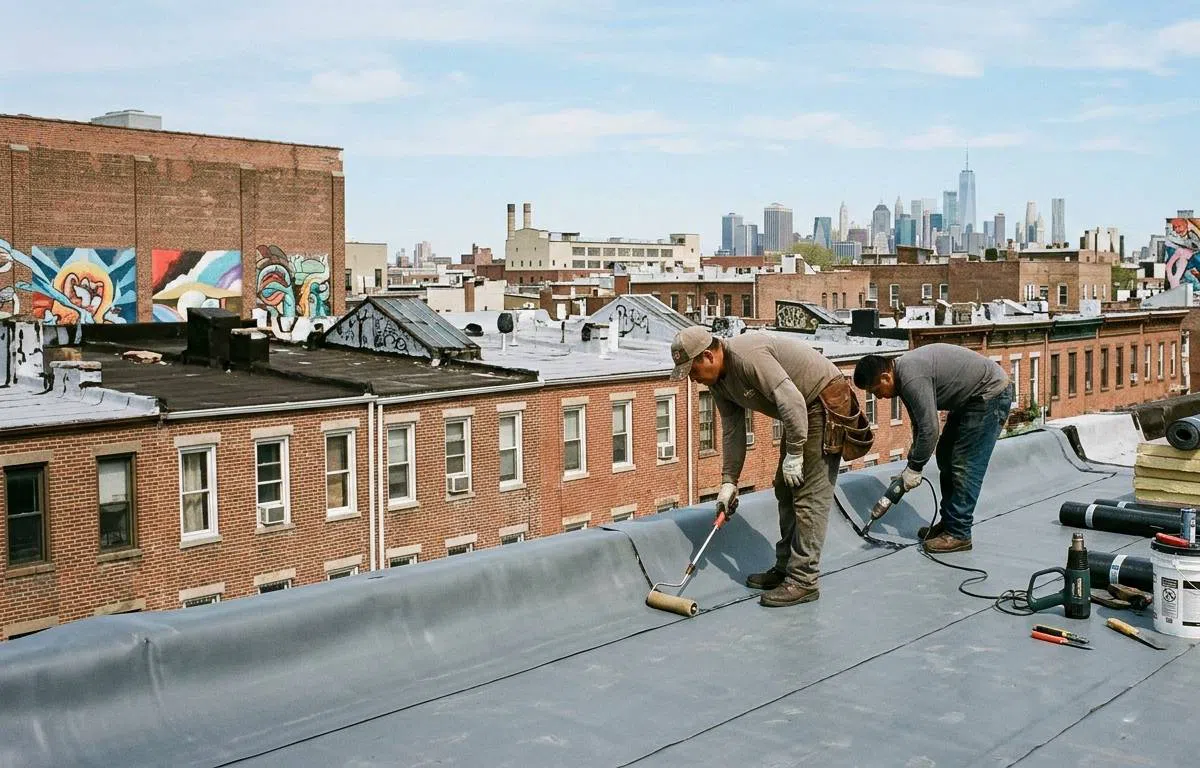
Understanding materials, maintenance, repairs, and installation can help commercial property owners make better long-term roofing decisions.
Commercial roofing is very different from residential roofing. A commercial building may have a much larger roof area, rooftop HVAC equipment, drainage systems, maintenance walkways, and other structures that require careful planning. In New York City, these challenges can become even more complicated because buildings are often surrounded by other properties and have limited access for materials and equipment.
Flat roofs are especially common on commercial buildings because they provide practical use of rooftop space and work well with large, simple building layouts. However, choosing the right roofing system requires more than selecting a material based on its price. Building use, drainage, insulation, rooftop traffic, weather exposure, and maintenance requirements all need to be considered.
Why Flat Roofs Are Common on Commercial Buildings
Flat roofing systems are widely used on offices, retail properties, apartment buildings, warehouses, and mixed-use buildings. Their design makes it easier to cover large areas without the structural complexity associated with steeply pitched roofs.
Another advantage is accessibility. Building owners and maintenance professionals may need regular access to HVAC units, vents, skylights, drains, and other rooftop equipment. A properly designed flat roof can accommodate these features while still providing reliable protection for the building below.
Although they are called flat roofs, these systems are not completely level. Properly designed commercial roofs include a slight slope that directs rainwater and melting snow toward drains, scuppers, or other drainage outlets. Without adequate drainage, standing water can place unnecessary stress on the roofing membrane.
Understanding the Main Commercial Flat Roofing Materials
There are several roofing systems available for commercial properties, and each has different characteristics.
PVC, TPO, EPDM, modified bitumen, and built-up roofing are commonly used for flat and low-slope applications. The appropriate option depends on the building's structure, budget, rooftop conditions, energy goals, and expected maintenance requirements.
PVC Roofing
PVC is a single-ply membrane known for its waterproofing capabilities and heat-welded seams. It also offers good resistance to many chemicals, making it useful for certain commercial properties where rooftop exhaust or chemical exposure may be a concern.
Its reflective surface can also help reduce heat absorption during warmer months. However, material and installation costs may be higher than some alternatives, so property owners should consider the system's expected long-term value.
TPO Roofing
TPO is another single-ply membrane commonly used on commercial flat roofs. It is popular because it combines durability, reflectivity, and relatively efficient installation.
Many TPO systems have light-colored surfaces designed to reflect sunlight, which may help reduce heat buildup. The material can work well on retail properties, warehouses, apartment buildings, and other large commercial structures.
Proper seam welding and flashing installation are essential to achieving reliable long-term performance.
EPDM Roofing
EPDM is a synthetic rubber membrane that has been used on commercial roofs for decades. Its flexibility allows it to accommodate normal movement caused by changing temperatures.
EPDM can be a practical choice for buildings that need a durable and flexible roofing system. As with other membranes, however, installation quality is critical. Seams, penetrations, flashing, and drainage points must be properly installed and maintained.
Modified Bitumen
Modified bitumen is an asphalt-based roofing system that combines traditional waterproofing methods with polymer reinforcement. It is available in several installation forms and can provide a durable surface for many commercial applications.
This type of roofing can be particularly useful when property owners want a robust membrane system with good resistance to normal rooftop activity.
Drainage Is Critical for Flat Roof Performance
One of the biggest concerns with any flat roof is water management.
Rainwater needs to move efficiently toward drains or scuppers. If outlets become blocked by leaves, debris, or accumulated dirt, water can remain on the roof for extended periods.
Ponding water can accelerate membrane deterioration and increase the risk of leaks. Over time, excessive moisture may also affect insulation and the underlying roof deck.
Regularly cleaning drainage systems and checking them during professional inspections is therefore an important part of commercial roof maintenance.
Insulation Plays an Important Role
A commercial flat roof is more than a waterproof membrane. Insulation beneath the roof surface can have a major effect on energy efficiency and indoor comfort.
Proper insulation reduces heat transfer between the building interior and the outside environment. During summer, it can help limit heat entering the building, while in winter it helps retain indoor warmth.
The insulation system should be selected according to the building's needs and integrated properly with the rest of the roof assembly. Gaps, moisture intrusion, or incorrect installation can reduce its effectiveness.
Repair or Complete Roof Replacement?
Not every damaged commercial roof needs to be completely replaced.
If the damage is limited to a small area, professional repairs may extend the life of the existing system. Minor membrane punctures, isolated flashing failures, and certain seam problems can sometimes be repaired without disturbing the entire roof.
Replacement becomes more appropriate when deterioration is widespread, leaks continue despite repeated repairs, the membrane has reached the end of its useful life, or underlying insulation and decking have suffered significant damage.
A professional inspection can help property owners understand whether repair or replacement makes more financial sense.
Signs a Commercial Flat Roof May Need Attention
Roofing problems often become more expensive when they are ignored. Property owners and building managers should pay attention to recurring leaks, damaged membranes, loose flashing, visible cracks, blisters, deteriorated seams, and areas where water regularly collects.
Interior warning signs can also provide useful clues. Water stains on ceilings or walls, damaged insulation, musty odors, or unexplained moisture may indicate that water is entering through the roofing system.
A small problem does not necessarily mean the entire roof has failed. Early inspection allows contractors to determine the actual source of the problem and recommend an appropriate solution.
Choosing the Right Commercial Roofing Contractor
The quality of installation has a major influence on how long a commercial roofing system performs.
When comparing contractors, property owners should look at relevant commercial experience rather than relying exclusively on the lowest estimate. A contractor familiar with flat roofing should understand membrane systems, drainage, flashing, insulation, rooftop equipment, and the challenges associated with working on occupied buildings.
Written estimates should clearly explain the proposed materials, scope of work, expected timeline, warranty information, and any preparation or cleanup requirements.
Good communication is also important. A professional contractor should explain findings clearly and discuss available options before recommending major work.
Regular Maintenance Can Extend Roof Life
Commercial roofs should not be inspected only when a leak appears.
Routine inspections allow property owners to identify problems before they develop into emergencies. Drainage outlets can be cleaned, flashing can be checked, seams can be evaluated, and damaged areas can be repaired before they affect larger sections of the roof.
After significant storms, an additional inspection may also be worthwhile. Strong winds, heavy rainfall, and temperature fluctuations can expose weaknesses that were not previously visible.
Preventive maintenance is generally less expensive and disruptive than emergency repairs.
Understanding Commercial Flat Roofing in NYC
NYC commercial properties face a combination of weather exposure, limited rooftop access, rooftop equipment, drainage requirements, and ongoing maintenance demands. Choosing an appropriate roofing system requires an understanding of all these factors rather than simply comparing material prices.
For property owners researching their options, this guide to commercial flat roofing in NYC provides additional information about common roofing systems, material differences, commercial roof repairs, replacement considerations, and maintenance practices.
Having this information before starting a project can make it easier to communicate with contractors and evaluate different proposals.
Plan for Long-Term Performance
A commercial roof is a long-term investment in the building. Choosing suitable materials, installing them correctly, maintaining drainage, and addressing small problems early can significantly influence how well the system performs.
Rather than waiting for a major leak or emergency failure, property owners can take a proactive approach through regular inspections and maintenance. With proper planning and professional installation, a commercial flat roof can provide dependable protection while supporting the building's operational and energy-efficiency goals for many years.