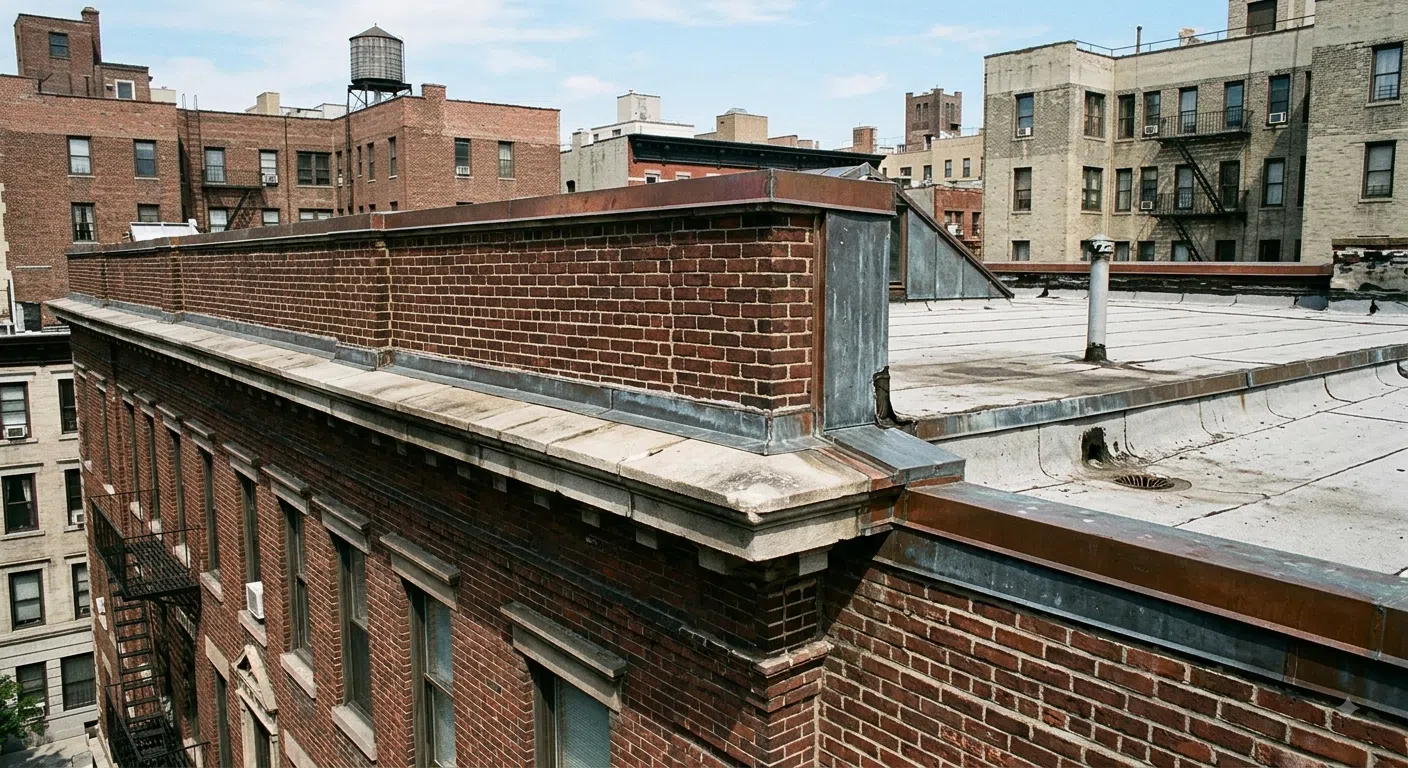
New York City buildings deal with a unique combination of weather, dense construction, aging materials, and limited rooftop space. For properties with flat or low-slope roofs, some of the most important protective components are not always the ones homeowners notice first. Parapet walls, coping, and flashing all play an important role in keeping water away from vulnerable areas of the building.
When these components are properly installed and maintained, they help direct rainwater away from masonry and roofing transitions. When they deteriorate, however, water can find its way into walls, insulation, roof decking, and interior spaces.
Understanding how these parts work together can help property owners recognize problems early and arrange appropriate maintenance before a small issue turns into a major repair.
What Is a Parapet Wall?
A parapet wall is the portion of a wall that extends above the roofline. They are common on many New York City properties, including rowhouses, brownstones, apartment buildings, commercial properties, and mixed-use buildings.
Parapets serve several purposes. They can define the edge of a roof, provide a barrier around rooftop areas, conceal mechanical equipment, and create an important transition between the roof and exterior wall.
Because the wall is exposed to rain, snow, wind, sunlight, and changing temperatures, it requires regular attention. Cracks in masonry, deteriorated mortar, loose bricks, and damaged coping can all create pathways for moisture.
The Role of Coping Along the Roof Edge
Coping is the protective material installed along the top of a parapet wall. It may be made from metal, stone, concrete, or other suitable materials depending on the building and its design.
Its main purpose is to keep water from sitting on top of the wall and entering the masonry. Properly designed coping directs water away from vulnerable surfaces while protecting the top of the parapet from weather exposure.
Over time, coping can develop problems such as open seams, corrosion, loose sections, cracked materials, or failed sealants. These issues may appear relatively minor, but they can allow moisture to reach the wall beneath.
For older NYC buildings, maintaining the coping is particularly important because repeated moisture exposure can contribute to masonry deterioration.
Why Roof Flashing Is So Important
Roof flashing protects areas where different surfaces meet. The connection between a flat roof and a parapet wall is especially important because water can collect or move along this transition.
Flashing creates a water-resistant barrier that helps prevent moisture from getting behind the roofing system. If flashing becomes loose, cracked, punctured, or improperly sealed, water can move into areas that are difficult to inspect.
A roof leak does not always appear directly below the location where water entered. Moisture can travel through building materials before eventually producing a stain on a ceiling or wall. This is one reason identifying the actual source of a leak can require more than simply looking at the interior damage.
How Parapet Problems Develop
Parapet deterioration usually happens gradually rather than overnight.
Seasonal temperature changes can cause masonry and metal components to expand and contract. During winter, moisture that enters cracks or open joints can freeze and expand. Repeated freeze-thaw cycles may gradually widen cracks and weaken mortar.
Heavy rain and wind can create additional stress. Water may enter through damaged masonry, coping joints, flashing terminations, or other openings around the roof edge.
Age is another factor. Older materials naturally become more vulnerable to deterioration, particularly when previous repairs were incomplete or incompatible with the original construction.
Warning Signs Property Owners Should Watch For
Some parapet problems are easy to notice from ground level, while others require a professional inspection.
Visible warning signs can include cracked bricks, deteriorated mortar, loose coping, rust stains, damaged flashing, peeling interior paint, ceiling stains, or recurring leaks near exterior walls.
A new water stain does not necessarily mean the entire roof needs replacement. The problem could be limited to a flashing detail, coping joint, masonry crack, or drainage issue.
The important step is identifying the source accurately before deciding what type of repair is necessary.
Why Drainage Matters Around Parapet Walls
Even a properly constructed roof can experience problems when water cannot drain effectively.
Flat and low-slope roofs depend on carefully planned drainage systems. Drains and scuppers need to remain clear so rainwater can move away from the roof surface. Debris, leaves, construction materials, and other obstructions can interfere with this process.
Persistent ponding water deserves attention because prolonged moisture exposure can place additional stress on roofing membranes and nearby parapet components.
Maintaining drainage systems is therefore an important part of protecting the entire roof edge.
Professional Inspection Can Prevent Bigger Problems
Parapet walls, coping, and flashing should not be treated as completely separate systems. They interact with the roofing membrane, masonry, drainage, and other building components.
This is why a professional evaluation can be valuable when a property owner notices recurring leaks or visible deterioration. An experienced contractor can examine the affected area and determine whether the problem involves masonry, coping, flashing, drainage, or a combination of issues.
For a more detailed explanation of the components involved and common repair considerations, this guide to parapet walls, coping, and flashing in NYC provides useful information for property owners dealing with roof-edge maintenance and water intrusion concerns.
Maintenance Is Better Than Emergency Repairs
Waiting until water enters the building can turn a relatively small maintenance issue into a much larger project.
A damaged coping joint may eventually allow water into masonry. A small flashing failure may contribute to wet insulation or deteriorated decking. A blocked drainage path may cause repeated ponding around vulnerable roof areas.
Routine inspections give property owners an opportunity to identify these conditions earlier. Preventive maintenance can also make it easier to schedule repairs at a convenient time instead of responding to an emergency during severe weather.
Choosing the Right Contractor
Parapet-related work can involve several areas of building construction, including roofing, masonry, sheet metal, waterproofing, and structural components. The contractor should understand how these systems interact rather than treating each problem as an isolated defect.
Before approving work, property owners should ask what caused the problem, which components need attention, what materials will be used, and whether additional repairs may be necessary once the affected area is opened.
A detailed proposal can help clarify the scope of work and reduce misunderstandings.
Protecting the Roof From the Top Down
Parapet walls may not receive as much attention as the main roofing surface, but they are an important part of a building's weather protection system. Coping helps protect the top of the wall, flashing protects the roof-to-wall transition, and proper drainage helps move water away from vulnerable areas.
Keeping these components in good condition can reduce the likelihood of leaks and help preserve the surrounding roofing and masonry.
For NYC property owners, regular inspections and timely repairs are practical ways to protect the building from moisture damage while avoiding the greater expense and disruption that can come with neglected roof-edge problems.