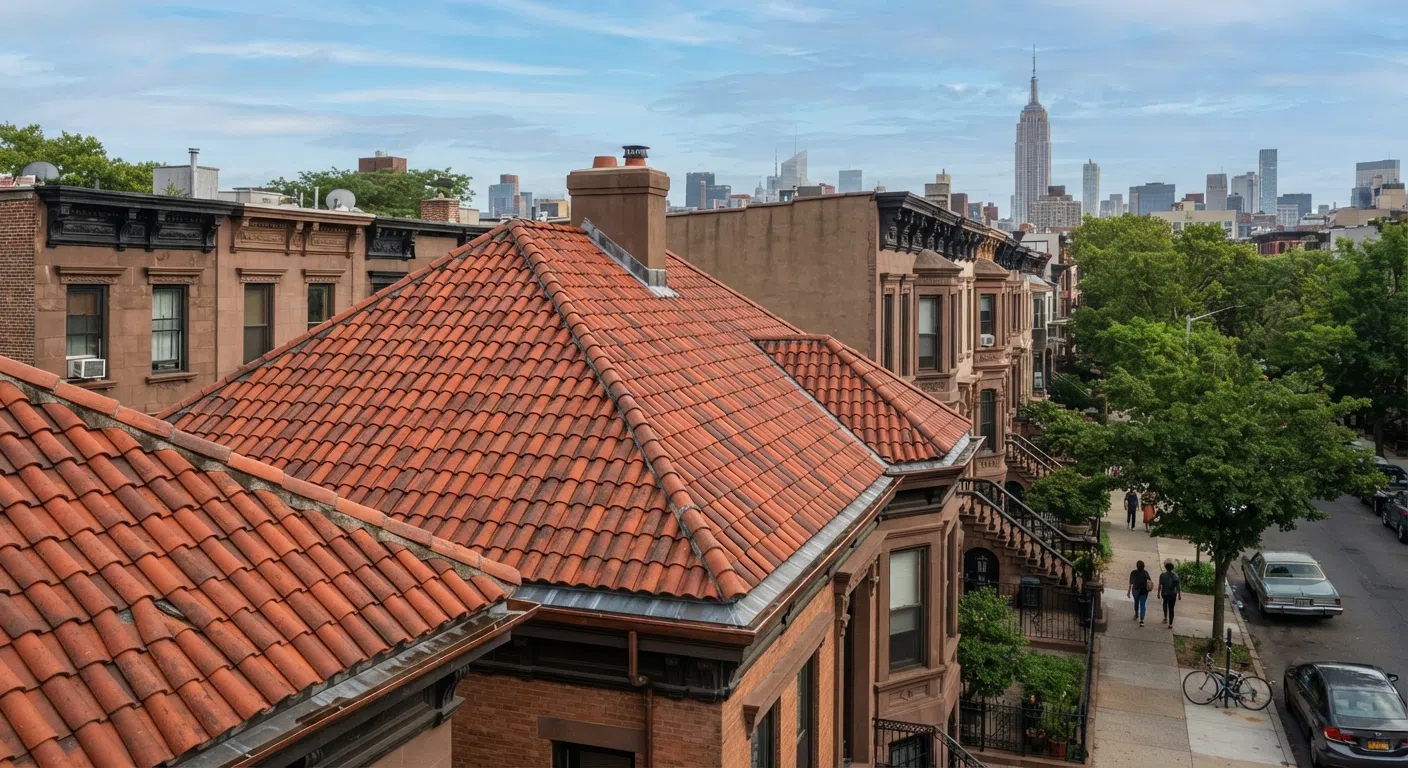
Choosing a roofing material is an important decision for any property owner. The roof affects not only how a building looks but also how effectively it handles rain, wind, temperature changes, and everyday exposure. For Brooklyn properties with the right architectural style and structural support, clay tile roofing can provide a distinctive combination of durability and visual appeal.
Clay tiles have been used as a roofing material for centuries because of their ability to withstand weather exposure and their traditional appearance. Modern clay roofing systems continue to offer these qualities while providing property owners with different shapes, profiles, and finishes to complement a building's design.
For homeowners and property managers considering this option, understanding how clay tile roofing works, where it is appropriate, and what maintenance it requires can help with the decision-making process. NY Roofing provides clay tile roofing services in Brooklyn as part of its broader range of residential and commercial roofing solutions. (nyroofing.com)
What Is Clay Tile Roofing?
Clay tile roofing is made from natural clay that is shaped and fired at high temperatures. The firing process creates a durable roofing material capable of handling significant environmental exposure.
Clay tiles are available in several profiles, including traditional curved designs and flatter styles. Their appearance can make them particularly suitable for properties where architectural character is an important consideration.
Unlike some lightweight roofing materials, clay tiles can be relatively heavy. The building's structural capacity should therefore be evaluated before installation to ensure that the roof can safely support the system.
Why Brooklyn Property Owners Consider Clay Tiles
Brooklyn has a diverse collection of architectural styles. While asphalt shingles and flat roofing systems are common, certain homes and buildings can benefit from the distinctive appearance of clay tile.
One of the main advantages is durability. Properly manufactured and installed clay tiles can have a long service life when they are maintained appropriately.
Clay is also resistant to many of the environmental conditions that can affect other roofing materials. It does not rust, and properly fired clay is naturally resistant to moisture and fire.
The material's traditional appearance can also complement properties where architectural design and curb appeal are important considerations.
Durability Through Changing Weather
A Brooklyn roof needs to handle a variety of weather conditions throughout the year. Rain, snow, wind, summer heat, and changing temperatures can all affect roofing materials over time.
Clay tiles are well suited to outdoor exposure because the material itself is naturally durable. However, the overall roofing system still depends on proper installation, underlayment, flashing, drainage, and supporting components.
Individual tiles can also become damaged through impact or other circumstances. A durable material does not mean that maintenance can be ignored.
Regular inspections can help identify cracked, broken, displaced, or deteriorating tiles before they contribute to water intrusion.
Clay Tile Roofing and Energy Performance
Clay roofing can also provide useful thermal characteristics. The air space created beneath some tile profiles can help reduce direct heat transfer between the roof surface and the building.
The actual energy performance of a clay tile roof depends on several factors, including the roof design, insulation, ventilation, tile profile, and installation method.
For property owners interested in improving overall building efficiency, the roofing material should therefore be considered as part of the complete roofing system rather than as an isolated component.
The Importance of Proper Installation
A clay tile roof can last for many years, but installation quality plays a major role in its performance.
The supporting structure must be capable of handling the weight of the tiles. The roof deck, underlayment, flashing, fasteners, and drainage system must also be properly prepared.
Tile placement needs to be carefully planned so that the roof can shed water effectively. Areas around chimneys, vents, valleys, and roof edges require particular attention because they can be vulnerable to water intrusion.
Working with an experienced roofing contractor can help ensure that these details are evaluated before installation begins.
Can Clay Tiles Be Used on Every Brooklyn Building?
Clay tile roofing is not automatically suitable for every property. The building's structure, roof design, pitch, existing materials, and overall condition all need to be considered.
Older buildings may require additional evaluation before a heavier roofing system is installed. In some cases, structural improvements may be necessary before the roof can safely support the material.
A professional inspection can help determine whether clay tile is an appropriate choice or whether a different roofing system would better suit the property.
Repairing Damaged Clay Tiles
One advantage of tile roofing is that localized damage does not necessarily require replacement of the entire roof. Individual cracked or broken tiles can sometimes be replaced while leaving the rest of the system intact.
However, replacing a tile requires more than simply placing a new piece in the damaged area. The contractor should also determine why the original tile failed and check surrounding components for additional problems.
If multiple tiles are damaged or the underlying roofing system has deteriorated, a more comprehensive inspection may be necessary.
Maintenance Requirements
Clay tiles are relatively durable, but regular maintenance remains important. Property owners should periodically inspect the roof for broken tiles, displaced materials, damaged flashing, blocked drainage, and signs of moisture.
Debris should also be managed carefully. Leaves and other material can interfere with drainage and contribute to moisture accumulation.
Property owners should avoid walking directly across clay tiles unless the roof is being accessed by trained professionals. Individual tiles can be damaged when subjected to improper foot traffic.
Professional inspections can provide a safer and more thorough way to evaluate the condition of the roofing system.
Clay Tile Roofing and Architectural Appeal
For some Brooklyn properties, the appearance of the roof is an important consideration. Clay tiles have a distinctive visual character that can complement Mediterranean, Spanish, traditional, and other architectural styles.
Different tile shapes and colors can create different appearances, allowing property owners to select an option that works with the building's overall design.
Because a roof can represent a substantial portion of a property's visible exterior, selecting a material that complements the architecture can contribute to the property's overall appearance.
Comparing Clay Tiles With Other Roofing Materials
Every roofing material has advantages and limitations. Asphalt shingles are generally lighter and widely used for residential properties. Flat roofing membranes are common on many urban buildings with low-slope roof designs.
Clay tile occupies a different position in the market. It can provide long-term durability and distinctive appearance but may require a structure capable of supporting its weight and a contractor experienced with tile installation.
The best choice depends on the property's design, structural capacity, budget, maintenance expectations, and desired appearance.
Choosing a Brooklyn Roofing Contractor
Selecting a contractor is an important part of any roofing project. Property owners should consider experience with the specific roofing material, installation practices, communication, and familiarity with the type of building involved.
Clay tile installation requires specialized knowledge because improper handling can damage the tiles or create vulnerabilities in the roofing system.
NY Roofing provides clay tile roofing services in Brooklyn and offers other roofing options for residential and commercial properties. Its listed Brooklyn location is 553 Prospect Ave., Brooklyn, NY 11215. (nyroofing.com)
Before beginning a project, property owners can request an assessment of the existing roof and discuss whether clay tile is suitable for the building.
Protecting a Clay Tile Roof for the Long Term
A clay tile roof can be a long-lasting investment when the material, supporting structure, installation, and maintenance are properly considered.
Regular inspections can help identify damaged tiles, drainage concerns, and flashing problems before they lead to more extensive issues. Professional maintenance can also help preserve both the performance and appearance of the roof.
For Brooklyn homeowners considering a distinctive and durable roofing option, Brooklyn Clay Tile Roofing can be worth exploring when the property's structure and architectural style are appropriate.
The right roofing decision starts with a careful assessment of the building. By considering structural requirements, installation quality, maintenance needs, and long-term goals, property owners can choose a roofing system that provides dependable protection while complementing the character of the property.