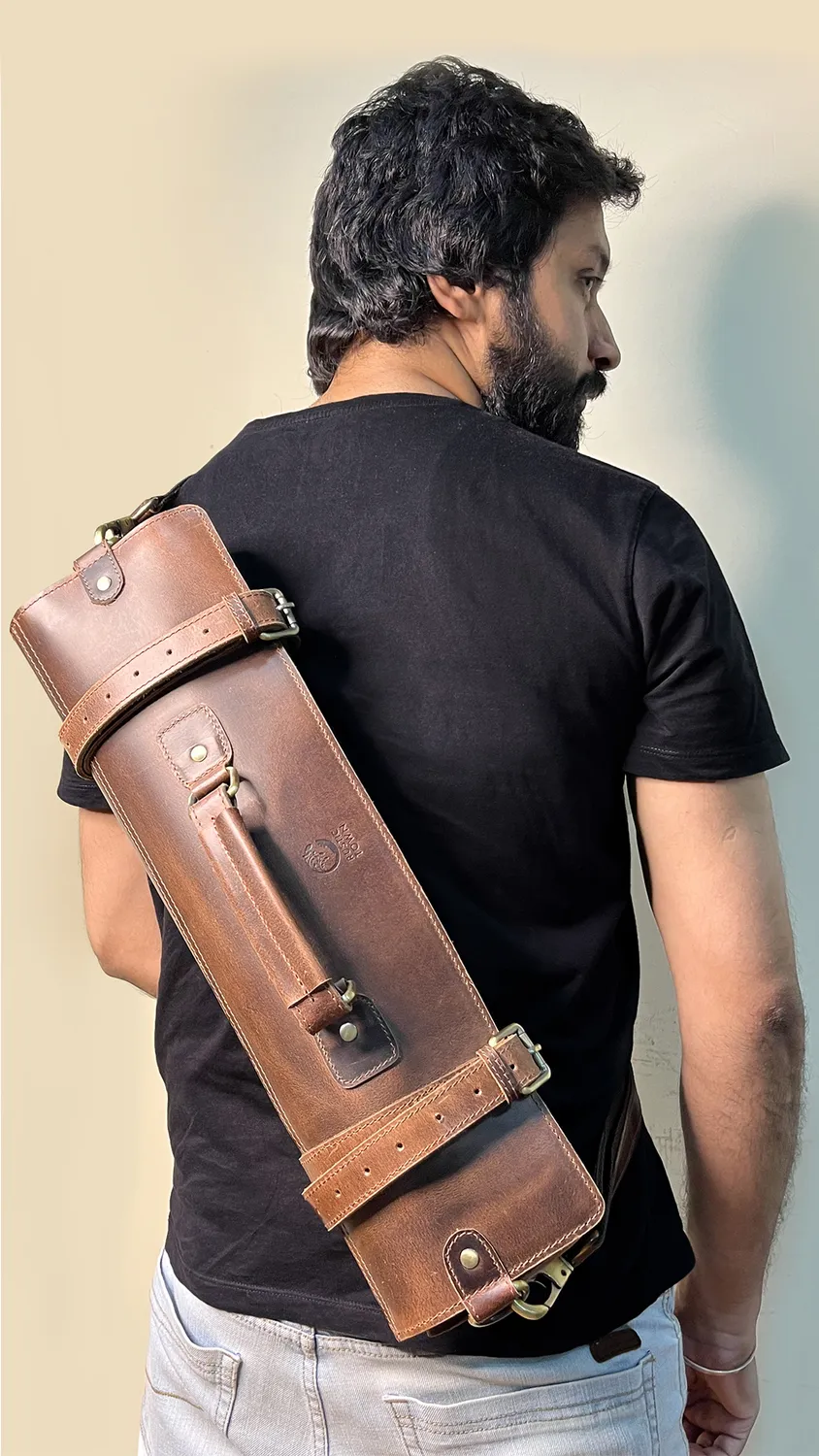
A leather knife bag is an asset for any culinary professional or enthusiast. To ensure it remains in top condition and serves you well for years, proper maintenance and care are essential. Here are some tips to help you maintain your leather knife bag and extend its longevity.
1. Regular Cleaning
Regular cleaning is crucial to keep your leather knife bag looking its best. Here’s how to clean it properly:
- Dust and Debris Removal: Use a soft, dry cloth or a brush with soft bristles to gently remove dust and debris from the surface. Do this regularly to prevent dirt from settling into the leather.
- Spot Cleaning: For minor spots and stains, dampen a cloth with warm water and gently wipe the affected area. Avoid using excessive water, as leather can absorb moisture and become damaged. For tougher stains, use a leather cleaner specifically designed for your type of leather.
- Deep Cleaning: Occasionally, you may need to perform a deeper clean. Use a leather cleaner according to the manufacturer's instructions. Apply the cleaner with a soft cloth, gently rubbing in a circular motion. Wipe away any excess cleaner with a clean, damp cloth, and allow the bag to air dry completely.
2. Conditioning the Leather
Leather can dry out and crack over time, so regular conditioning is essential to keep it supple and moisturized. Here’s how to condition your leather knife bag:
- Choose the Right Conditioner: Select a high-quality leather conditioner appropriate for your type of leather. Avoid products with harsh chemicals or silicone, which can damage the leather.
- Application: Apply a small amount of conditioner to a soft cloth and rub it into the leather in circular motions. Ensure even coverage, focusing on areas that may be more prone to drying out, such as edges and seams.
- Drying: Allow the conditioner to absorb into the leather for several hours or overnight. Wipe off any excess conditioner with a clean, dry cloth.
3. Protecting from Moisture
Moisture is one of the biggest enemies of leather. To protect your leather knife bag from moisture damage:
- Avoid Exposure: Keep your leather bag away from excessive moisture. Avoid placing it on wet surfaces or exposing it to rain. If your knife roll bag does get wet, blot it dry with a soft cloth and allow it to air dry naturally. Do not use direct heat sources like hair dryers, as they can damage the leather.
- Waterproofing: Consider using a leather waterproofing spray to add an extra layer of protection. Follow the manufacturer’s instructions for application, and reapply as needed, especially after cleaning or conditioning.
4. Proper Storage
Storing your leather knife bag correctly when not in use is crucial for maintaining its shape and condition. Here’s how to store it properly:
- Cool, Dry Place: Store your leather knife bag in a cool, dry place away from direct sunlight, which can cause fading and drying out. Avoid areas with high humidity, as moisture can lead to mold and mildew growth.
- Shape Maintenance: To maintain the bag’s shape, stuff it with acid-free tissue paper or a soft cloth. Avoid overstuffing, which can stretch the leather. If the bag has straps, avoid hanging it for long periods, as this can cause the leather to stretch and deform.
- Breathable Cover: Store your bag in a breathable dust cover or a cotton pillowcase. Avoid using plastic bags, as they can trap moisture and lead to mold growth.
5. Handling and Use
How you handle and use your leather knife bag can also impact its longevity. Here are some tips:
- Gentle Use: Treat your leather knife bag gently. Avoid placing it on rough or dirty surfaces, which can scratch or stain the leather. When carrying sharp knives, ensure they are securely fastened in their slots to prevent them from cutting or puncturing the bag.
- Avoid Overloading: Do not overload your bag with more knives or tools than it is designed to hold. Overloading can strain the seams and cause the leather to stretch or tear.
6. Addressing Damage
Despite your best efforts, your leather knife bag may occasionally suffer damage. Here’s how to address common issues:
- Scratches and Scuffs: Minor scratches and scuffs can often be buffed out with a soft cloth or treated with a small amount of leather conditioner. For deeper scratches, consider using a leather repair kit.
- Stains: Address stains promptly. For oil-based stains, sprinkle cornstarch or talcum powder on the stain and let it sit overnight to absorb the oil. Gently brush off the powder in the morning. For ink stains, use a cotton swab dipped in rubbing alcohol and gently dab the stain.
- Tears and Rips: For significant tears or rips, it’s best to seek professional repair services. A leather specialist can assess the damage and provide appropriate repairs to restore your bag.
7. Regular Inspections
Regularly inspect your leather knife bag for signs of wear and tear. Early detection of issues like loose stitching, weakened seams, or hardware problems allows you to address them before they become more significant problems. Performing routine maintenance and addressing minor repairs promptly will extend the life of your bag.
Conclusion
Maintaining your leather knife bag requires regular cleaning, conditioning, and proper storage. By following these tips, you can ensure your knife bag remains in excellent condition, providing reliable protection and adding a touch of elegance to your culinary toolkit. Investing a little time and effort into caring for your leather knife bag will pay off in the long run, keeping it looking and performing at its best for years to come.