Young children often learn best when education feels playful, colorful, and connected to activities they already enjoy. The same principle can make a major difference when introducing a child to the piano. Combining beginner piano instruction with visual activities, simple games, drawing, and age-appropriate worksheets can turn unfamiliar musical concepts into experiences children can understand and enjoy. At NewSongs Music School: Madison Ave, creating a positive early connection with music can help young learners develop curiosity, confidence, coordination, and foundational skills while making each step of their musical journey feel rewarding.
How Can Creative Activities Support Early Piano Learning?
Traditional piano instruction often involves learning keyboard patterns, finger positions, notes, and rhythm. While these fundamentals remain important, very young students may benefit when technical concepts are introduced through activities that match their developmental level.
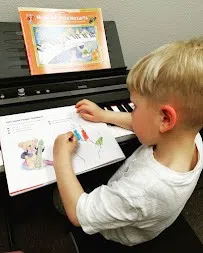
Colorful worksheets, pictures, musical games, and interactive exercises can give children another way to understand what they encounter at the keyboard. For example, a teacher might connect a musical symbol with a picture, use colors to demonstrate patterns, or introduce rhythm through clapping before asking the student to play it.
These activities do not replace piano practice. Instead, they can provide another pathway for understanding the same musical ideas.
Turning Abstract Concepts Into Familiar Experiences
For a beginner, concepts such as pitch, rhythm, note values, and keyboard geography can initially seem abstract. Children may understand these ideas more easily when instructors connect them with something visual or physical.
A student might identify groups of black keys, match notes with pictures, trace musical symbols, or complete a short activity before finding the same concept on the piano. Moving between visual learning and hands-on playing can keep lessons varied while reinforcing important information.
Can Piano Lessons Encourage Creativity?
Learning music involves more than reproducing notes from a page. Creativity is an important part of becoming comfortable with an instrument.
Young students can explore the piano by experimenting with high and low sounds, creating short rhythmic patterns, or inventing simple melodies. Even small creative exercises give children an opportunity to make decisions and hear the immediate results of those choices.
This freedom can make the instrument feel less intimidating. Instead of viewing every lesson as a test of whether they played something correctly, students begin to recognize the piano as a tool for exploration and self-expression.
How Does Visual Learning Help Young Musicians?
Children process information in different ways. Some respond quickly to spoken explanations, while others benefit from seeing a concept demonstrated or interacting with it physically.
Visual materials can be particularly useful during early music education because music notation introduces an entirely new symbolic language. Notes, rests, staffs, clefs, and dynamic markings all require recognition before students can use them confidently.
Connecting the Page to the Keyboard
One important goal of beginner piano education is helping students understand the relationship between written music and physical keys.
A child may first recognize a note or pattern on a worksheet and then locate it at the piano. Repeating this connection gradually develops familiarity with both notation and keyboard layout. As recognition becomes easier, students can spend less time figuring out individual symbols and more time concentrating on rhythm, technique, and expression.
Can Fun Lessons Improve a Child's Motivation to Practice?
Practice is essential for musical progress, but young children may not naturally understand the value of repetition. If every practice session feels like completing an assignment, motivation can quickly decline.
Engaging lessons can help establish a different attitude. When students associate piano learning with discovery and accomplishment, practicing becomes an opportunity to revisit something they enjoyed rather than simply completing a requirement.
Short, achievable goals are especially valuable for beginners. Learning a four-measure melody, recognizing several notes, or maintaining a simple rhythm can provide an immediate sense of success. Those small victories encourage students to attempt the next challenge.
What Skills Can Children Develop Through Piano Education?
Piano study requires several abilities to work together. Students must look at musical information, listen to sound, coordinate their hands, maintain rhythm, and remember previously learned concepts.
Over time, these activities can support stronger musical coordination, attentive listening, patience, concentration, and disciplined practice habits. Children also learn how to work through mistakes rather than expecting immediate perfection.
This process is important because musical growth is gradual. A difficult passage may require several attempts before it becomes comfortable. When students finally succeed, they experience a clear connection between effort and improvement.
Why Does Personalized Instruction Matter for Young Beginners?
Children do not all develop musical skills at the same pace. One student may quickly recognize notes but need more support with rhythm. Another may have excellent listening skills while finding finger coordination challenging.
Personalized instruction gives teachers the flexibility to respond to these differences.
At NewSongs Music School: Madison Ave, lessons can focus on helping students develop strong foundations while keeping the learning experience appropriate for their individual stage of development. An encouraging environment can make it easier for children to ask questions, try unfamiliar activities, and continue working when something feels challenging.
Building Confidence One Achievement at a Time
Confidence in music usually develops through a series of manageable accomplishments. Playing a first melody, recognizing notes independently, keeping a steady beat, or completing a creative activity can all become meaningful milestones.
When these achievements are acknowledged, children begin to see themselves as capable learners. That confidence can encourage greater independence as their musical abilities develop.
How Can Parents Support Piano Learning at Home?
Parents do not need musical expertise to support a child learning piano. Showing interest, creating a comfortable practice routine, and recognizing improvement can be extremely valuable.
For younger learners, shorter and more consistent practice sessions are often easier to manage than occasional long sessions. Parents can also ask children to demonstrate something they learned, creating a natural opportunity for them to celebrate their progress.
The goal should be to encourage consistency without making music feel unnecessarily stressful.
Conclusion
Creative piano activities can make early music education more accessible by combining structured instruction with visual learning, exploration, and age-appropriate challenges. When children can see, hear, touch, and experiment with musical concepts, the learning process becomes more meaningful and enjoyable.
At NewSongs Music School: Madison Ave, a supportive approach to music education can help young students establish strong foundations while developing confidence, creativity, coordination, and enthusiasm for continued learning. The first piano lessons may begin with simple notes and playful activities, but they can open the door to a musical journey that continues for many years.
For more information to visit our site: https://www.newsongsmusic.com/ or visit Google Map: https://maps.app.goo.gl/YYqpqHh8KZS1bciG6