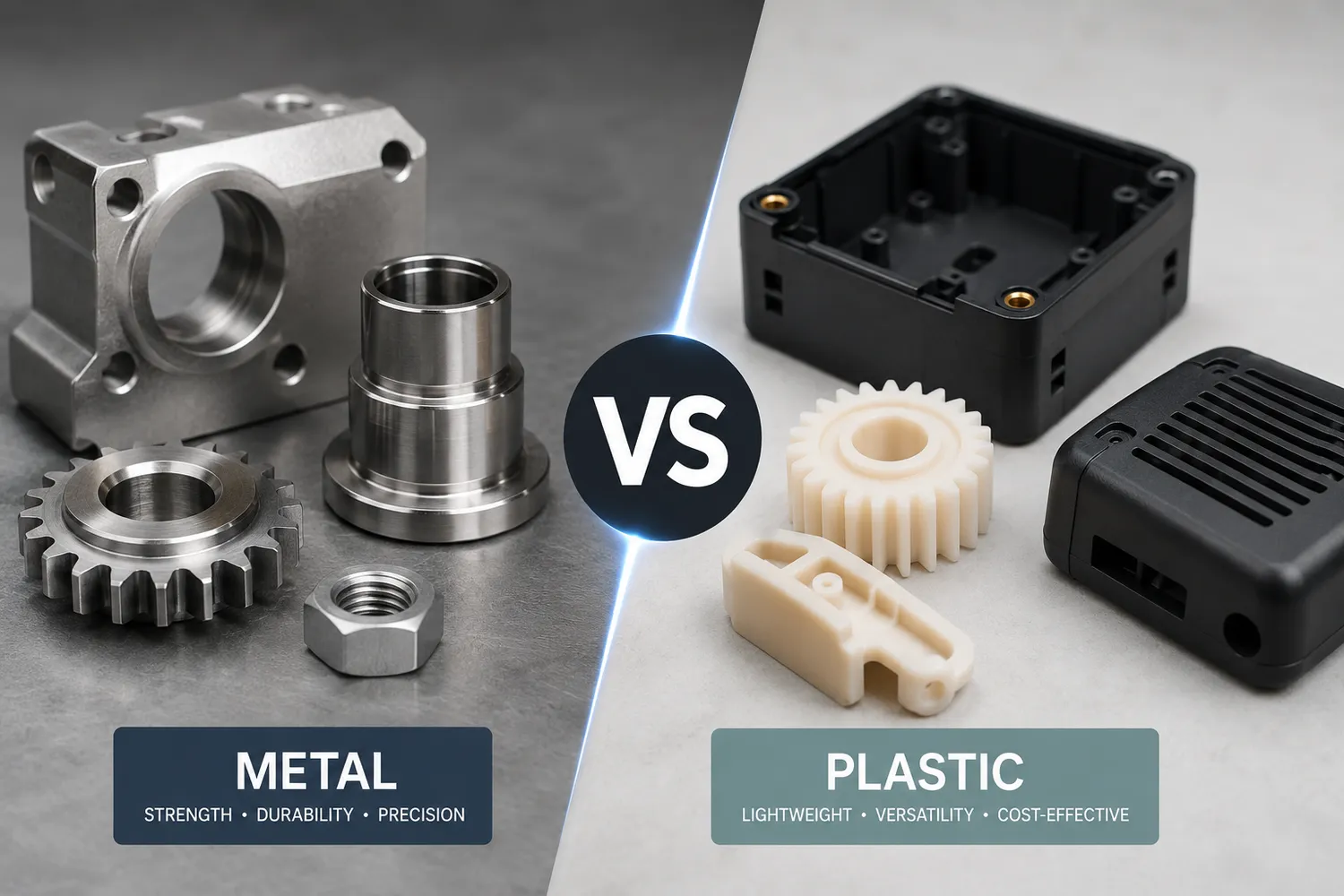
Selecting the right material is one of the most important decisions in any manufacturing project. Whether you're developing a new product, improving an existing design, or looking to reduce production costs, the choice between metal and plastic can have a significant impact on performance, durability, manufacturability, and overall cost.
There is no universal answer to the question of whether metal or plastic is better. Each material offers distinct advantages and limitations, and the best choice depends on your product's intended application, operating environment, budget, and production requirements.
This guide compares metal and plastic across the factors that matter most, helping designers, engineers, and procurement teams make informed decisions during the product development process.
Why Material Selection Matters
The material used in a product influences far more than its appearance. It affects:
- Mechanical strength
- Product lifespan
- Manufacturing processes
- Weight
- Corrosion resistance
- Operating temperature
- Maintenance requirements
- Production costs
- Environmental impact
Choosing the wrong material can lead to premature failure, increased warranty claims, manufacturing difficulties, or unnecessary production costs. Involving an experienced manufacturing partner early in the design process can help identify the most suitable material before production begins.
When Metal Is the Better Choice
Metal remains the preferred material for many engineering and industrial applications because of its exceptional strength, durability, and resistance to demanding operating conditions.
Common metals used in manufacturing include:
- Stainless steel
- Mild steel
- Aluminium
- Brass
- Copper
- Titanium
The Advantages of Metal
Superior Strength
Metal components generally provide much higher tensile strength and load-bearing capacity than plastic alternatives. This makes them ideal for structural components, machinery, automotive parts, and heavy-duty equipment.
Excellent Heat Resistance
Many metals retain their mechanical properties at temperatures where plastics begin to soften or deform. This makes them suitable for engines, industrial machinery, heating systems, and high-temperature environments.
Long-Term Durability
Metal components often have excellent fatigue resistance and can withstand repeated loading over many years without significant wear.
High Precision
Processes such as CNC machining allow manufacturers to produce metal parts with extremely tight tolerances, making them suitable for aerospace, medical, defence, and precision engineering applications.
Electrical and Thermal Conductivity
Unlike most plastics, metals conduct heat and electricity efficiently, making them essential in electrical systems, electronics, and heat transfer applications.
When Plastic Is the Better Choice
Modern engineering plastics have transformed manufacturing. Today's high-performance polymers offer excellent strength-to-weight ratios while providing significant cost and manufacturing advantages.
Popular engineering plastics include:
- ABS
- Polycarbonate
- Nylon
- Acetal (POM)
- PEEK
- PTFE
- Polypropylene
The Advantages of Plastic
Lightweight
Plastic components can weigh significantly less than equivalent metal parts, making them particularly valuable in automotive, aerospace, consumer electronics, and portable equipment where reducing weight improves efficiency and usability.
Corrosion Resistance
Unlike many metals, plastics do not rust and are naturally resistant to moisture, chemicals, and many corrosive environments.
This makes them ideal for:
- Outdoor equipment
- Medical devices
- Chemical processing
- Marine applications
- Food manufacturing
Lower Manufacturing Costs
Plastic components are often cheaper to manufacture at high volumes using processes such as injection moulding.
Once tooling has been produced, thousands—or even millions—of identical components can be manufactured quickly and consistently.
Design Flexibility
Plastic allows designers to create complex shapes, integrated features, snap-fit assemblies, and lightweight geometries that would be expensive or impossible to machine from metal.
Reduced Assembly Requirements
Multiple metal components can sometimes be replaced by a single moulded plastic part, reducing assembly time, fasteners, and overall manufacturing costs.
Comparing Metal and Plastic
When deciding between the two materials, consider the following factors:
Strength
Metal generally provides greater mechanical strength and impact resistance, making it the preferred choice for highly loaded structural applications.
However, many engineering plastics offer more than enough strength for consumer products, housings, enclosures, and mechanical assemblies while providing significant weight savings.
Weight
Plastic is substantially lighter than metal.
Reducing product weight can lower shipping costs, improve fuel efficiency in vehicles, and make products easier for users to handle.
Corrosion Resistance
Plastics naturally resist corrosion, while many metals require protective coatings or specialist alloys to prevent rust and degradation.
For harsh outdoor or chemical environments, plastic may offer a longer maintenance-free lifespan.
Manufacturing Process
Metal components may require:
- CNC machining
- Welding
- Fabrication
- Casting
- Sheet metal forming
Plastic components are commonly manufactured using:
- Injection moulding
- Blow moulding
- Vacuum forming
- Rotational moulding
- Extrusion
The appropriate manufacturing method should be considered alongside material selection to optimise both cost and quality.
Cost
Material cost is only one part of the equation.
Although some plastics are more expensive per kilogram than certain metals, they may reduce machining time, assembly costs, shipping expenses, and overall production costs.
Likewise, premium metals such as titanium or specialist stainless steels may provide exceptional performance where reliability is critical.
Sustainability Considerations
Environmental performance is becoming an increasingly important factor in material selection.
Both metals and plastics can contribute to sustainable manufacturing when chosen appropriately.
Metal Sustainability
Many metals are highly recyclable without significant loss of quality.
Aluminium and steel, in particular, have well-established recycling systems and can often be reused multiple times.
Plastic Sustainability
Modern manufacturing increasingly uses recycled polymers and bio-based plastics where appropriate.
Careful product design can also minimise waste by reducing material usage and improving manufacturing efficiency.
Rather than viewing sustainability as simply choosing metal or plastic, manufacturers should consider the entire product lifecycle, including durability, repairability, recyclability, transport, and energy consumption during production.
Industry Examples
Different industries often favour different materials depending on performance requirements.
Automotive
Manufacturers frequently combine metals and engineering plastics to reduce vehicle weight while maintaining structural integrity.
Medical
Medical devices often use engineering plastics because they are lightweight, chemically resistant, and suitable for sterilisation, while surgical instruments typically require stainless steel.
Consumer Electronics
Plastic housings reduce weight and manufacturing costs, while metal components provide strength, heat dissipation, and premium aesthetics where required.
Industrial Equipment
Heavy machinery often relies on steel frameworks with plastic guards, bearings, and wear components to balance durability with cost-effective operation.
Working with Your Manufacturing Partner
Choosing between metal and plastic should not be based solely on material properties.
Experienced manufacturers can recommend design improvements, alternative materials, and production methods that reduce costs without compromising performance.
Early collaboration can help identify:
- More efficient manufacturing processes
- Lower-cost material alternatives
- Opportunities to reduce component count
- Improved product reliability
- Faster production times
- Better long-term supply chain resilience
Design for Manufacturability (DfM) reviews are particularly valuable during the early stages of product development, helping prevent costly redesigns later in the project.
Final Thoughts
The choice between metal and plastic depends on the specific requirements of your product rather than a one-size-fits-all solution.
Metal offers exceptional strength, durability, and performance in demanding environments, making it ideal for structural and precision-engineered applications. Plastic, meanwhile, provides outstanding design flexibility, corrosion resistance, lightweight performance, and cost advantages for many high-volume manufacturing projects.
By carefully evaluating mechanical requirements, environmental conditions, manufacturing methods, lifecycle costs, and sustainability goals, businesses can select the material that delivers the best balance of performance and value.
Partnering with an experienced manufacturer early in the design process ensures material choices support both product quality and efficient production, helping your project move from concept to manufacture with greater confidence.