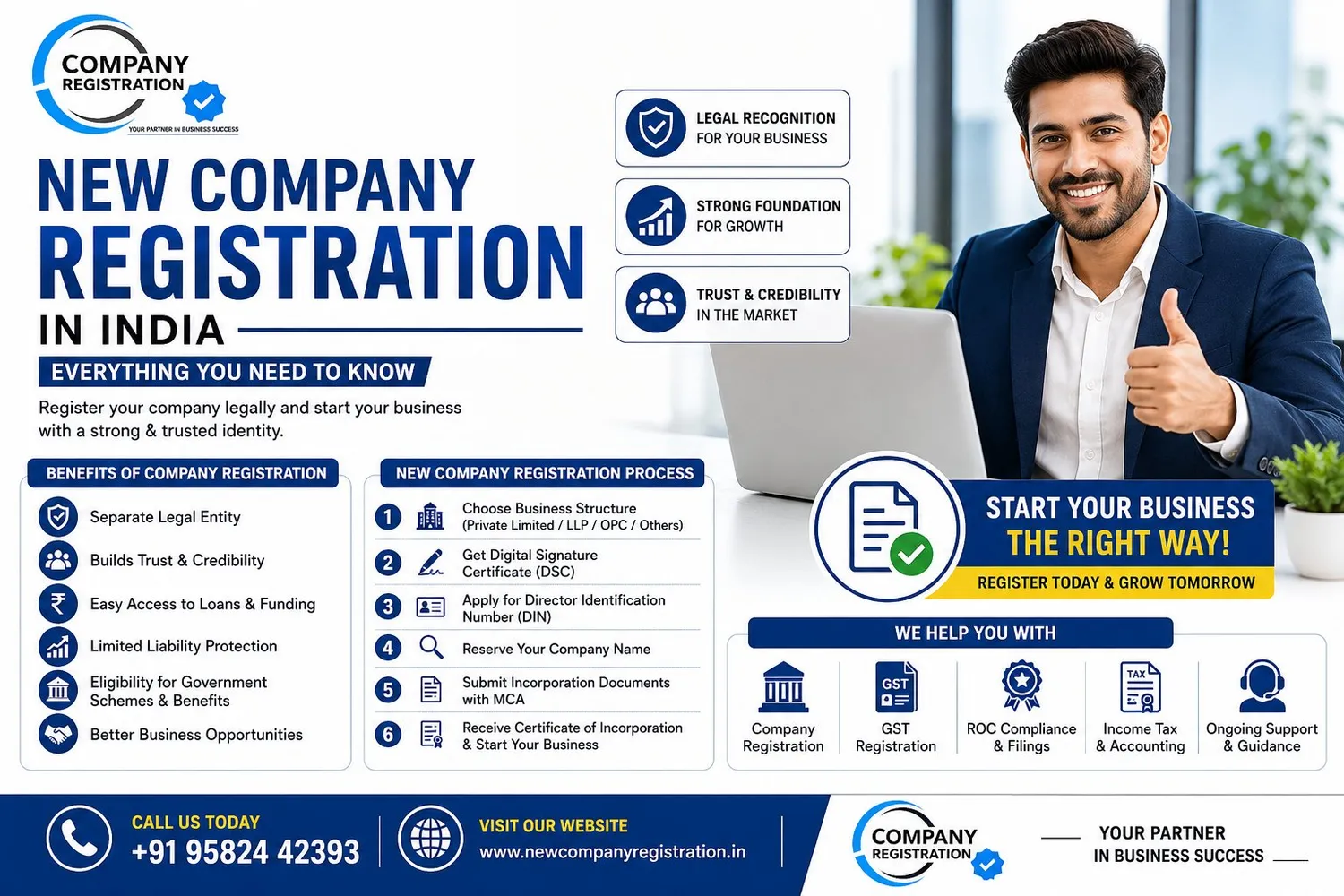
Starting a new business in India is an exciting opportunity, but before beginning operations, it is important to create a strong legal foundation. Registering your company not only gives your business a separate legal identity but also improves credibility among customers, investors, and financial institutions.
With the digital transformation introduced by the Ministry of Corporate Affairs (MCA), the process of new company registration in India has become easier, faster, and more transparent. Entrepreneurs can now complete most registration formalities online without visiting government offices.
This detailed guide explains the complete process, eligibility requirements, required documents, benefits, and important points to consider before registering a company in India in 2026.
What is New Company Registration in India?
New company registration is the legal process of incorporating a business entity under the Companies Act, 2013. Once registered, the company receives a Certificate of Incorporation issued by the Registrar of Companies (ROC), which confirms that the business legally exists.
A registered company can open a business bank account, enter into contracts, hire employees, raise investments, and operate with greater trust in the market.
The most common business structure chosen by startups and entrepreneurs in India is a Private Limited Company because it provides limited liability protection and a professional business structure.
Types of Companies That Can Be Registered in India
Before starting the registration process, entrepreneurs should select the right type of company according to their business goals. Common options include:
1. Private Limited Company
A Private Limited Company is one of the most preferred choices for startups and growing businesses. It requires a minimum of two directors and two shareholders. The liability of shareholders is limited to their investment in the company.
Many entrepreneurs choose this structure for pvt ltd company registration because it provides better credibility, easier funding opportunities, and a structured management system.
2. One Person Company (OPC)
An OPC allows a single entrepreneur to establish a company with limited liability protection. It is suitable for individuals who want to operate independently while enjoying the benefits of a corporate structure.
3. Limited Liability Partnership (LLP)
An LLP combines the flexibility of a partnership firm with the benefits of limited liability. It is commonly preferred by professional service providers and small businesses.
4. Public Limited Company
A Public Limited Company is suitable for larger businesses that plan to raise funds from the public through shares.
Eligibility Requirements for Company Registration in India
To register a company in India, certain basic conditions must be fulfilled:
- Minimum two directors are required for a Private Limited Company.
- At least one director must be an Indian resident.
- The company must have a unique name approved by the MCA.
- A registered office address in India is required.
- Directors and shareholders must provide valid identity and address proof.
Meeting these requirements helps ensure a smooth and successful registration process.
Documents Required for New Company Registration
The following documents are generally required for company incorporation:
Documents of Directors and Shareholders
- PAN card
- Aadhaar card or other identity proof
- Passport-size photographs
- Address proof such as bank statement or utility bill
- Email ID and mobile number
Documents Related to Registered Office
- Ownership proof or rent agreement
- Electricity bill or utility bill
- No Objection Certificate (NOC) from the property owner
Having all documents ready before applying can reduce delays during the approval process.
Step-by-Step Process of New Company Registration in India
Step 1: Choose a Unique Company Name
The first step is selecting a unique name for your company. The proposed name should not be similar to an existing registered company or violate trademark rules.
The name application is submitted through the MCA online portal for approval.
Step 2: Obtain Digital Signature Certificate (DSC)
Since the registration process is completely online, proposed directors need a Digital Signature Certificate to sign electronic forms submitted to the MCA.
Step 3: Apply for Director Identification Number (DIN)
Every company director must have a Director Identification Number issued by the Ministry of Corporate Affairs.
Step 4: Submit Incorporation Application
The company incorporation application is filed through the MCA portal using the required forms along with documents of directors, shareholders, and office address details.
Step 5: Receive Certificate of Incorporation
After verification and approval by the Registrar of Companies, the company receives the Certificate of Incorporation. This document confirms that the company has been officially registered.
After incorporation, businesses can apply for PAN, TAN, bank account opening, GST registration (if applicable), and other required licenses.
Benefits of Registering a Company in India
Registering a company provides several advantages:
Separate Legal Identity
A registered company is treated as a separate legal entity from its owners. This means the company can own assets, enter agreements, and take legal actions independently.
Limited Liability Protection
Shareholders are not personally responsible for company debts beyond their investment amount.
Better Business Credibility
Registered companies often gain more trust from customers, suppliers, and investors compared to unregistered businesses.
Funding Opportunities
A registered company structure makes it easier to attract investors and apply for business loans.
Long-Term Growth
A legally registered company provides a strong foundation for expansion and future growth.
Cost of Company Registration in India
The cost of registration depends on various factors, including:
- Type of company selected
- Government fees
- Professional service charges
- Authorized share capital
- Additional registrations required
Entrepreneurs should carefully understand all costs before starting the process to avoid unexpected expenses.
Why Choose Professional Assistance for Company Registration?
Although the MCA process is online, many entrepreneurs prefer professional assistance because company incorporation involves legal documentation, form filing, and compliance requirements.
Experts can help with document verification, name approval, filing procedures, and avoiding common mistakes that may delay registration.
Businesses looking for company registration in Delhi often choose professional services to complete the process smoothly and ensure compliance with government regulations.
Common Mistakes to Avoid During Registration
Some common mistakes entrepreneurs should avoid include:
- Choosing a company name without checking availability
- Providing incorrect documents
- Missing important compliance requirements
- Selecting the wrong business structure
- Delaying post-registration filings
Proper planning can make the registration process easier and faster.
Post-Registration Compliance Requirements
After receiving the Certificate of Incorporation, companies must complete certain compliance activities, such as:
- Opening a company bank account
- Maintaining statutory records
- Filing annual returns
- Maintaining proper accounting records
- Completing tax-related requirements
Following compliance rules helps avoid penalties and keeps the company in good legal standing.
Final Thoughts
Completing new company registration in India is an important step for entrepreneurs who want to build a professional and legally recognized business. A properly registered company provides credibility, limited liability protection, and better opportunities for growth.
Whether you are starting a small business or planning a scalable startup, choosing the right company structure and completing the registration process correctly can create a strong foundation for long-term success.
With proper documentation and awareness of the registration procedure, entrepreneurs can complete the incorporation process smoothly and begin their business journey with confidence.