In the intricate tapestry of business operations, budgeting stands as a cornerstone, guiding resource allocation and ensuring financial stability. Yet, the path to effective budgeting is not a one-size-fits-all journey. The choice between top-down and bottom-up approaches can significantly influence a company's financial health and strategic direction.
Understanding the Basics
At its core, budgeting involves creating a financial roadmap, outlining anticipated income and expenses over a specific period. The two primary approaches to budgeting, top-down and bottom-up, offer distinct perspectives on this process.
Top-Down Budgeting
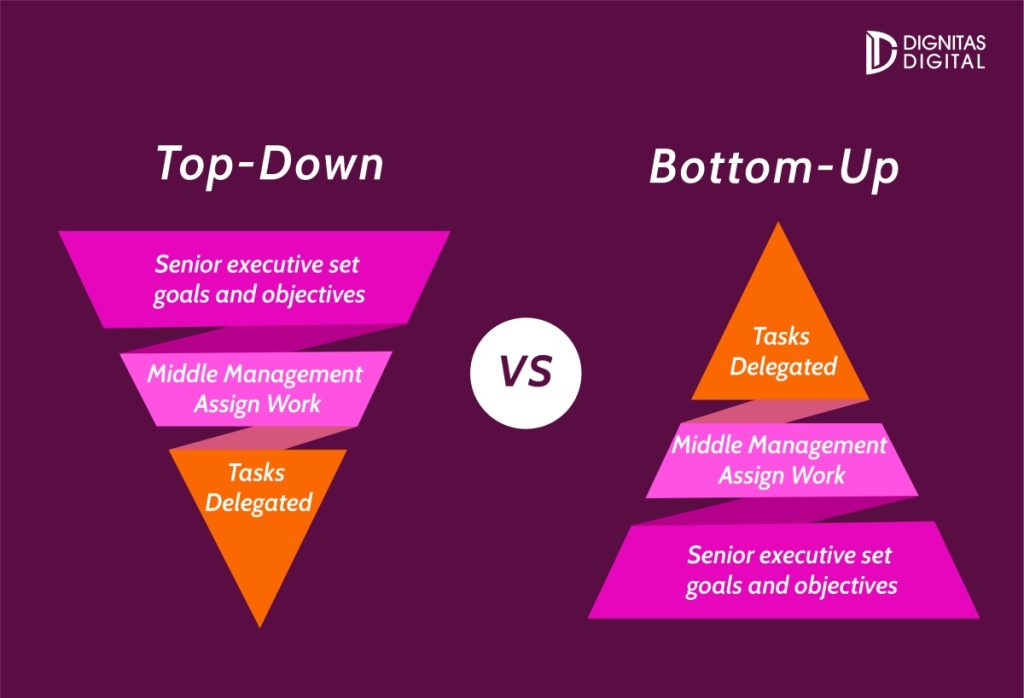
In a top-down approach, the budgeting process originates from the executive suite. Senior management sets the overall financial goals for the organization, and these targets are then cascaded down to departments. Each department is assigned a budget allocation, and they must operate within these predetermined limits.
Pros:
- Ensures alignment with the company's strategic objectives.
- Provides a centralized view of financial performance.
- Can be more efficient for larger organizations.
Cons:
- May not fully account for departmental needs and challenges.
- Can lead to a lack of departmental engagement and buy-in.
- May result in unrealistic expectations or constraints.
Bottom-Up Budgeting
In contrast, bottom-up budgeting starts at the departmental level. Each department creates its own budget based on its specific needs, projections, and expenses. These individual budgets are then aggregated to form the overall company budget.
Pros:
- Offers greater accuracy and detail in budget estimates.
- Encourages departmental involvement and ownership.
- Provides flexibility to adapt to changing circumstances.
Cons:
- Can be time-consuming and complex, especially for large organizations.
- May not always align with the company's overall strategy.
- This can lead to the overestimation of costs due to departmental biases.
Choosing the Right Approach
The optimal budgeting method depends on several factors, including:
- Company size and structure: Larger organizations may benefit from a top-down approach, while smaller, more agile companies may prefer a bottom-up approach.
- Organizational culture: A company with a decentralized culture may find bottom-up budgeting more effective, while a more centralized culture might favor top-down.
- Strategic objectives: If aligning budgets with overarching company goals is a priority, a top-down approach can be beneficial. However, if detailed departmental planning is crucial, bottom-up budgeting might be more suitable.
Hybrid Approaches
In many cases, a hybrid approach that combines elements of both top-down and bottom-up budgeting can provide the best results. This approach involves setting high-level financial targets from the top, while allowing departments to provide detailed input and adjust their budgets accordingly.
Beyond the Basics: Key Considerations
While the choice between top-down and bottom-up budgeting is crucial, it's essential to consider other factors that can impact the effectiveness of your budgeting process:
- Data-driven decision-making: Leveraging accurate and timely data is essential for effective budgeting. Consider implementing financial planning and analysis (FP&A) tools to support data-driven decision-making.
- Regular monitoring and adjustments: Budgets are living documents that need to be monitored and adjusted throughout the year to account for changes in business conditions.
- Employee engagement: Involving employees in the budgeting process can foster a sense of ownership and accountability. Consider implementing budgeting tools that facilitate collaboration and transparency.
- Technology adoption: Advanced budgeting software can streamline the process, improve accuracy, and provide valuable insights.
- Expert Advice: When deciding on the right approach for your business based on your budget, consulting industry experts can significantly help maximize your ROI.
Case Studies: Real-World Examples
To better understand the practical applications of top-down and bottom-up budgeting, let's examine a few real-world case studies:
Case Study 1: A Retail Giant
A multinational retail corporation, operating in numerous countries, faced challenges in maintaining consistent financial performance across its diverse business units. The company initially relied on a top-down budgeting approach, setting strict financial targets for each region. However, this led to a disconnect between regional needs and corporate goals.
To address this issue, the company implemented a hybrid approach. While top management set overall financial targets, regional managers were given more autonomy to develop their own budgets based on local market conditions and customer preferences. This hybrid approach improved financial performance and fostered a more engaged workforce.
Case Study 2: A Technology Startup
A rapidly growing technology startup found itself struggling to keep up with its rapid expansion. The company's initial bottom-up budgeting approach, while providing flexibility, often resulted in budget overruns and inconsistencies.
To address these challenges, the startup implemented a more structured top-down approach, setting clear financial guidelines and priorities. However, the company also ensured that departmental managers had input into the budgeting process, allowing for adjustments based on specific needs. This hybrid approach helped the startup achieve its financial goals while maintaining a collaborative work environment.
The Future of Budgeting: Emerging Trends and Best Practices
As businesses continue to evolve, so too must their budgeting practices. Several emerging trends and best practices are shaping the future of financial planning:
- Zero-based budgeting: This approach requires departments to justify every expense, rather than simply adjusting the previous year's budgets. It can help identify unnecessary costs and improve efficiency.
- Rolling forecasts: Instead of annual budgets, rolling forecasts provide a more dynamic view of future financial performance by continuously updating projections based on changing conditions.
- Scenario planning: By developing multiple financial scenarios, businesses can better prepare for potential risks and opportunities.
- Integration with business intelligence: Combining budgeting with business intelligence tools can provide valuable insights into financial performance and identify areas for improvement.
- Sustainability and ESG considerations: As sustainability and environmental, social, and governance (ESG) factors become increasingly important, businesses are integrating these considerations into their budgeting processes.
Related: How to Decide Your Digital Marketing Budget
Conclusion
The choice between top-down and bottom-up budgeting is a critical decision for any organization. By carefully considering the factors discussed in this article and adopting a hybrid approach when appropriate, businesses can create a budgeting process that supports their financial goals, fosters employee engagement, and drives long-term success.
Article Inspiration Source: Dignitas Digital Blog - Top-down vs Bottom-up Budgeting: Which Should You Use?