SEO has grown from a niche technical discipline into a full-scale operational engine. For agencies managing multiple clients, platforms, and industries, the challenge isn’t simply ranking—it’s scaling. Without a well-defined workflow, even the most talented teams risk getting buried in spreadsheets, missed deadlines, and fragmented strategies.
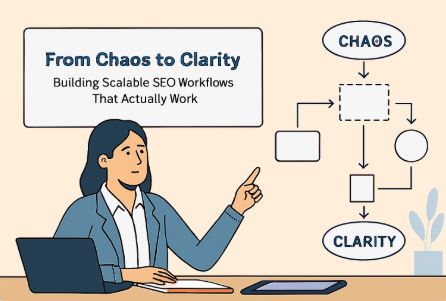
The answer isn’t more tools or endless meetings. It’s building scalable SEO workflows that actually work—systems that support growth, maintain quality, and adapt to inevitable changes without collapsing under pressure.
The Reality of SEO at Scale
Scaling SEO has little to do with publishing more content or acquiring more links. The real challenge lies in managing complexity. Modern agencies juggle:
- Multiple clients across both regulated and non-regulated industries
- Diverse platforms, from Google Sites and Medium to Reddit, Trustpilot, and Blogger
- Varied content types, including landing pages, reviews, articles, and outreach posts
- Compliance requirements in fields such as law, healthcare, and finance
- Constant algorithm updates and shifting search behavior
Without a structured workflow, these moving pieces quickly turn into bottlenecks. Visibility drops, quality slips, and campaigns stall. What’s needed is a framework that transforms chaos into clarity.
What Makes a Workflow Scalable?
A scalable workflow isn’t just repeatable—it’s resilient. It can handle volume, absorb setbacks, and maintain standards across every campaign. The hallmarks of a scalable system include:
- Modularity: Breaking tasks into reusable components such as briefing, writing, editing, and publishing.
- Automation: Streamlining repetitive actions like rank tracking, link monitoring, and reporting.
- Visibility: Ensuring the whole team knows what’s happening, what’s next, and who’s accountable.
- Adaptability: Building flexibility to pivot when algorithms change or client priorities shift.
- Compliance: Incorporating checkpoints to ensure content meets legal and regulatory standards.
When these elements are in place, SEO stops being a reactive scramble and becomes a predictable growth engine.
The SEO Workflow: From Brief to Publish
Let’s break down how a high-functioning workflow supports scale without sacrificing quality.
1. Strategic Briefing
Every project begins with a clear brief. This should include:
- The target keyword and anchor text (e.g., “scalable SEO workflows”)
- Platform-specific tone and formatting notes
- Compliance requirements for regulated sectors
- Calls to action and internal linking plans
Templates make briefs efficient, but they must allow room for nuance so content never feels formulaic.
2. Editorial Execution
Writers and editors collaborate to produce content that is:
- Aligned with search intent
- Adapted for the target platform
- Structured for clarity and SEO performance
- Legally sound when required
Quality control is non-negotiable. That means no recycled language, no keyword stuffing, and no generic filler. Every piece should feel native to the platform and valuable to its audience.
3. Technical Optimization
Before publishing, content goes through a technical layer to ensure it’s both accessible and indexable. This includes:
- Schema markup for services, reviews, and locations
- Mobile-first formatting and responsive layouts
- Internal link validation to maintain site architecture
- Accessibility checks against ADA and WCAG standards
The goal is to make content not only easy to read but also easy to crawl and compliant with accessibility regulations.
4. Publishing & Distribution
Content is then published on the appropriate platform—whether that’s Medium, Blogger, Google Sites, or a specialized forum. Effective distribution includes:
- Outreach to relevant communities
- Social amplification across brand channels
- Review monitoring and response management where applicable
- Ongoing link monitoring and performance tracking
Publishing is not the finish line—it’s the start of engagement.
5. Performance Monitoring
Finally, success must be measured by impact, not just volume. Key metrics include:
- Keyword movement tied to conversion performance
- Engagement signals such as time on page and scroll depth
- Sentiment and volume of reviews
- Audit pass rates in regulated industries
- Platform trust indicators such as authority growth and brand mentions
These insights feed back into the workflow, shaping future briefs and strategies.
Common Pitfalls in Scaling SEO
Even experienced teams stumble when scaling SEO. Common traps include:
- Over-reliance on automation: Tools are useful but can’t replace editorial judgment.
- Ignoring platform nuance: Content that works on Medium may fail on Reddit or niche forums.
- Neglecting compliance: Skipping legal review in regulated industries is a costly risk.
- Chasing vanity metrics: Page views mean little without conversions or trust signals.
- Poor communication: Without centralized visibility, teams lose alignment and efficiency.
Avoiding these pitfalls requires discipline, documentation, and strong oversight.
The Role of a Specialized SEO Agency
Scaling SEO isn’t just a technical challenge—it’s an operational one. A specialized SEO Agency brings the infrastructure, experience, and editorial rigor to build workflows that function at scale.
Agencies provide:
- Workflow templates tailored to both industry and platform
- Editorial standards that preserve quality under pressure
- Compliance checkpoints for industries with strict regulations
- Integrated reporting that links performance to strategy
- Cross-functional collaboration between content, technical, and outreach teams
In short, they don’t just support SEO—they engineer it. And in a digital environment where visibility must be earned, that kind of precision separates brands that grow from those that get stuck in guesswork.