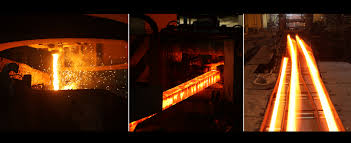
TMT bars are the cornerstone of modern construction, and Nakoda TMT Bars have earned a strong reputation for delivering superior strength, durability, and safety. But what makes Nakoda TMT Bars stand out? The answer lies in their world-class manufacturing process. In this detailed guide, we take you through every step of how Nakoda TMT Bars are produced—from raw material selection to the final product ready for construction.
1. Introduction to Nakoda TMT Bars
Nakoda TMT Bars are Thermo-Mechanically Treated reinforcement bars known for their exceptional strength, ductility, and corrosion resistance. Designed to endure the toughest environmental and structural challenges, Nakoda TMT Bars offer the ideal combination of strength and flexibility, making them a trusted choice for residential, commercial, and infrastructure projects.
2. Premium Raw Material Selection
At Nakoda, quality starts with the raw materials. The company sources high-grade iron ore, coal, limestone, and scrap steel to ensure the highest purity and strength in its products.
Materials Used:
- Iron Ore: Provides the base metal.
- Coke/Coal: Acts as a fuel and reducing agent.
- Limestone/Dolomite: Removes impurities.
- Scrap Steel: Adds eco-efficiency and helps maintain chemical balance.
Nakoda’s procurement standards guarantee consistency in raw material quality for uniform final output.
3. Iron Making in Blast Furnace
Raw materials are fed into a blast furnace, where a high-temperature reduction process transforms iron ore into molten hot metal.
Key Highlights:
- Hot air blasts convert coke and iron ore into molten iron.
- Slag (waste material) is separated and removed.
- The molten iron is tapped into ladles for steel refining.
Nakoda employs the latest technology to minimize impurities during this crucial stage.
4. Steel Making Using BOF or EAF
The molten iron is refined further in a Basic Oxygen Furnace (BOF) or Electric Arc Furnace (EAF) to reduce the carbon content and create high-quality steel.
Why It Matters:
- BOF introduces oxygen to remove excess carbon and impurities.
- EAF melts scrap steel using electric arcs for precise control.
- Alloying elements are added to enhance strength, corrosion resistance, and ductility.
Nakoda’s advanced refining techniques ensure that every batch meets international mechanical and chemical standards.
5. Secondary Refinement in Ladle Furnace
To ensure superior steel quality, the molten steel undergoes secondary metallurgical treatment in a Ladle Furnace (LF).
Benefits:
- Uniform temperature and chemistry
- Removal of sulphur and phosphorus
- Reduction of non-metallic inclusions
This meticulous attention to refinement distinguishes Nakoda TMT Bars with superior purity and performance.
6. Continuous Casting into Billets
Refined molten steel is poured into a Continuous Casting Machine (CCM), forming solid rectangular billets—the primary raw material for TMT bars.
Features:
- Controlled cooling for a fine-grain structure
- Billets are cut to standard lengths
- Automated process for accuracy and consistency
Nakoda uses high-end casting technology to ensure uniform microstructure and mechanical integrity in each billet.
7. Billet Heating in Reheating Furnace
Before rolling, billets are heated in an energy-efficient reheating furnace to a temperature of around 1100–1200°C.
Purpose:
- Makes the steel malleable for rolling
- Ensures homogeneous heat distribution
Nakoda’s furnaces are equipped with automatic temperature control to reduce energy usage and material wastage.
8. Hot Rolling in Fully Automated Rolling Mill
Heated billets are passed through a series of rolling stands that gradually reduce their cross-section to the required size.
Rolling Process:
- Roughing stands break down the billets.
- Intermediate and finishing stands shape the bar to final dimensions.
- Rib patterns are embossed for better bonding with concrete.
Nakoda’s high-speed, automated mills ensure consistent bar shape, size, and rib pattern, enhancing performance in RCC structures.
9. Quenching in Thermex Cooling System
Immediately after rolling, red-hot bars enter the Thermex Quenching System, where water jets rapidly cool the surface.
Results of Quenching:
- Outer surface becomes hard martensite.
- Core remains hot and ductile.
This rapid cooling forms the base of the Thermo-Mechanical Treatment (TMT) process. Nakoda’s precision quenching delivers optimal mechanical properties with every bar.
10. Self-Tempering Phase
The heat retained in the core flows outward, tempering the martensitic outer layer. This process, known as self-tempering, reduces brittleness and enhances toughness.
Microstructural Transformation:
- Strong yet flexible outer layer
- Tough ferrite-pearlite core
Nakoda’s controlled self-tempering ensures better earthquake resistance and structural flexibility.
11. Atmospheric Cooling on Cooling Beds
Bars are laid on long cooling beds where they are naturally cooled under atmospheric conditions. This helps the inner core to achieve a ferrite-pearlite structure.
Final Structure of Nakoda TMT Bars:
- Surface: Tempered Martensite
- Middle Layer: Bainite
- Core: Ductile Ferrite-Pearlite
This layered structure ensures superior bendability without compromising strength.
12. Cutting, Bundling, and Tagging
Once cooled, the bars are cut into standard lengths (typically 12 meters), bundled automatically, and tagged with full traceability.
Automation in Bundling:
- Minimizes human error
- Ensures uniform bar length
- Barcode-enabled tags for batch tracking
Nakoda’s packaging and dispatch process reflect the same precision found in every other step.
13. Rigorous Quality Testing
Every batch of Nakoda TMT Bars undergoes stringent quality checks in NABL-accredited laboratories.
Tests Performed:
- Yield strength, tensile strength, and elongation
- Chemical analysis
- Bend and rebend tests
- Corrosion and fatigue resistance
Only products meeting the exact specifications of IS 1786 (Indian Standards) or other international benchmarks are released to the market.
14. Eco-Friendly and Safe Manufacturing
Nakoda integrates sustainability and safety into every aspect of its production process.
Sustainability Measures:
- Water recycling in the quenching system
- Emission control and dust extraction units
- Energy-efficient equipment and lighting
Worker Safety:
- Real-time monitoring systems
- PPE and automation to reduce human risk
- Continuous training and compliance protocols
This commitment to sustainability and safety ensures that Nakoda not only builds structures but also protects the environment and people.
15. Why Choose Nakoda TMT Bars?
Nakoda TMT Bars are manufactured using state-of-the-art technology and strict quality control, ensuring:
- High Yield Strength for heavy loads
- Excellent Ductility to resist seismic shocks
- Superior Weldability and Bonding with concrete
- Corrosion Resistance for longer life
- Trusted Compliance with IS 1786 and global norms
Whether it’s a high-rise, flyover, or factory, Nakoda TMT Bars are built to perform in every condition.
Conclusion
The manufacturing of Nakoda TMT Bars is a carefully calibrated process that transforms raw iron into high-performance reinforcement bars. Each phase—from sourcing to casting, quenching to cooling—is optimized for quality, strength, and sustainability. By investing in advanced technologies, rigorous testing, and environmental responsibility, Nakoda continues to set the benchmark in the Indian TMT industry.
Choosing Nakoda means choosing reliability, strength, and peace of mind—one bar at a time