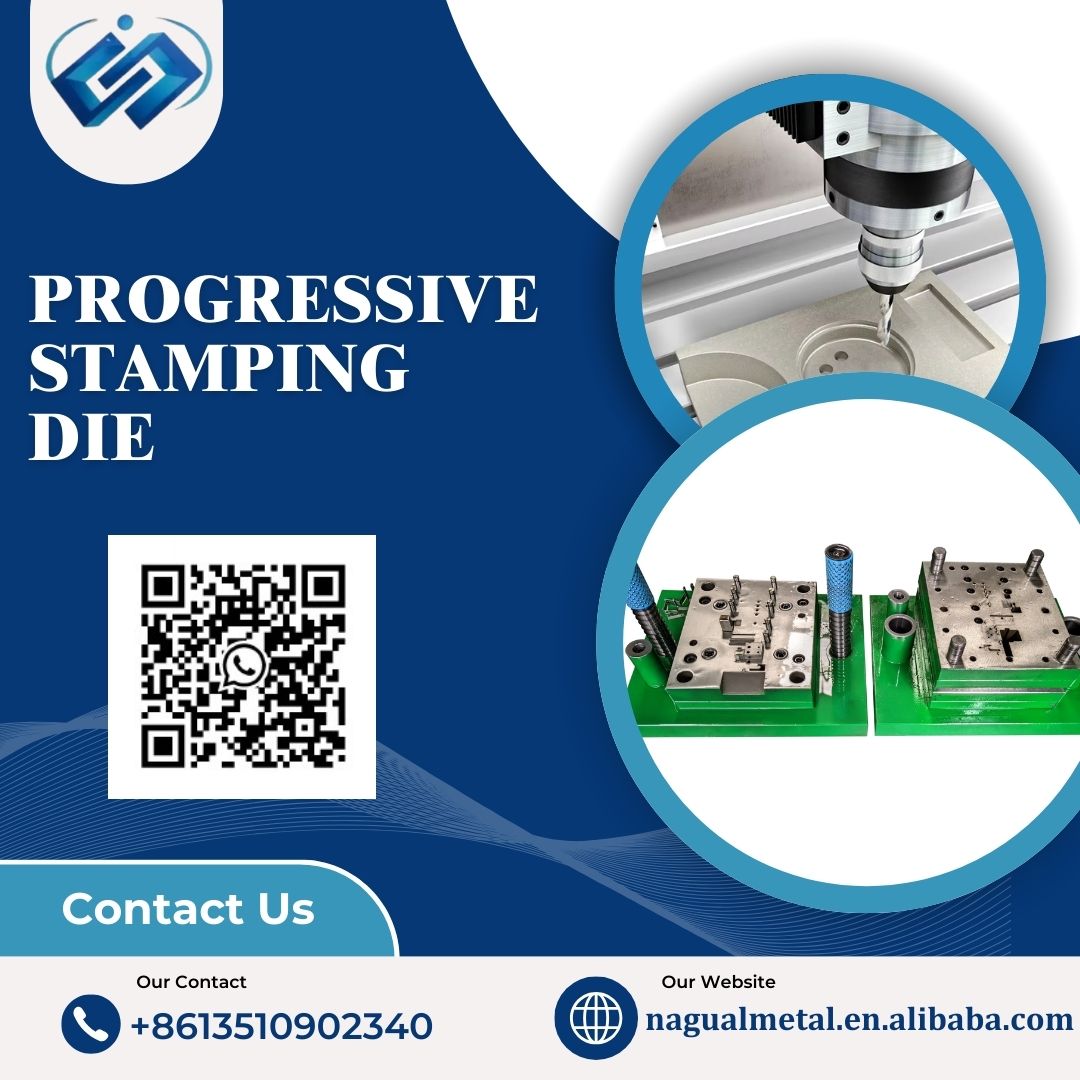
Progressive stamping dies are critical tools in metalworking, enabling the efficient production of complex parts at high volumes. Used in industries such as automotive, aerospace, and consumer electronics, this process combines precision, speed, and cost-efficiency, making it indispensable for modern manufacturing.
What is a Progressive Stamping Die?
A progressive stamping die consists of a series of stations within a single die, each performing a unique operation on a metal strip as it progresses through the machine. Actions like cutting, punching, bending, and coining are performed in sequence, and the final part is separated from the strip in the last station.
Advantages of Progressive Stamping Dies:
- High Efficiency: Multiple operations are completed in one continuous process, significantly reducing production time.
- Cost-Effective: The process minimizes material waste and requires less manual labor, making it ideal for large-scale production.
- Consistency and Precision: The automated nature of the process ensures uniformity and high accuracy across all parts.
- Versatility: Progressive dies are used for producing a wide range of metal components, from small connectors to complex brackets.
Applications:
Progressive stamping dies are widely used in industries that require high-precision parts, including the automotive sector for components like chassis and brackets, and the electronics industry for intricate connectors and enclosures.
Conclusion:
Progressive stamping dies are the backbone of efficient metal part manufacturing. Their ability to deliver precision and speed at scale makes them an invaluable asset for industries focused on innovation and efficiency.