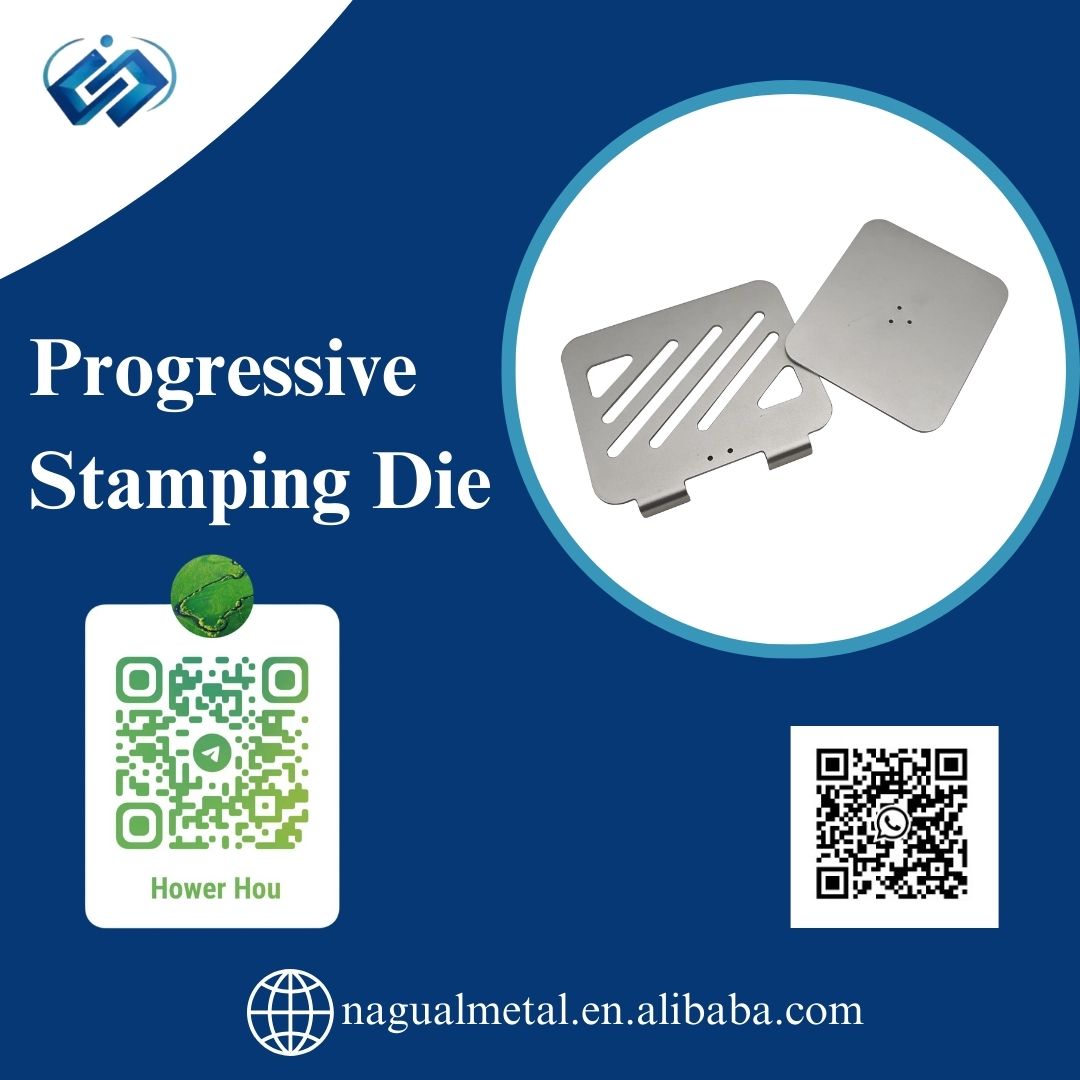
Progressive stamping dies are essential tools in the manufacturing industry, enabling the production of complex metal parts with high precision and efficiency. This method involves a series of stations in a die, each performing a distinct operation, such as cutting, bending, or punching, as the metal strip progresses through the machine.
How Progressive Stamping Dies Work:The process begins with feeding a coil of metal into the stamping press. The metal strip moves through a sequence of stations, with each station performing a specific action on the material. These stations are strategically designed within a single die set, allowing for multiple operations to be completed in one go. By the time the strip reaches the final station, the finished part is cut free, ready for use. This efficient process minimizes waste and maximizes production speed.
Advantages of Progressive Stamping Dies:
1. High Efficiency and Precision:Progressive dies can produce intricate metal parts at a rapid pace, making them ideal for high-volume production. The accuracy of each station ensures consistent quality, reducing the need for additional finishing processes.
2. Cost-Effective Production: Once set up, progressive stamping requires minimal labor and reduces material waste, making it a cost-efficient solution for producing large quantities of parts.
3. Versatility: This method is used across various industries, including automotive, electronics, and appliance manufacturing, for producing parts like connectors, brackets, and metal clips.
Conclusion: Progressive stamping dies are a cornerstone of efficient, high-volume metal part production. Their ability to perform multiple operations in a single pass through the press saves time, reduces costs, and delivers precise, high-quality components, making them invaluable in modern manufacturing.