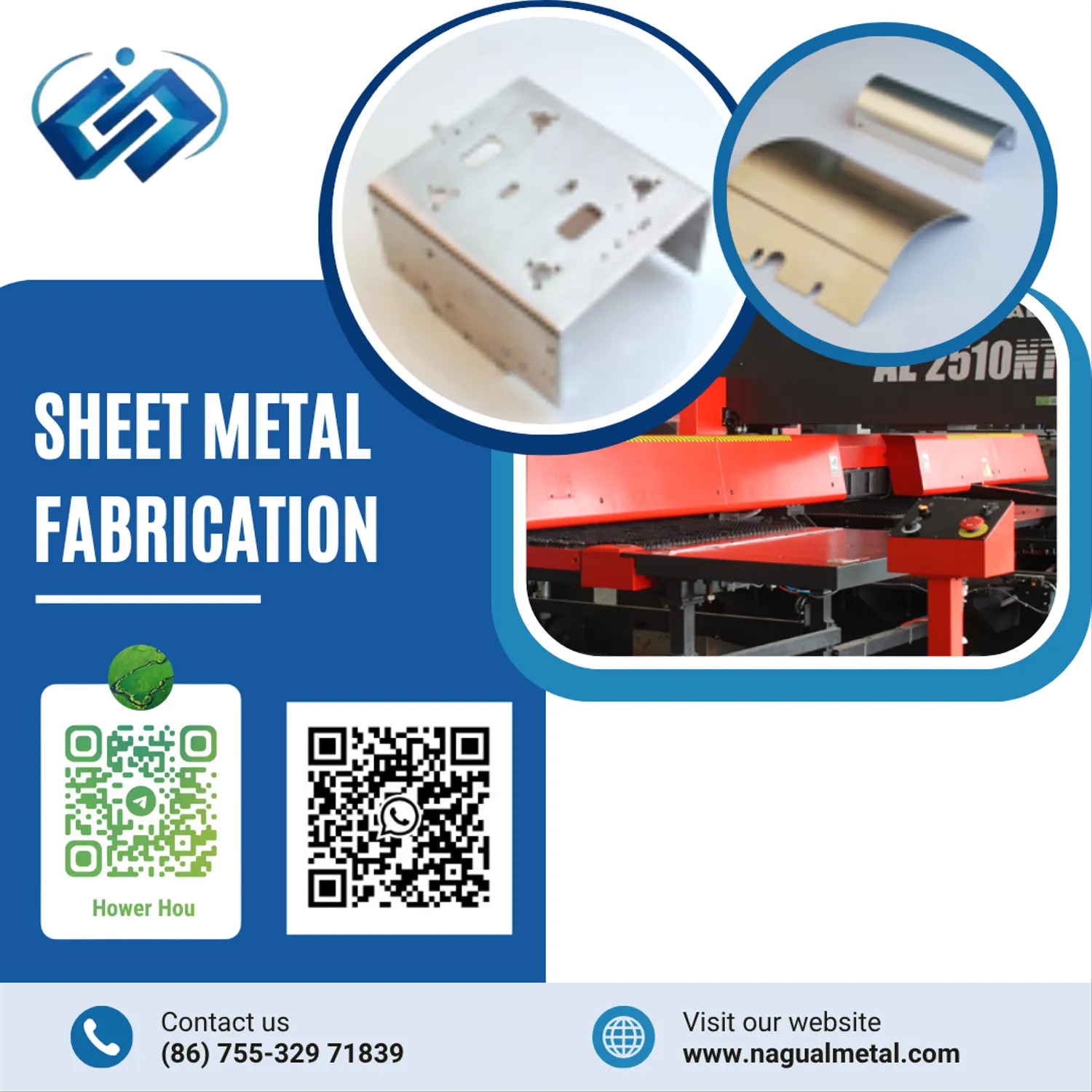
Sheet metal fabrication is a critical process in modern manufacturing, involving the cutting, bending, and assembling of metal sheets into functional products or components. This method is widely used across various industries, including automotive, aerospace, construction, and electronics, due to its cost-effectiveness, durability, and design flexibility.
The process begins with selecting the appropriate type and thickness of metal—commonly steel, aluminum, brass, or copper. Using tools like laser cutters, water jets, or plasma torches, the metal is precisely cut into desired shapes. It is then bent or formed using press brakes or rolling machines, and finally assembled using welding, riveting, or fasteners.
One of the main advantages of sheet metal fabrication is its ability to produce both simple and highly complex designs with tight tolerances. This versatility makes it ideal for custom parts and prototypes, as well as large-scale production. Additionally, advancements in CNC (Computer Numerical Control) machining and automation have improved production speed, consistency, and accuracy.
Sustainability is another benefit, as metal scraps can be recycled, reducing material waste and environmental impact. Moreover, fabricated sheet metal offers excellent strength-to-weight ratios, corrosion resistance, and long service life.
In conclusion, sheet metal fabrication remains a cornerstone of industrial production, combining technology, craftsmanship, and innovation. Its adaptability and efficiency continue to support the creation of high-performance components essential to everyday life and modern infrastructure.