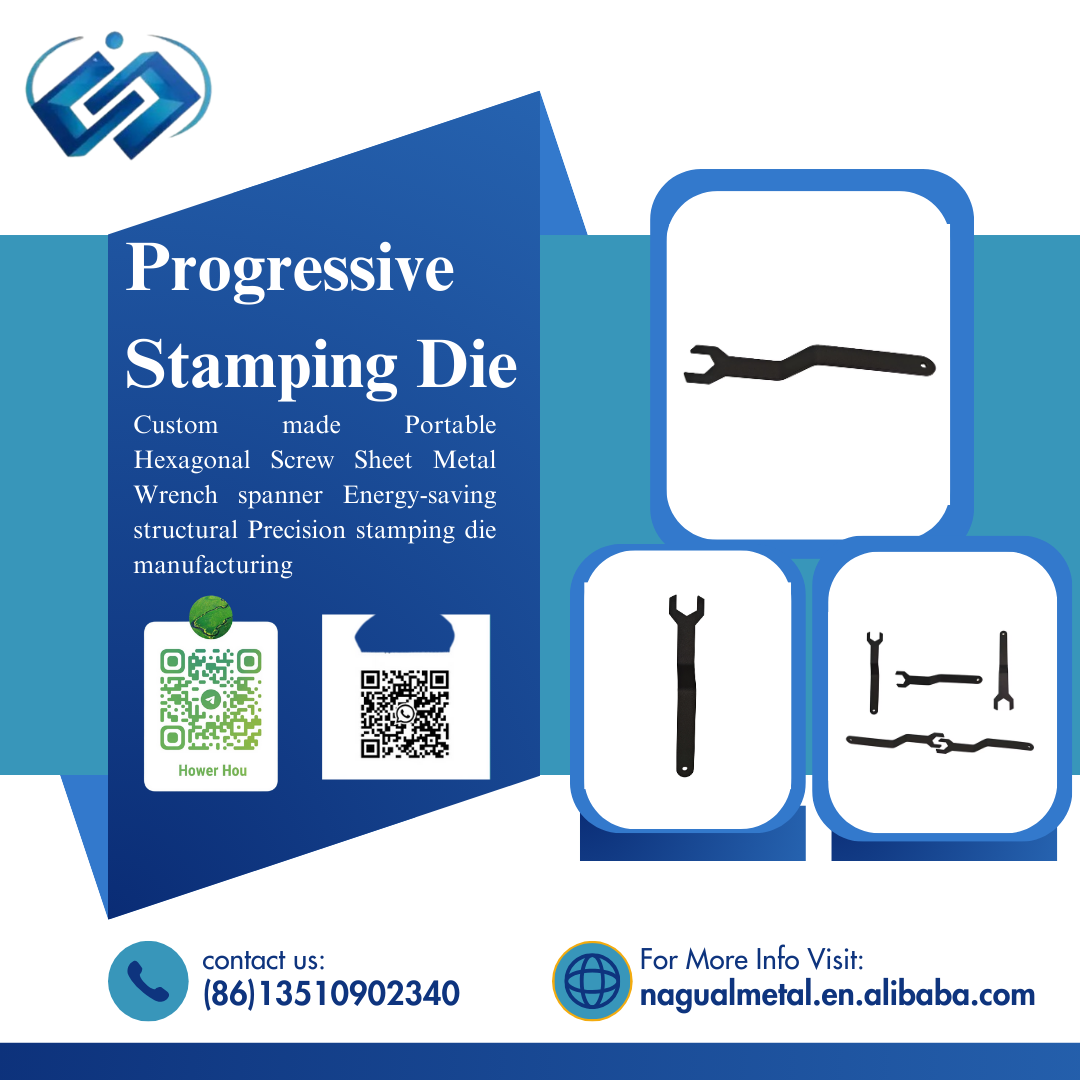
Progressive stamping dies are critical tools in the manufacturing industry, enabling the efficient production of intricate metal parts. Used extensively in sectors like automotive, electronics, and consumer goods, these dies streamline the fabrication process, enhancing productivity and precision.
A progressive stamping die consists of a series of workstations arranged within a single tool, each performing a specific operation on a metal strip as it progresses through the die. The process begins with feeding the metal strip into the die, where it undergoes a sequence of operations such as punching, bending, and coining. Each station incrementally shapes the metal, and by the time the strip exits the die, a fully formed part is produced. This continuous, automated process minimizes waste and reduces cycle times, making it ideal for high-volume production.
One of the main advantages of progressive stamping dies is their ability to produce complex parts with tight tolerances and high repeatability. This precision ensures that each part is consistent, which is crucial in industries where accuracy is vital. Additionally, progressive dies can work with various metals, including steel, aluminum, and copper, providing flexibility for different applications.
The design and maintenance of progressive stamping dies are crucial to their performance. Advanced computer-aided design (CAD) software is used to create detailed and optimized die designs, ensuring efficiency and durability. Regular maintenance is essential to keep the dies in optimal condition, prolonging their lifespan and maintaining production quality.
In conclusion, progressive stamping dies are indispensable in modern manufacturing. Their ability to produce high-quality, complex parts quickly and efficiently makes them a key asset in today’s fast-paced industrial landscape, driving innovation and maintaining competitive advantage.