1967.
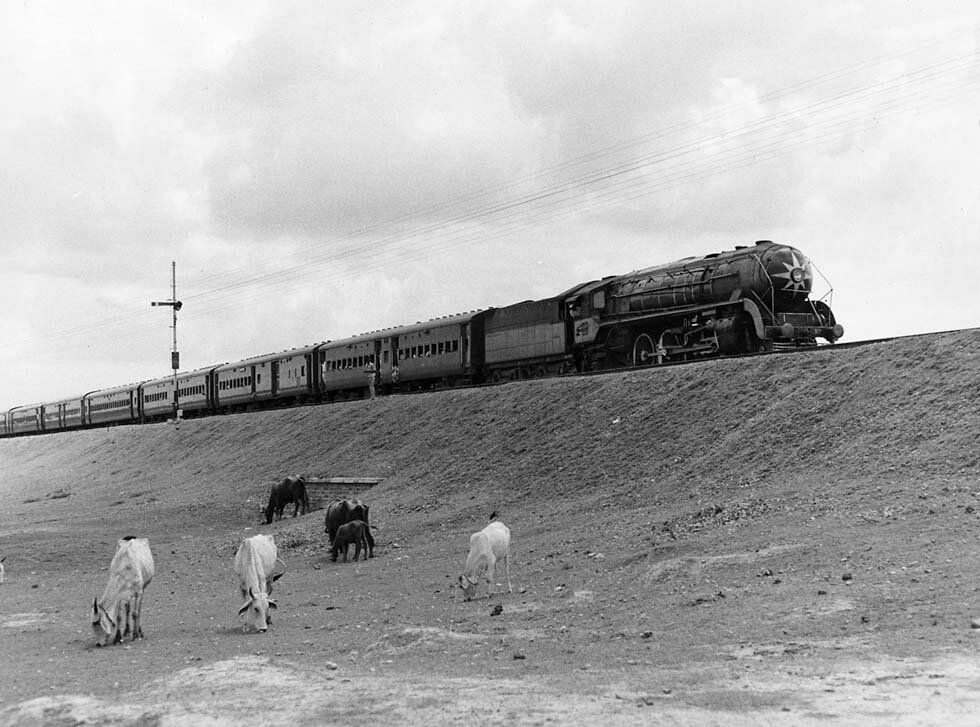
Toofan Mail at a Signal.
That year my cousin and I travelled to Calcutta and spent our summer holidays with my Uncle's family.
If you're looking for a definitive experience in India, then a train journey is a must. Nothing can showcase rural India better than a train journey, a trip that cuts through pastoral landscapes, over bridges across mighty rivers, chugging along dusty or fertile green plains. It's also a tribute to engineering and grudgingly the British.
Today you can book your Railway ticket on your phone, but back in the day, one had to physically go to the Railway Station stand in serpentine queues and come prepared with three travel options.
The booking Clerk's were in cahoots with the unscrupulous touts who sold tickets on the black market obviously for a profit.
And so it was that my cousin and I boarded the Toofan Mail, an omnibus train from Delhi to Calcutta in May 1967.
These days, despite the Rajdhanis, the Shatabdi's and even the Gatimaan's, trains have been reduced to mere numbers.
An interesting anecdote is the old name for train no 12345. It was previously known as the Saraighat Express and ran between Howrah and Guwahati.
The train was named after the Battle of Saraighat (1671), fought between the Mughals and Ahom rulers. The Ahom kingdom reigned the middle and upper reaches of the Brahmaputra valley from 1228 to 1826, longer than the Mughal Empire that ruled most of India from 1526 to 1857.
In the earlier days, trains had names, and some of the famous ones were iconic, like the Grand Truck Express or the Frontier Mail and yes, the "Toofan Express", which ran for the first time on June 1. 1931, between Delhi and Howrah 7 UP and 8 DOWN.
You may be surprised to know there never was a train called Toofan Mail. Officially, it was always Toofan Express. The name Toofan Mail probably stuck.
And so, she ran from 1931 for ninety-one years until May 31. 2020. Possibly a victim of Covid-19?
Back on Toofan mail, we travelled in an Easterly direction, past towns and cities, along this well-trodden path which the Mughals had taken and later the East India Company would take to colonise India and her people.
We went past Kanpur, Allahabad, Mughal Sarai, Patna, Asansol and Bandel, finally steaming into Calcutta under the watchful gaze of its most visible landmark. The Howrah Bridge.
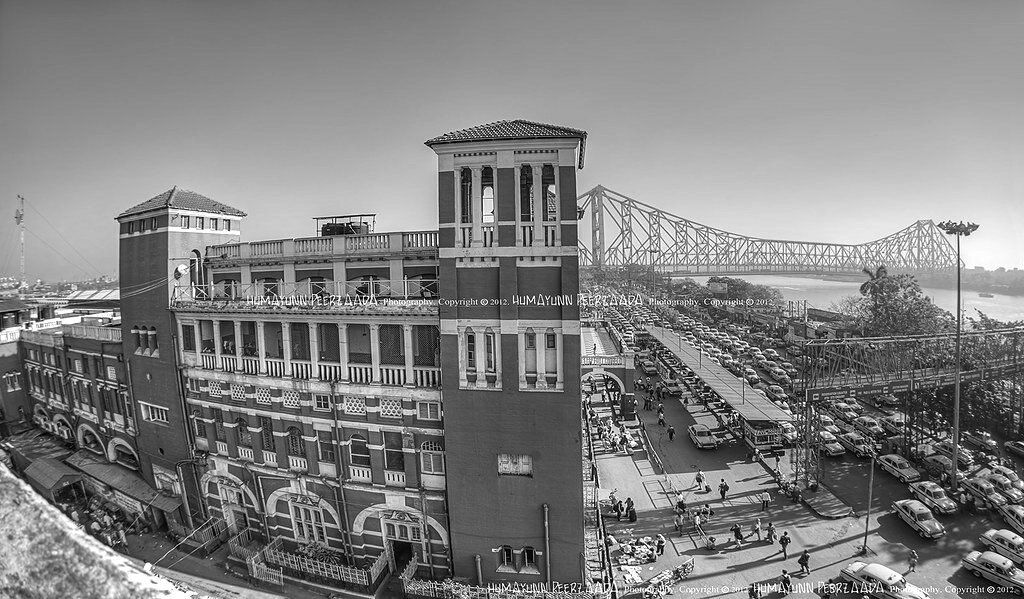
Howrah Station & bridge. Image courtesy Humayunn Peerzada
Attempting to get rid of its colonial past, Calcutta, in the year 2001, reverted to its phonetic and somewhat original name Kolkatta. Lonely Planet describes it thus.
India's third-largest city is a daily festival of human existence, simultaneously noble and squalid, cultured and desperate, decidedly futuristic though still in transition.
To the Westerner, it is the picture-postcard setting of human suffering at its worst that was fictionalised by Dominique Lapierre, author of the novel "City of Joy". It is the story of an American doctor who experiences a spiritual rebirth in an impoverished section of the city.
Calcutta was established in 1686, when Job Charnock, a trader of the British East India Company, purchased three villages (Sutanuti, Kolkata, Gobindapur) from Sabarna Chowdhury, a wealthy landlord.
While Calcutta grew into a Colony, Murshidabad, a city 110 miles further north, was the capital of Bengal. In its heyday, it held a vast territory of Eastern, Western and South-Eastern India. It was absorbed into the ever-expanding dominion of the Mughal Empire in 1576 and, in 1757, became the first territorial possession of the British East India Company.
It was time to visit this great city. My cousin and I looked forward to the outings, and our maiden trip was to the Victoria Memorial and the Maidan. As the name suggests, it is an all-marble memorial built on the orders of Lord Curzon to commemorate the passing away of Queen Victoria. The lonely planet asks you to think of it as the U.S. Capitol meets the Taj Mahal.
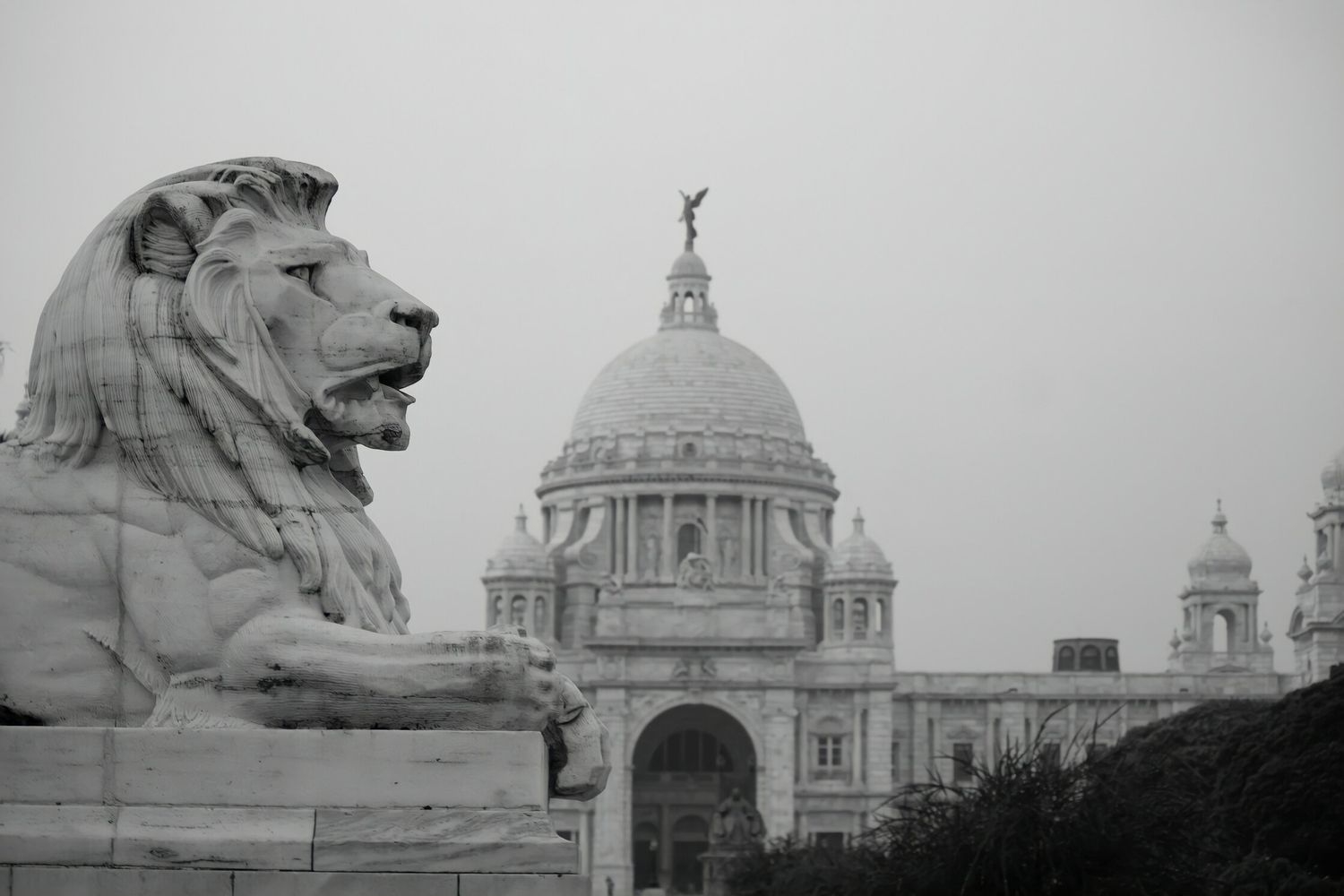
Victoria Memorial. Image courtesy Vishal Rohtagi
We got our first colonial history lesson, and upon returning to Delhi, I had to write a 1000 word essay. There were no search or research tools at my disposal. I wrote it from memory.
The Maidan is where Kolkata's residents congregate for walks, spirited cricket and football matches, family outings, dates, tonga (horse-drawn carriage) rides and general idling. The grounds are flanked by the Victoria Memorial and St Paul's Cathedral to the south and the Hooghly riverbanks to the west. A tram line cuts through the greens, and hopping onto one of the carriages for a slow ride is great fun. There's an important feature that lonely planet left out. The Maidan is also the grazing ground for thousands of sheep that act as lawnmowers. Courtesy Lonely Planet
Eating out was forbidden; however, we got to taste the famous RosoGullaa, a traditional Bengali sweet. Soft spongy balls made of fresh cottage cheese and drip soaked in sugary syrup. I wouldn't go anywhere near it today. But a ten-year-old has cast iron intestines.
We continued with our perambulations, taking in the sights and sounds of Calcutta over the next two weeks.
I remember our walk over the Howrah bridge and then along the Western Bank of the Hooghly river before jumping into the iconic Yellow Cab that has come to symbolize the city of joy. They owe their success and longevity to the King of the Indian Roads, the ubiquitous "AMBASSADOR" car.
King of Indian Roads
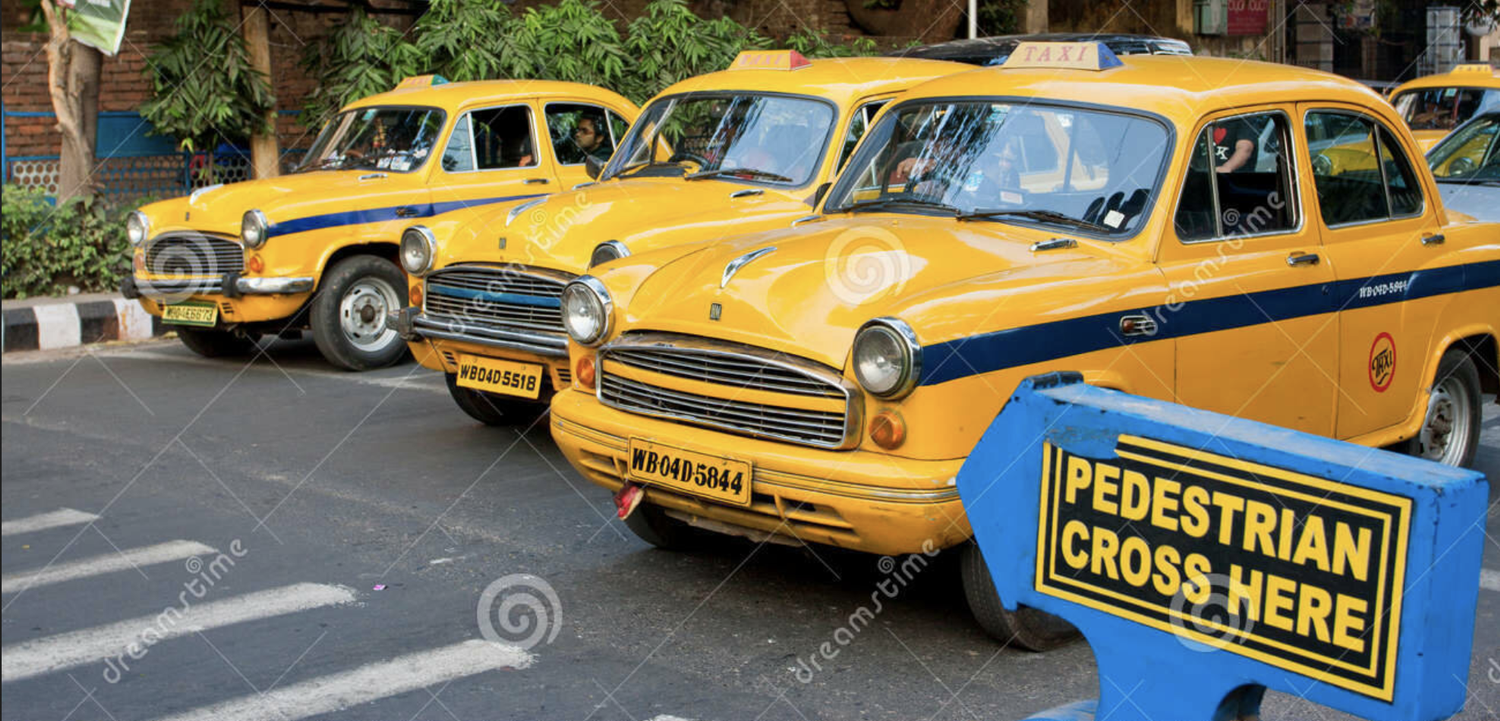
An antiquated-looking automobile with a bowler hat of a roof called the Ambassador. She is a part icon, part curiosity, a beast of an automobile that easily seats seven, stands high off the ground and usually offers a ride with all the smoothness of an earthquake as described by an NYTimes journalist who virtually wrote its obituary in 1999.
But she carried on for another two decades before production finally stopped in 2014, and the coup de grace was delivered by Covid-19 that put the yellow cabs of Calcutta out of business.
But there was another mode of transport. The human rickshaw (called tana rickshaw in Bengali) is Calcutta's most recognizable symbol. It became the preferred mode of transportation of the Bhadralok's (bourgeois), a status symbol of sorts.
An Indian website describes it best. Like tea, the trams, cricket and Gothic architecture, the hand-pulled rickshaw symbolizes colonial India. These light-weight, wooden rickshaws pulled by men of thin but sturdy body frame, wrapped in a lungi from the waistline down to their knees, run through waterlogged lanes and crowded marketplaces in sharp contrast to the city's modern infrastructure with skyscrapers and flyovers.
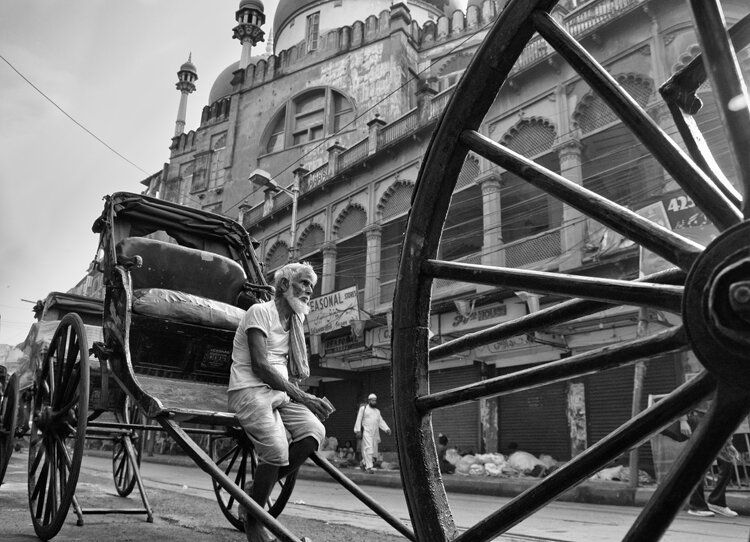
Courtesy Satyaki Basu
The flourishing Opium trade between the East India Company and China brought an influx of fleeing Chinese nationals into Calcutta in the late XIX and early XX centuries. Arriving from Canton, Shanghai and Hong Kong, they introduced the Chinese Rickshaw to Calcutta.
They plied unchecked and unregulated through the streets of Calcutta until the British passed an act in 1919 formally recognizing them as passenger transport. While their counterparts in South East Asia disappeared over time, the tana rickshaw survived well into the 21 century thanks to its tenacious pullers.
My Uncle lived in BallyGunge, an affluent neighbourhood where the educated Bengali middle class lived. In the mid-eighteenth century, the East India Company purchased some 33 villages that lay in the surroundings of the settlement and reorganized them into one bloc. BallyGunge was one of them and grew into a fashionable English suburb before the Bengali bourgeoisie took over. Villas, three-storied homes, tree-lined avenues are what I remember, and of course, the Amby. Your status was incomplete if you didn't own one or at least came and went by in one of those yellow cabs!
It is hard to imagine that Calcutta went from three sleepy villages in a short span of 335 years that the British acquired to become India's third-largest city. From the Mughals to Mamata Banerjee via Mir Jaffer, Mahatma Gandhi and Mother Teresa, I can't think of any other city with such an array of characters who played their roles in shaping the destiny of Calcutta and India.
The Calcuttan's and the Bengali's in particular, have excelled in every sphere. Arts, literature, music, cinema, poetry, journalism, fashion design, sports, endless debate, food addiction, Communism, trade unions, you'll always find a stellar Didi or Dada at the forefront. Kolkatta, to me, is the quintessential cosmopolitan city of India.
It would be another 20 years before I returned to the city of three villages. Only this time, BallyGunge was unrecognizable, and I stayed at Grand Dame of Chowringhee, The Oberoi Grand, an establishment par excellence. I have made several trips since, forged new friendships, discovered new places, and my last trip took me to the erstwhile capital of Bengal. Murshidabad.
But in 1967, our trip had come to an end, and it was time to return home. If the train journey of 1964 was an initiation into travel, the Calcutta trip in 1967 was coming of age. Eight years later, I would take my first steps into the World of Travel.