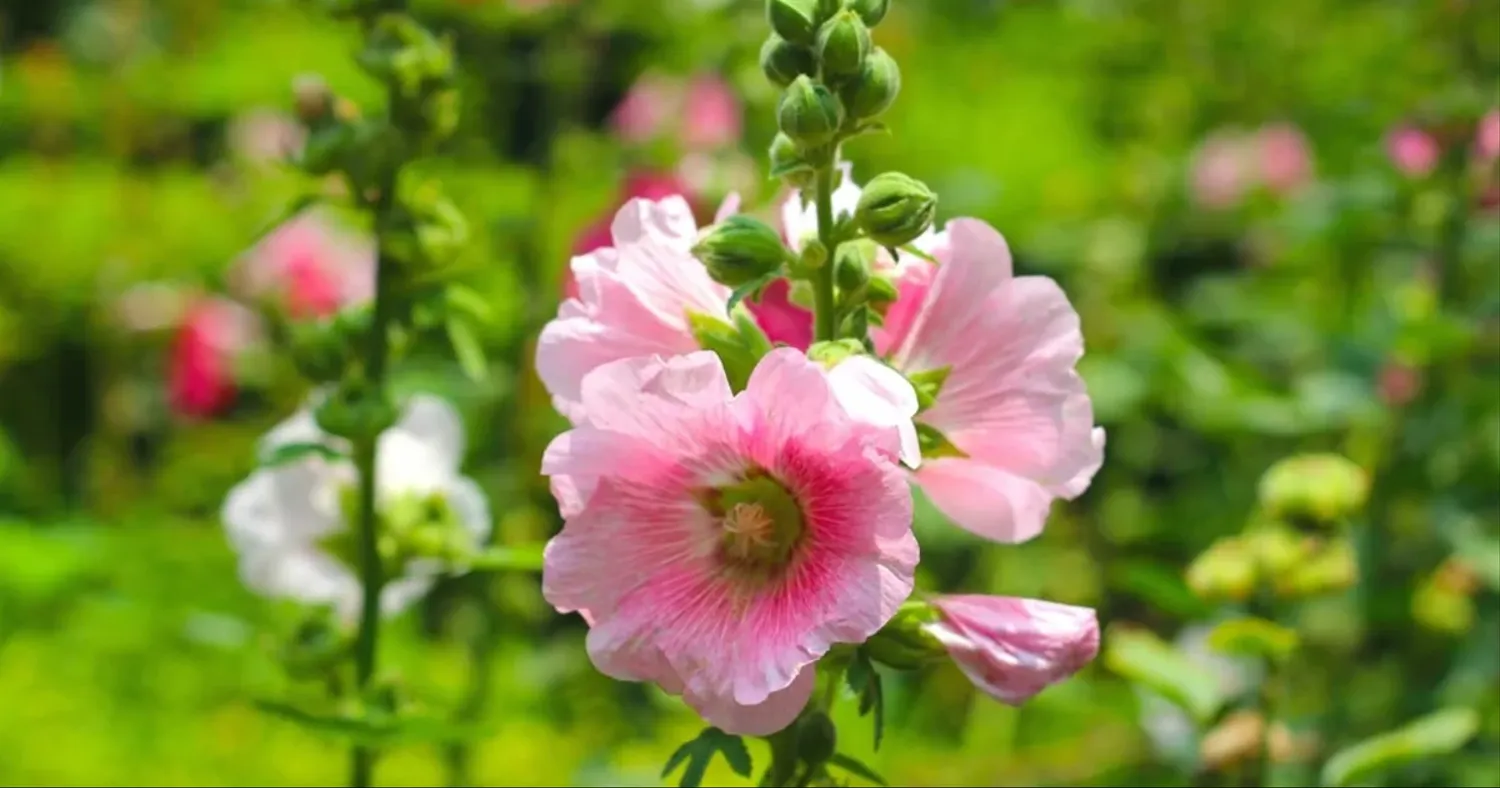
Hollyhocks (Alcea rosea) are beautiful, their tall spikes of colored, ruffled flowers producing old-fashioned cottage-garden charm wherever they're planted. To provide hollyhocks with their fullest, richest flower show, spring fertilizing of hollyhocks at the proper time is essential. The following step-by-step season-by-season guidance will instruct you on how and when to fertilize hollyhocks to get their greatest flowering potential.
Spring – The Basis of Healthy Growth
When hollyhocks begin to break their winter dormancy early in spring, they need a boost of nutrients to spur early growth. Fertilize at the time the first leaf is visible using a balanced fertilizer containing an NPK ratio of 10-10-10 or 20-20-20. This fosters robust root and leaf development, which will serve as a foundation for lush flowering during the rest of the season. Organic alternatives such as well-rotted compost or fish emulsion also contain necessary nutrients and condition the soil.
Early Summer – Promoting Bud Formation
As soon as hollyhocks start producing flower buds early in the summer, change to a phosphorus-type fertilizer, for example, one with an NPK rating of 5-10-10. Phosphorus promotes bud and bloom health development. Fertilize every four to six weeks, as directed on the manufacturer's label. Liquid fertilizers provide quick absorption, but granular slow-release fertilizers release the nutrients over a longer period.
Mid to Late Summer – Facilitating Bloom Production
At the time of maximum flowering, hollyhocks can be given a steady supply of nutrients. A flowering-inducing fertilizer with low nitrogen and increased phosphorus and potassium will aid in flower development and avoid leafy growth. If an organic schedule is being used, liquid seaweed extract or bone meal are ideal to give the plants nutrients and enrich the soil.
Fall – Preparing for Dormancy
Once the flowering period is over, hollyhocks start preparing for winter dormancy. Fertilizing now should be light. Some compost or a balanced organic fertilizer can be introduced into the soil to carry on root system during winter. Fertilization in autumn using high-nitrogen fertilizers must be avoided as it would stimulate new growth that will not be able to survive winter.
Further Tips for Best Fertilization
Soil Testing: Analyze the soil to determine nutrient deficiencies and adjust fertilizing accordingly.
Watering Practices: Water hollyhocks deeply after fertilization to allow nutrients to be taken up and prevent root burn.
Mulching: Mulch around the plants to retain moisture and slowly release nutrients as organic materials break down.
Avoid Over-Fertilizing: Excessive nitrogen will create more foliage with fewer flowers, so always follow application rates.
By fertilizing hollyhocks at the right times during their growth phase, you can make them produce lush lovely flowers year-round. With proper upkeep, your garden will be adorned with the stately beauty of hollyhocks all summer long.