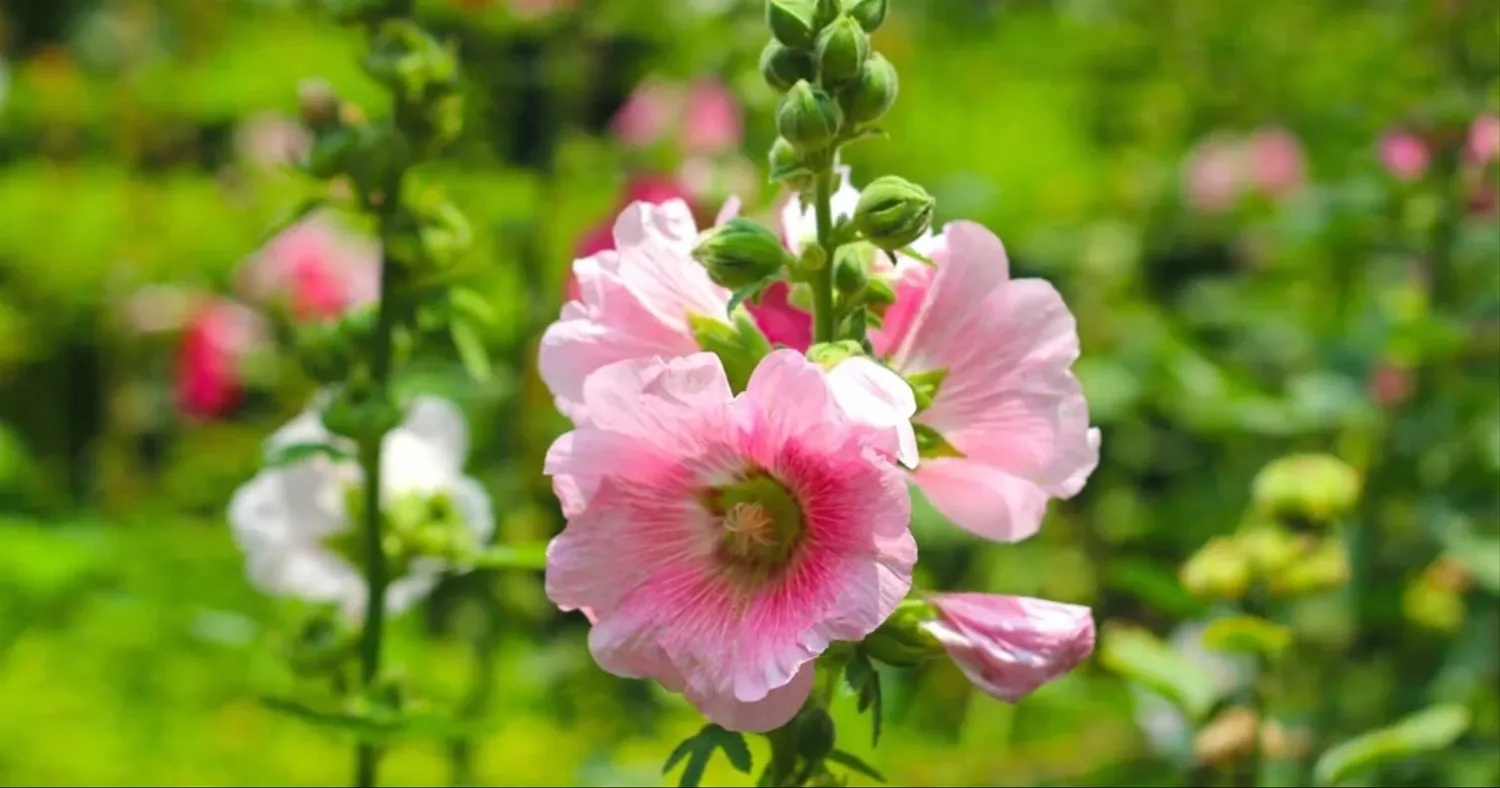
Hollyhocks (Alcea rosea) are long-lived, stately perennial garden favorites that come in grand, dignified towers of multi-colored flowers. These old cottage garden flowers bring height, texture, and an air of age-old elegance to the garden. Selecting the best hollyhock variety for your garden involves taking climate, color scheme, space, and disease tolerance into account. Here is how to choose the best hollyhock varieties for your garden.
Learning About Hollyhock Varieties
Hollyhocks exist in a variety of species and cultivars, which vary in height, bloom form, and growth habit. Among the most commonly employed forms are:
Single-Flowered Hollyhocks
These old-fashioned hollyhocks produce open, five-petaled blooms that are reminiscent of wild roses. They are pollinator-friendly, welcoming bees and butterflies, and adding an informal, lacy feel to the garden. Some favored single-flowered varieties include:
Alcea rosea 'Blacknight' – Deep maroon, nearly black blooms
Alcea rosea 'Halo Apricot' – Pale apricot flowers with a darker center
Alcea rosea 'Radiant Rose' – Bright pink flowers with a yellow contrasting center
Double-Flowered Hollyhocks
Double-flowered hollyhocks possess a more theatrical, voluptuous look with crumpled, peony-like flowers. Double-flowered types provide the complete, luxurious appearance and come in various colors:
Alcea rosea 'Chater's Double' – A traditional series with red, pink, yellow, and white varieties
Alcea rosea 'Peaches 'n Dreams' – Beautiful peach blossoms with creamy undertones
Alcea rosea 'Powderpuff Mix' – A combination of pale hues with plumper-than-usual flowers
Dwarf Hollyhocks
Space may be limited or you might want to have container gardens, so dwarf varieties of hollyhocks provide all the beauty of their taller counterparts in a compact package. Some favorite types include:
Alcea rosea 'Queeny Purple' – A bushy compact plant with deep purple flowers
Alcea rosea 'Majorette Mix' – Semi-double, the flowers in a mixture of vivid shades
Selection of Hollyhocks Based on Climate
Hollyhocks are hardy in USDA Hardiness Zones 3-9, but with proper selection, you can do better in your area. If you have cold winters, plant hardy ones such as Alcea ficifolia (fig-leaved hollyhock), which has better disease resistance and can tolerate harsh winters. In warmer areas, heat-tolerant types such as Alcea rosea 'Summer Carnival' do well and bloom from spring to summer.
Disease Resistance Considerations
Among the shared problems of hollyhocks is being prone to rust (Puccinia malvacearum), a fungal infection that creates orange-brown leaf spots. Growing rust-resistant cultivars will prevent or minimize such problems. Alcea rugosa, native to Russia and having yellow flowers, has good rust resistance. Alcea ficifolia also has improved disease resistance compared to normal hollyhocks.
Matching Hollyhocks to Your Garden Aesthetic
Hollyhocks come in a variety of colors, so it is easy to match colors for your garden theme. Double hollyhocks in pale pastel colors are a good choice for a classic cottage garden and go well with roses and delphiniums. If you prefer a dramatic, bold appearance, deep reds, purples, and near-black varieties like 'Blacknight' make dramatic centerpieces.
Conclusion
Choosing the best hollyhock types for your garden guarantees a dazzling array of tall blooms that amaze year in and year out. From traditional single blooms, to lavish double flowers, to diminutive dwarf types, hollyhocks provide elegance and variety. Based on climate, disease resistance, and beauty, you can have a beautiful garden with these lovely plants.