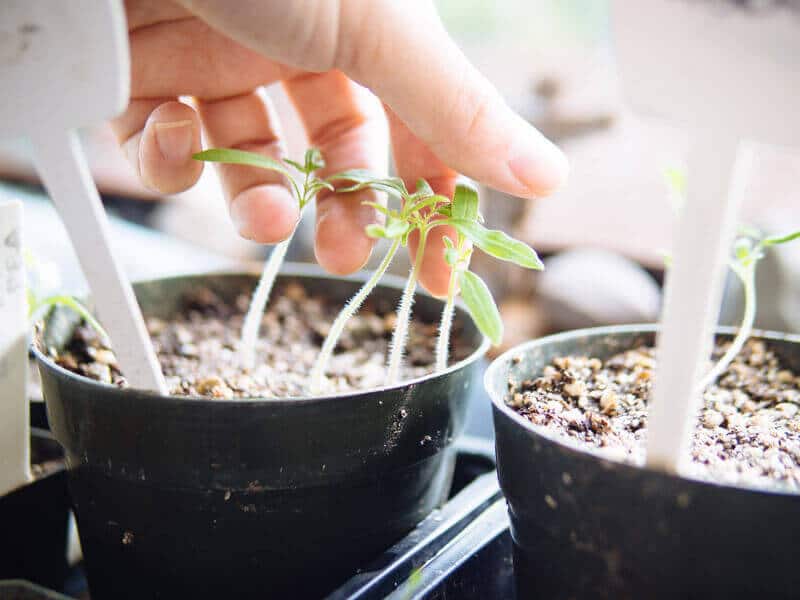
This can occur from the production of weak stems with elongated appearance. They are hard to sustain by themselves in growing the plant. Environmental conditions such as low light contribute to the formation of such seedlings. Despite that, the occurrence of such has intricate cellular and physiological causes. Leggy seedlings science knowledge will benefit understanding how plants react to the environment and strategies on health growth.
Phototropism and Light Perception in Leggy Seedlings
Phototropism is at the core of leggy seedling development. This is the plant's growth response to light. The photoreceptors responsible for detecting light quality, intensity, and direction are specially designed phytochromes. A low-light condition or shading phytochrome initiates hormonal cascades that make it favor elongation of stem over any other growth. This adaptive strategy to grow towards better light conditions puts the development at a cost for robust development.
Hormonal Dynamics: Auxins at Work
Auxins belong to the plant hormone group, with which they typically regulate elongation in leggy seedlings. Low illumination leads to unequal distribution between auxin-rich and relatively auxin-free sides in the stem; the darker side, the higher it is rich. The irregular distribution leads to the differentiation process to lengthen a part on the one end and curve in the direction of illumination. In the absence of adequate light, the general rate of activity of auxin increases, followed by rapid but weak stem growth. This phenomenon is known as etiolation, a survival mechanism characteristic of spindly legginess in seedlings.
Cellular Mechanism: Elongation and Cell Wall Loosening
Elongation in leggy seedlings follows complex changes in the cell wall at the cellular level. Auxins activate proton pumps in the cell membrane, lowering the pH in the cell wall. The acidic environment activates the enzymes known as expansins, which break the bonds between cellulose fibers in the cell wall. The cell wall is loosened, and the cell can expand rapidly by responding to internal turgor pressure. During rapid elongation, the plant grows tall, but with a trade-off of softer stems, which do not allow for a strong foundation necessary for support over time.
Gibberellin Effects
Another group of plant growth hormones that are involved in this elongation process is called gibberellins. These stimulate cells to divide and to the elongation, particularly inter-nodes, that separate the leaves. The activity increases with low light intensity also, which encourages more extension of tall, thin stalks. However, all this growth is somewhat offset because resources are drawn to the expense of leaves and roots, so a really weaker plant results.
Strategies to Prevent Leggy Seedlings
This way, the development of leggy seedlings will be countered by optimizing environmental conditions. For example, sufficient lighting may be supplied through natural or artificial grow lights, making sure that phytochromes send signals for well-balanced growth. Appropriate spacing of seedlings is also essential to avoid shading and light competition between seedlings. Other possible conditions to be controlled that can regulate hormonal activity towards sturdier growth are temperature, and too much fertilization should be avoided.
Conclusion
Leggy seedlings provide a very interesting example of how plants adapt to less-than-optimal conditions through very subtle cellular and hormonal mechanisms. The science behind the phenomenon is something that gardeners can understand, and hence create an environment that fosters healthy and balanced growth. This in turn not only increases the chances of successful gardening but also increases appreciation for the marvellous adaptability of plants.