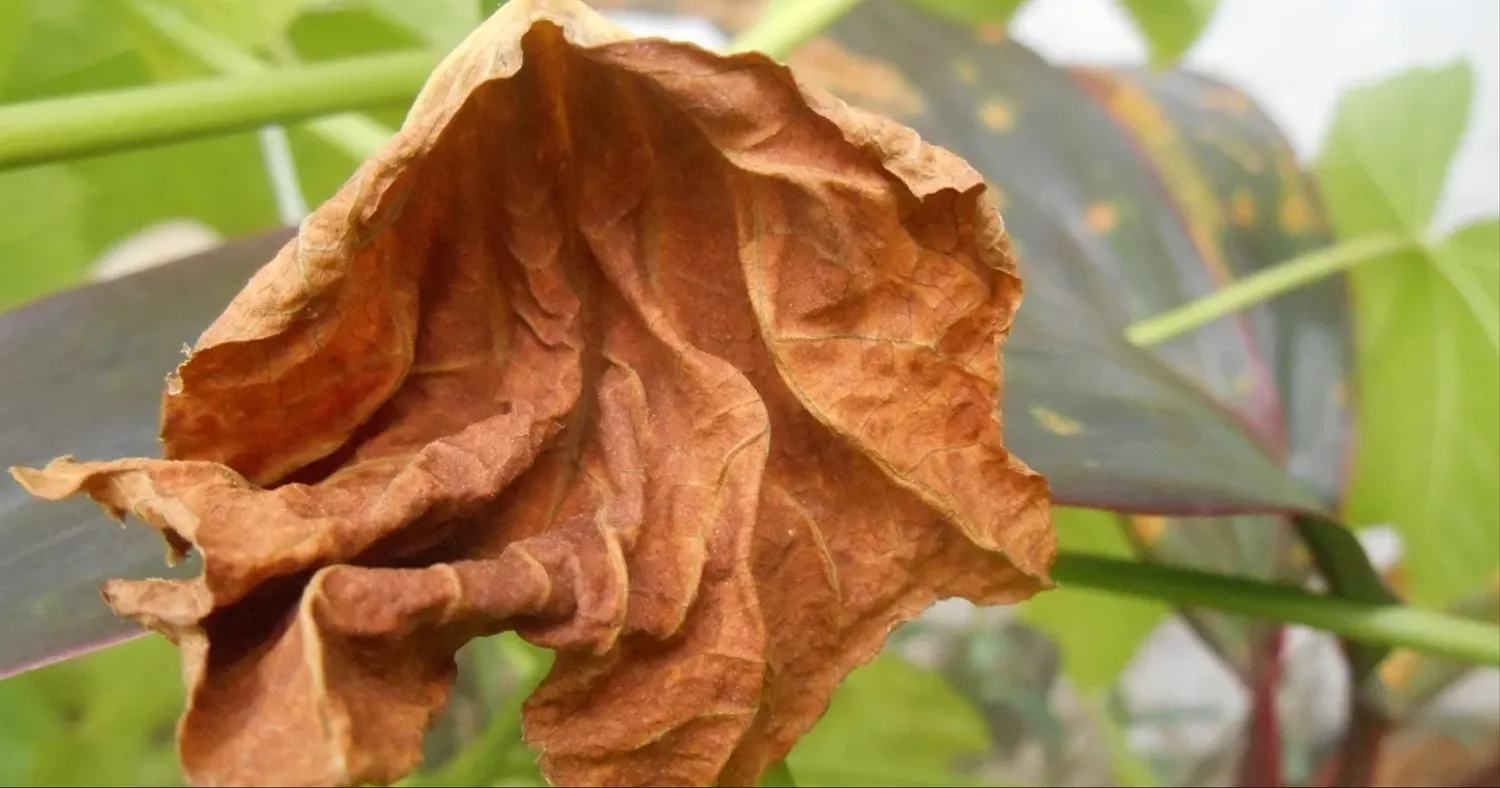
Plants rely on water for several physiological processes such as photosynthesis, nutrient transport, and temperature regulation. Without adequate moisture, they experience drought stress, which triggers a cascade of physiological responses, which are normally manifested as leaf discoloration. Understanding how underwatering affects plant health can help gardeners, farmers, and horticulturists prevent damage and maintain healthy leaves.
How Drought Stress Causes Leaf Discoloration
Drought stress influences plants at cellular as well as systemic levels, altering their functioning ability. The key impacts of the absence of water are:
1. Disruption of Photosynthesis
Water plays a crucial role in photosynthesis, the process through which plants convert light energy to chemical energy. Stomata, minute pores that occur on the leaf surfaces, close when there is a shortage of water to conserve water. Although the process saves water, it limits the entry of carbon dioxide, reducing photosynthetic processes. As a result, chlorophyll—the green pigment that carries out photosynthesis—begins to degrade, causing yellow leaves, or chlorosis.
2. Nutrient and Transport Deficiencies
Water is a medium for nutrient transport and uptake in the plant. Under conditions of low soil water, nutrient uptake decreases, resulting in deficiencies that affect leaf coloration. For example:
Nitrogen deficiency may cause even yellowing.
Potassium deficiency may cause browning of leaf margins.
Magnesium deficiency usually causes interveinal chlorosis, where leaf veins are green but tissue between them is yellow.
3. Toxic Compound Buildup
During water stress, plants synthesize chemical protectants in the form of reduced reactive oxygen species (ROS) to counter oxidative harm. However, accumulation of ROS in excess causes damage to cells, which then appears in the form of browning of leaves, wilting, and even necrosis of tissues (dead tissue patches).
4. Loss of Turgor Pressure
Turgor pressure is the pressure exerted by water-filled cells on the cell walls of a plant, stiffening leaves and keeping them upright. When plants are dehydrated, turgor pressure is lost, and leaves curl or become brittle and wilted. Leaf scorch may be due to extended dehydration where edges and tips become crispy and brown.
5. Premature Leaf Drop
Extreme water stress will trigger an adaptive reaction where plants shed leaves as a mechanism of conserving resources. This protective process reduces water loss but results in defoliation, further weakening the plant.
Prevention and Control of Underwatering Stress
To mitigate the effects of drought stress and leaf yellowing, the following can be adopted:
Regular Watering Schedule: Adopt a regular watering schedule according to the specific requirements of the plant as well as external conditions.
Mulching: Organic mulch prevents water evaporation and keeps soil moist.
Soil Enrichment: Soils are enriched with organic matter or compost for improved water retention.
Good Drainage: The soil must drain, but remain hydrated all the time without waterlogging.
Monitoring and Early Detection: Check crops on a regular basis for drought stress and irrigate accordingly.
Conclusion
Underwatering and drought stress play a significant role in plant health, with the change in leaf color being one of the most significant indicators of distress. By understanding the physiological effect of water deficiency, plant caretakers can take the necessary hydration steps to prevent damage and promote healthy growth. Maintaining adequate moisture not only preserves leaf color but also preserves overall plant health.