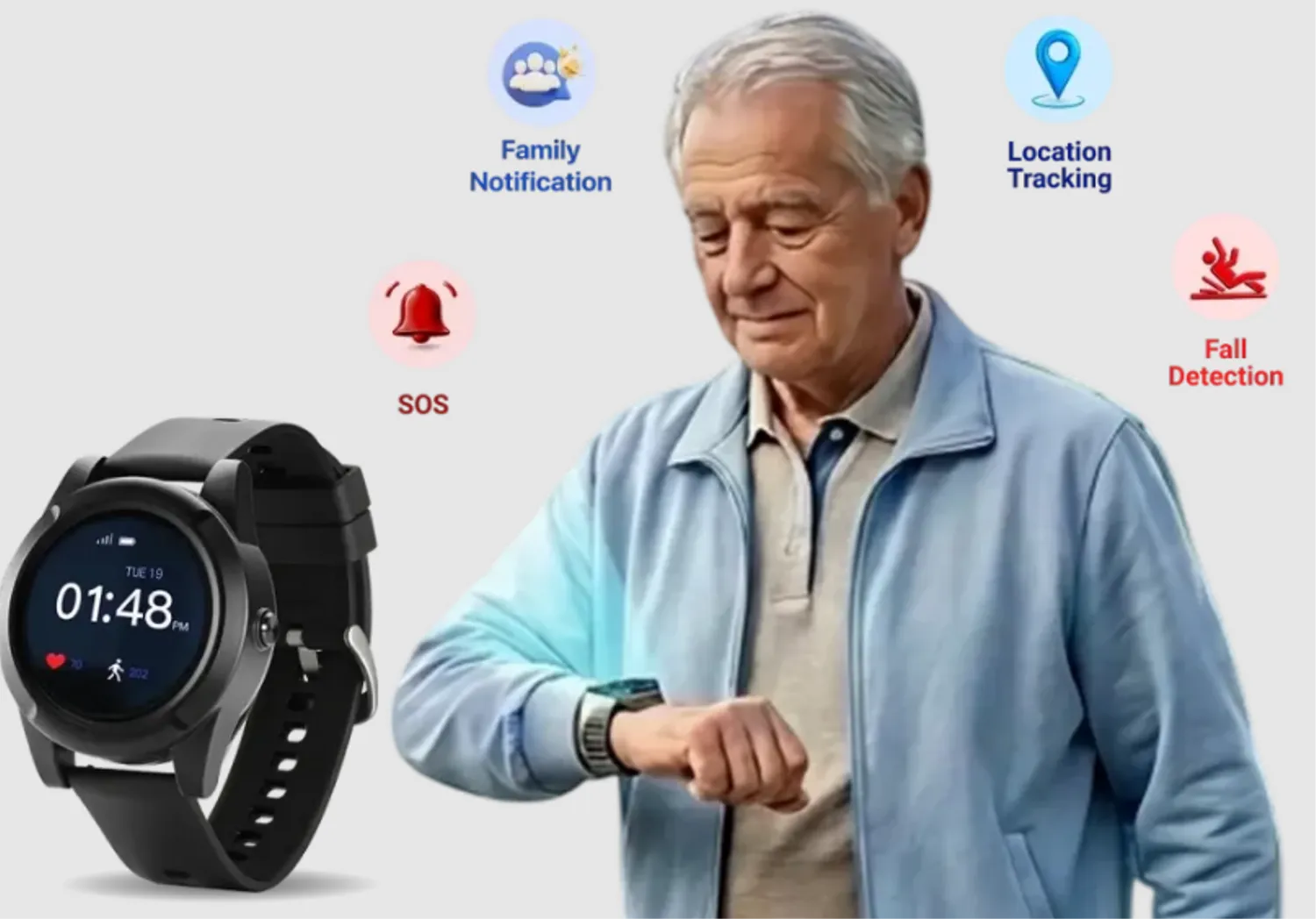
There is a distinct moment that almost every adult child or aging senior experiences. It usually happens after a minor slip in the kitchen, a dizzy spell while gardening, or simply reading a headline about a neighbor who spent hours on the floor waiting for help. It is the realization that independence comes with a fragile boundary.
For seniors living independently across the United States—from the icy winter walkways of New England to the sun-drenched, sprawling retirement communities of Arizona—maintaining freedom is a top priority. But so is safety.
Fortunately, modern technology has evolved past the clunky, embarrassing plastic buttons of the past. Today’s smart safety ecosystems, anchored by the modern fall detection watch and specialized fall detection device options, offer a seamless blend of style, dignity, and life-saving utility.
At myseniorcarehub, we believe that choosing the right protection shouldn't feel like a medical compromise. Here is a comprehensive look at how these devices work, how to choose the right one for your local environment, and how they preserve the lifestyle you love.
How Modern Fall Detection Technology Works
Many seniors worry that a device will trigger an emergency response team every time they drop their keys or sit down too quickly. Thankfully, the technology behind today’s medical alerts is remarkably sophisticated.
Most high-quality devices use a combination of miniature internal sensors:
- Accelerometers: These measure sudden changes in speed, tracking the rapid acceleration downward that characterizes a hard fall.
- Barometric Pressure Sensors: These detect subtle, rapid changes in air pressure that happen when a person shifts from a standing height to the floor.
- Algorithmic Filters: Before an alert is ever sent, the device's internal software analyzes the data trajectory to differentiate a real fall from a heavy plop onto a soft sofa.
If the device detects a genuine impact, it initiates a brief countdown. If the user doesn't cancel it within 15 to 30 seconds, the device automatically dials a 24/7 monitoring center, providing the user's exact GPS location.
Fall Detection Watch vs. Traditional Fall Detection Device
When shopping for protection, you will generally choose between two primary form factors. The right choice depends heavily on your daily habits, cognitive health, and style preferences.
1. The Fall Detection Watch (Wrist-Worn)
A fall detection watch looks identical to a standard smartwatch or a sleek analog timepiece. It is perfect for active seniors who spend a lot of time outside the home, running errands, or socializing.
- Pros: Highly discreet, stylish, and rarely forgotten on the nightstand because it doubles as a daily timepiece. Many models also track steps, heart rate, and send medication reminders.
- Cons: The wrist moves constantly. Actions like clapping, hammering, or violently waving can sometimes trigger false alarms. Additionally, because the wrist is further from the body's center of mass, wrist-based algorithms have to work harder to accurately detect certain types of slow, sliding falls.
2. The Traditional Fall Detection Device (Lanyard or Belt Clip)
A dedicated fall detection device is usually worn as a pendant around the neck or clipped securely to a belt.
- Pros: Because these devices sit flush against the sternum or core, they are highly accurate at detecting true falls while minimizing false alarms. They often feature larger, simpler buttons and extended battery lives that last weeks or months instead of days.
- Cons: They look distinctly medical. Some seniors resist wearing them consistently due to the perceived stigma of a visible medical alert pendant.
The US Geographic Factor: Adapting to Your Environment
Safety isn't one-size-fits-all, and where you live in the United States plays a significant role in which device will serve you best. Different climates and regional infrastructures demand different hardware features.
The Northeast & Midwest: Weathering the Winters
If you reside in states like New York, Ohio, or Illinois, winters mean ice, snow, and slush. A fall on an icy driveway requires immediate attention, especially in freezing temperatures.
- Key Feature Needed: Look for a device with rugged, water-resistant casing and a robust cellular connection (like built-in 4G LTE) that works reliably even during winter storms when power lines might go down.
The South & West: Sun, Sweat, and Sprawl
For seniors enjoying retirement in Florida, Texas, or California, life is often highly active and outdoors. Golfing, swimming, and community walks are daily staples.
- Key Feature Needed: High water resistance (IP67 rating or greater) is non-negotiable to handle sweat, heavy humidity, and the occasional dip in the pool. Furthermore, ensure the device features advanced A-GPS (Assisted GPS) so monitoring centers can pinpoint your exact location on a vast golf course or walking trail.
Rural America: Overcoming Connectivity Gaps
For those living in rural or mountainous areas across the Pacific Northwest or the Heartland, cellular coverage can be spotty.
- Key Feature Needed: Multi-network roaming. Choose a fall detection device that isn’t tied to just one carrier but can dynamically switch to whatever cellular network has the strongest signal in your specific zip code.
4 Critical Features to Evaluate Before Buying
Before investing in a system for yourself or an aging parent, ensure the device checks the following practical boxes:
Automatic vs. Manual Activation
Never rely solely on a manual button. If a senior knocked unconscious during a fall, they cannot press a button. Automatic detection is the ultimate safety net.
Two-Way Communication
Ensure the device features a clear, high-quality speaker and microphone built directly into the hardware. When an alert triggers, you want to be able to speak directly to the dispatcher from your wrist or pendant without needing to reach for a cell phone.
Battery Lifespan and Charging Habits
A device is only useful if it has power. Smartwatches with heavy features typically require daily charging. If a senior is prone to forgetting to plug things in, a dedicated pendant with a long-lasting battery is a much safer alternative.
Monitored vs. Unmonitored Systems
- Monitored: Connects to a professional, certified dispatch center for a monthly fee. They hold your medical history, lockbox codes for emergency services, and contact family members instantly.
- Unmonitored: Automatically dials a designated family member or 911 directly. While free of monthly fees, if your family member misses the call, the alert goes unanswered.
Helping Seniors Embrace the Technology
The hardest part of implementing a fall detection watch is often getting the senior to wear it. It is common for older adults to feel that accepting a safety device is an admission of weakness or aging.
When discussing the transition, reframe the conversation entirely around independence.
A fall detection system isn't a sign that you are losing your freedom; it is the exact tool that allows you to keep it. It gives adult children the peace of mind to step back, and it gives seniors the confidence to live life on their own terms, knowing that help is always just a heartbeat away.
Explore the latest reviews and customized senior living tech guides directly at myseniorcarehub to find the perfect fit for your lifestyle and location today.