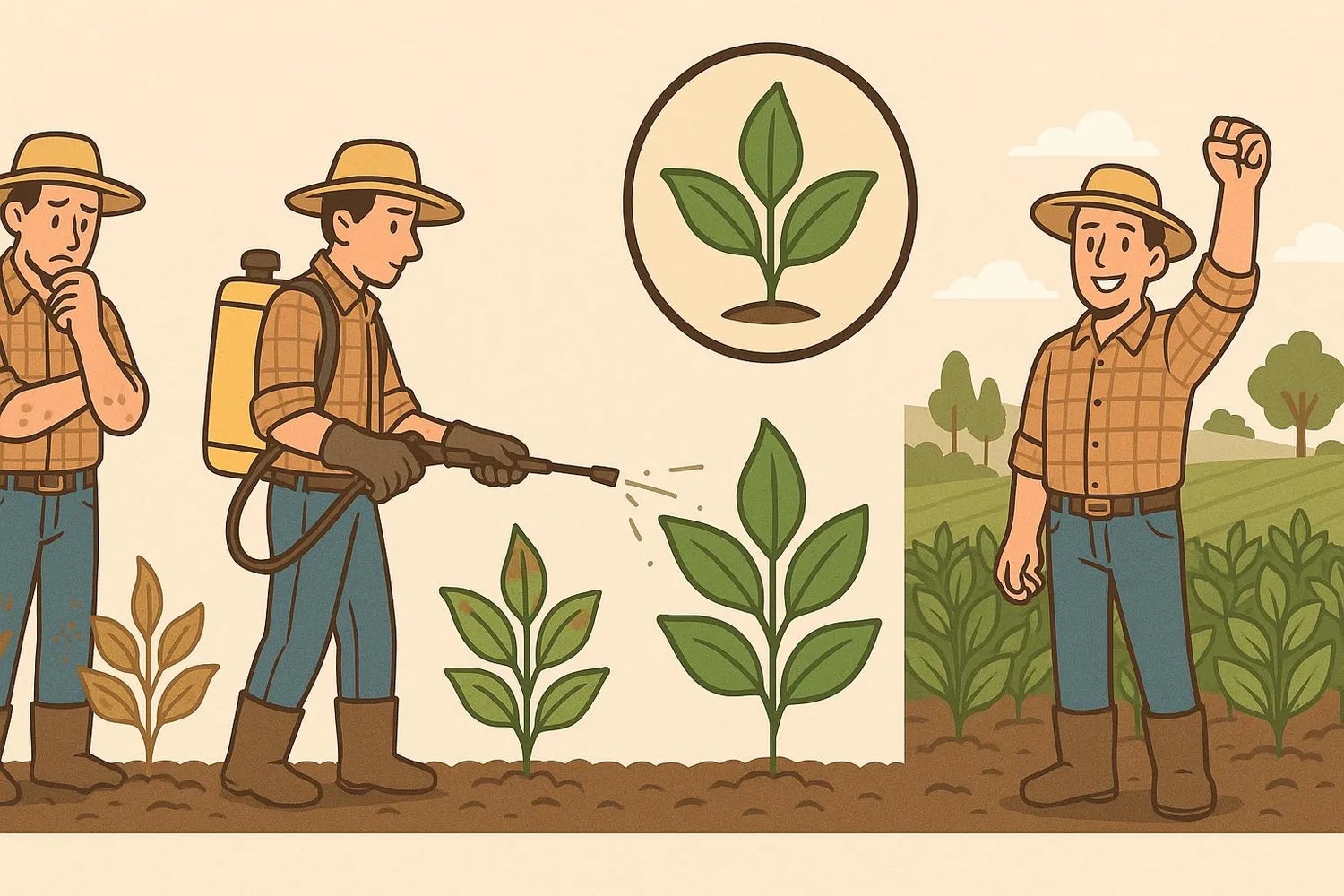
It’s the same routine every year—spray, monitor, repeat—yet something's off. What used to be a reliable pest control method seems to be losing its punch. You’re not imagining it. Farmers worldwide are witnessing a steady decline in the effectiveness of pesticides. But the reasons behind this shift run deeper than just faulty formulations or knock-off brands. This is a complex, multi-layered issue tied to biology, farming practices, chemical resistance, and regulatory changes.
Let’s break it down.
The Enemy: Resistance Is Not Just a Buzzword
The issue of pesticide resistance is not something that will arise in the future. Pests change over time. Genes that may make them marginally more resilient to the newest chemical cocktail are passed down from generation to generation. Those survivors replicate spray by spray. The demographic you're working with eventually just doesn't react to what you're utilizing.
Fungi, weeds, and insects are all adaptable. More than 600 insect and mite species have demonstrated resistance to at least one type of pesticide, according to the Insecticide Resistance Action Committee (IRAC). This issue isn't limited to large-scale farming; smaller farmers are also facing it.
- A 2023 report showed that over 80% of surveyed vegetable farmers in Southeast Asia noticed diminished pesticide performance within five growing cycles.
- The brown planthopper, a notorious rice pest, has developed resistance to more than 40 active ingredients globally.
Are You Rotating Modes of Action—Or Just Labels?
By switching between products with different packaging or brand names, many farmers erroneously think they are rotating insecticides. However, you're not spinning anything significant unless you're changing your modes of action (MoA).
The way a pesticide impacts its target organism is referred to as its mode of action. For instance, one may disturb moulting, while another may assault the neurological system of insects, paralysing them.
It's like changing the colour of your hammer—it's still a hammer—when you use different goods with the same MoA. When a single MoA is overused, resistance develops more quickly than you can say "infestation". Understanding chemical classifications is essential in this situation. It's crucial to look for active components on the label rather than just gaudy brand names.
The Hidden Problem: Sublethal Dosing and Spray Misapplication
If not used properly, even the best product won't work. Sublethal doses can be produced by spraying under windy conditions, at the wrong time of day, or with improperly calibrated equipment. These doses are strong enough to educate pests on how to survive but too weak to kill them.
Sprayers frequently apply pesticides right before rain or during periods of extreme heat, which causes fast evaporation or wash-off. The result is weakened bugs that are now more intelligent and nevertheless manage to reproduce.
Even worse, many farmers dilute their products to save money, not realising that this speeds up resistance. Sublethal exposure efficiently trains bugs to withstand the chemical attack by allowing them to produce detoxification enzymes.
Have You Looked at Your Soil and Crop Health?

It's not usually the pesticide that causes bug resistance. It also has to do with the ecosystem. Crops under stress are more susceptible to pests. Your fields are a feast for insects and diseases due to poor soil health, unbalanced nutrients, and an over-reliance on monoculture.
The requirement for chemical control can be significantly decreased by using integrated pest management (IPM) techniques and crop diversity. Healthy plants recover more quickly and can better withstand mild pest pressure.
Microbially rich soil can improve plant resistance and naturally reduce insect outbreaks. It would be like fixing a leaky pipe without first evaluating the water pressure if this biological layer were ignored.
Misplaced Trust in Blanket Spraying
Many farmers automatically use blanket spraying, which applies broad-spectrum insecticides to the entire field regardless of the presence of pests. However, careless spraying eliminates both beneficial and pest insects; natural predators, such as lacewings, parasitic wasps, and ladybirds, aid in controlling pests. If you kill them, you've left a void that the evil guys would gladly fill.
Blanket spraying frequently results in subsequent pest outbreaks rather than pest suppression. Even small pests have the potential to develop into significant issues when the natural equilibrium is disrupted.
This is the role of targeted remedies, such as Optus-Emamectin Benzoate 1.9% EC, which are designed to provide precise control over specific pest types while minimising non-target damage. For long-term sustainability and effectiveness, these chosen tools must be integrated into a comprehensive IPM plan.
The Regulatory Shift: Fewer Tools, Higher Stakes
There are fewer active chemicals available in the pesticide market in many countries due to tighter regulations. The toolkit has been tightened by restrictions on the use of glyphosate, bans on neonicotinoids in some parts of Europe, and heightened scrutiny of organophosphates.
These rules force farmers to make more informed decisions with fewer options, even if they are frequently founded on legitimate environmental and health concerns. This implies that you might not have a backup in the same category if a specific insecticide starts to malfunction.
It is therefore imperative to stay current on approved pesticide lists and resistance trends. Free, current information on pest identification and treatment methods worldwide can be found on websites like CABI's Plantwise Knowledge Bank.
“Pesticides are not a silver bullet. They're a single tool in a toolbox that must include biology, rotation, observation, and prevention.”
Rethinking Farm Strategy: Are You Too Reliant on Chemistry?
The over-reliance on the pesticide is the actual problem, not the chemical itself. You wind up chasing symptoms rather than addressing the underlying causes when you use the same chemical solution for every pest issue. Think about the emergence of natural predators, microbial inoculants, and biostimulants. They are no longer considered fringe science. To reduce the strain on synthetic sprays, several producers are incorporating them into hybrid methods.
It's crucial to go from a reactive to a preventive strategy. Crop scouting, weather modelling, pheromone lures, and traps are not merely theoretical ideas. They can predict insect cycles and help make better spraying choices. You're wasting your time if you're not already using resources like AgriMet's weather-based pest prediction tools.
What Can You Do Right Now?
If your pesticide sprays are becoming less effective, the time for action isn’t after the next harvest—it’s now.
- Start by mapping out your pesticide usage history. Look at what MoAs you’ve been applying and whether any patterns suggest overuse.
- Test your equipment. A poorly calibrated sprayer can ruin even the best product.
- Introduce trap crops or companion plants to break the pest cycle.
- Implement non-chemical methods, such as crop rotation, intercropping, and predator releases.
Remember, an overused pesticide is a liability. A well-planned, integrated system is a competitive advantage.
FAQs
- Why do pesticides seem to work less even when I increase the dose?
Increasing the dose can lead to temporary results, but it usually signals resistance. Overdosing also harms beneficial organisms and the environment, and it can cause phytotoxicity. - Is resistance permanent in pests?
Not always. In some cases, stopping the use of a specific pesticide can reduce resistance levels over time, especially if fitness costs are high for resistant strains. However, it's not a guarantee. - How often should I rotate pesticides?
Rotate every season or after two applications, depending on the pest lifecycle and crop. Continuously rotate between different MoA groups, not just product names. - Do organic farms face pesticide resistance issues?
Yes, although it’s less common. Overuse of natural pesticides, such as neem or Bt, can also lead to resistance. Integrated strategies are necessary regardless of certification. - What’s the role of weather in pesticide effectiveness?
Humidity, temperature, and wind speed all impact spray deposition and pest behavior. Spraying during inappropriate conditions can dramatically reduce effectiveness.
Don’t End - Adapt
This problem doesn't have a tidy conclusion, as it persists indefinitely. Like the bugs you're fighting, it changes with time. However, that does not imply that you are helpless. You may overcome resistance before it spoils your season by changing your perspective from one of control to one of strategy, from one of reaction to prevention.
Instead of utilizing more, today's most prosperous farmers use more intelligently. They are spending money on diversity, training, data, and observation. Perhaps it's time to update your overall strategy if your spray isn't doing as well as it once did.
To keep ahead, one must be knowledgeable, inquisitive, and willing to break old patterns. The pests aren't motionless. You shouldn't either.