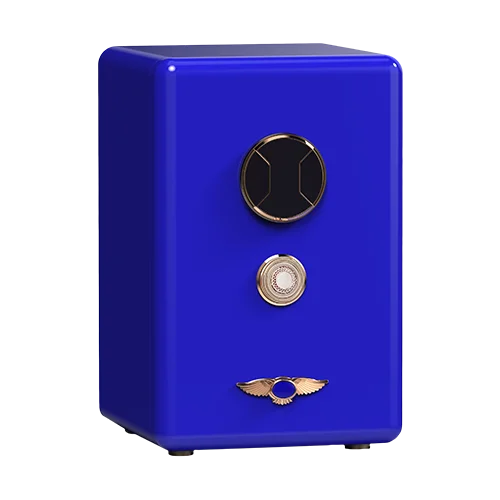
Generational wealth is often envisioned as a sprawling portfolio of stocks, real estate, and trust funds. However, the true bridge between building wealth and successfully passing it on is much more tactile. It is a physical point of failure or success. Without a centralized, secure location to house the “keys” to your kingdom, even the most sophisticated estate plan can crumble under the weight of legal delays, lost access codes, and family disputes.
Enter the concept of the Family Vault. This isn’t just a storage unit; it is a strategic command center for your legacy. To build a vault that survives the test of time and crisis, you need more than a drawer — you need a high-grade safe box that offers fire protection, anti-burglary certifications, and enough volume to house a family’s history. Specifically, heavy-duty models like the Empress Safe or the Knight Safe provide the structural integrity required to serve as the bedrock of an estate plan.
The Philosophy of Centralization
In a digital world, assets are increasingly fragmented. We have bank accounts in one cloud, crypto on a hardware wallet, and property deeds in a dusty folder. In an emergency, your heirs don’t just need your money; they need the map to find it. Organizing your safe box ensures that during a time of grief, your family isn’t forced into a scavenger hunt.
Phase 1: The Core Legal Infrastructure
The first layer of your Family Vault should be the “Foundational Four.” These are the documents that grant your survivors the legal authority to act.
Original Wills and Living Trusts: While your attorney has a copy, the “wet ink” original is often required by probate courts. Storing this in an Empress Safe — known for its superior fire resistance — ensures that the primary directive of your estate remains intact even in a disaster.
Powers of Attorney (Medical and Financial): These are “living” documents. In a sudden medical emergency, your family needs to grab these immediately to make life-saving decisions.
Letters of Instruction: This is a non-legal document where you speak directly to your heirs. It explains the “why” behind your distributions and provides the “where” for your accounts.
Death Certificates and Social Security Cards: These are the administrative keys to closing accounts and claiming benefits.
Phase 2: Financial Passports and Titles
Once the legal authority is established, your heirs need to prove ownership of assets. This section of your safe box acts as the inventory of your life’s work.
Property Deeds and Title Insurance: Real estate is often a family’s largest asset. Physical deeds, along with recent property tax assessments, should be bundled together.
Life Insurance Policies: Many life insurance benefits go unclaimed simply because the family didn’t know the policy existed. Keep the original policy document and the contact information for your agent in the vault.
Stock and Bond Certificates: If you hold physical certificates or have paper records of private equity holdings, these must be protected from humidity and theft inside a Knight Safe, which offers the heavy-duty bolting mechanisms needed to deter professional heists.
Business Succession Documents: If you own a company, your buy-sell agreements and operating certificates should live here.
Phase 3: The Digital Bridge (Crypto and Beyond)
Perhaps the most significant risk to modern generational wealth is the “digital black hole.” Billions of dollars in Bitcoin have been lost forever because seed phrases died with their owners.
Crypto Seed Phrases: Never store these on a computer. Write them on “seed plates” (fireproof metal) and place them in the back of your safe box.
The Master Password List: Whether you use a digital password manager or a physical ledger, your heirs need the master key to your email, banking portals, and cloud storage.
Hardware Wallets: Store your Ledger or Trezor devices alongside their recovery keys. The Empress Safe, with its specialized internal compartments, is ideal for keeping these small but vital devices organized.
Phase 4: Heirlooms and Non-Liquid Wealth
Generational wealth isn’t just about the balance sheet; it’s about the “emotional equity” of a family.
Family Heirlooms: Jewelry, rare coins, or medals of honor should be stored in soft-lined drawers within the safe. The Knight Safe is particularly suited for this, as its reinforced steel plating provides the high-level security required for high-value physical assets.
Physical Gold and Silver: As a hedge against inflation, many families keep a portion of their wealth in bullion. This adds significant weight, requiring a safe with a high floor-load capacity and advanced locking bolts.
High-Value Photos and Letters: Often, a single handwritten letter from a great-grandparent is worth more to a family than a bank account. Ensure these are in acid-free sleeves before being placed in the vault.
Selecting the Vessel: Empress vs. Knight
When organizing for the long term, the quality of the safe box is non-negotiable.
The Empress Safe is often the choice for families prioritizing protection from the elements. Its sophisticated fire seals expand when heated, protecting paper documents and digital drives from smoke and water damage. It is the “librarian” of safes, perfect for the document-heavy estate.
The Knight Safe, conversely, is the “sentinel.” It is built for maximum security. If your estate planning includes significant physical assets like gold, expensive watches, or high-value collectibles, the Knight’s anti-drill plates and glass re-lockers provide the peace of mind that your wealth will actually be there when the next generation comes to claim it.
The Maintenance Protocol: The “Annual Audit”
A Family Vault is a living entity. Every year on a set date (perhaps after tax season), the family leaders should perform an audit.
Check for Expired Documents: Replace old insurance policies with updated ones.
Update Digital Keys: Ensure the master password list is current.
Review Beneficiaries: If there has been a birth, death, or marriage, ensure the documents in the safe box reflect the current family structure.
Practical Organization Tips
Fireproof Pouches: Even inside a fire-rated safe, double-bagging your most vital documents in silicone-coated fiberglass pouches provides an extra layer of protection.
Categorized Binders: Don’t just throw papers in a pile. Use color-coded binders (e.g., Red for Medical/Emergency, Blue for Financial, Black for Legal).
Internal Lighting: Ensure your Empress Safe or Knight Safe is equipped with LED lighting. In an emergency or a power outage, you need to be able to identify documents instantly.
Conclusion: The Gift of Clarity
The transition of wealth is rarely a simple event; it is a process fraught with emotion and complexity. By organizing a “Family Vault,” you are doing more than protecting paper and gold; you are providing your family with the gift of clarity during their most difficult moments.
Investing in a heavy-duty safe box like the Empress or Knight is a one-time capital expense that secures a multi-generational future. It ensures that the wealth you have spent a lifetime building doesn’t vanish due to a lost password or a misplaced deed. In the end, a well-organized safe is the ultimate act of stewardship — a physical manifestation of your commitment to the generations you may never live to meet.
Pop over here : https://myafbsafe.com.sg