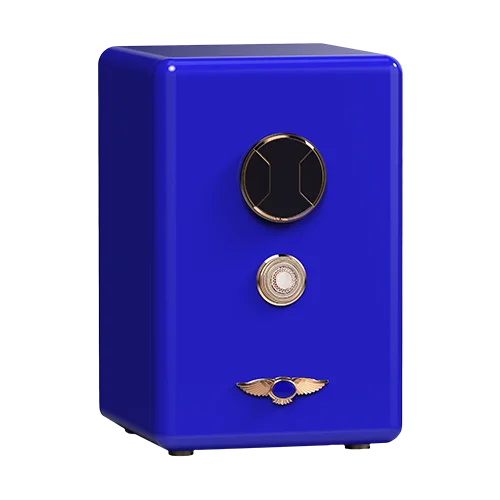
The acquisition of a Rolex, a Patek Philippe, or a bespoke piece of high jewelry is rarely a simple transaction. It is an entry into a world of heritage, precision engineering, and significant financial investment. For the serious collector, the focus is often on the “chase” — the years spent on waiting lists or the thrill of the auction house. However, once the asset is secured, a new challenge begins: preservation.
Many collectors believe that once an item is placed behind the heavy steel bolts of a high-security safe, the mission is accomplished. They assume that “secure” is synonymous with “protected.” Unfortunately, this is a dangerous misconception. The very materials that provide security from theft — raw steel, iron, and reinforced alloys — are the silent enemies of high-end horology and fine jewelry. If your storage solution features a metal interior, you aren’t just storing your collection; you are slowly eroding its value.
The Silent Killer: Micro-Scratches and Metal-on-Metal Contact
A Rolex “Oystersteel” case is a marvel of durability, but it is not invincible. The high-polish finishes and brushed surfaces of luxury timepieces are designed to reflect light with mathematical precision. When a watch is placed inside a safe with an unlined metal shelf or a hard plastic drawer, every vibration — be it from nearby traffic, home construction, or the mechanical operation of the safe itself — causes minute movements.
This results in metal-on-metal friction. Over time, this friction creates “micro-scratches.” While these may not be visible to the naked eye under casual lighting, they are glaringly obvious under a loupe. To a professional appraiser or a secondary market buyer, these scratches indicate a lack of care.
Furthermore, jewelry featuring soft gemstones, such as emeralds, opals, or pearls, is even more at risk. Emeralds, for instance, are notoriously brittle due to their natural inclusions. One sharp contact with a cold steel interior can cause an internal fracture (an “inclusion bloom”) that can never be repaired.
The Humidity Trap: How Steel “Sweats”
A secondary, more insidious threat is the micro-climate inside a standard metal safe. Metal is an excellent conductor of temperature. When the ambient temperature in your home shifts, the metal interior of a safe reacts. This temperature differential can lead to condensation — a phenomenon often referred to as “sweating.”
Humidity is the ultimate enemy of a mechanical watch movement. Even with the gaskets of an Oyster case, microscopic moisture can infiltrate the crown or case back over years of storage. This moisture degrades the synthetic oils that lubricate the escapement and gears. For jewelry, humidity can tarnish silver components and weaken the silk threads used in high-end pearl strands.
A premium leather-lined interior acts as a natural buffer. High-quality leathers used in “The Vault” and “Grandeur” series are breathable. They help regulate the immediate micro-environment around the watch, absorbing minute amounts of excess moisture and providing a stable thermal mass that prevents rapid temperature swings.
The Necessity of Leather-Lined Safes: “The Vault” Standard
When we discuss “The Vault” or our “Grandeur” series, we are talking about a philosophy of storage that treats the safe as an extension of the object it protects. A leather-lined interior is not merely a luxury aesthetic; it is a functional requirement for the preservation of value.
1. Impact Absorption
Premium leather, particularly the top-grain varieties used in our bespoke interiors, possesses a natural elasticity. When you set your Rolex Submariner down after a long day, the leather compresses slightly, cradling the watch. This eliminates the “jarring” impact of a hard surface, ensuring that the delicate balance wheel and hairspring within the movement are not subjected to unnecessary shock.
2. Chemical Neutrality
It is a little-known fact in a pet grooming course or any specialized maintenance discipline that the chemicals used in storage matter. Cheaper safes often use synthetic foams or glues that “off-gas” over time. These chemicals can actually react with the gold alloys (especially rose gold) or the dial luminescence (Super-LumiNova) of a watch, causing premature discoloration. Our premium leather interiors are tanned using processes that ensure chemical neutrality, preserving the original factory color of your investments.
Preserving “New Old Stock” (NOS) Value
In the world of high-end horology, “New Old Stock” or “Unworn” condition carries a massive premium — sometimes 20% to 50% above the price of a “Lightly Used” piece. The moment a watch develops a “desk diving” mark on the clasp from sitting on a metal safe shelf, it loses that status.
A leather-lined drawer system allows for organized, separated storage. By using individual watch pillows and leather-lined dividers, you ensure that pieces never touch one another. This prevents the “clinking” of bracelets against cases, which is the primary cause of damage in multi-watch collections.
The Aesthetic of Ownership
Beyond the technical preservation, there is the psychological aspect of ownership. The ritual of opening a safe should be an experience that matches the quality of the items inside. Stepping from a beautiful dressing room into a cold, grey, industrial metal box creates a sensory disconnect.
“The Vault” and “Grandeur” safes utilize hand-stitched leather interiors because the tactile experience matters. When you reach for a diamond necklace or a GMT-Master II, your hands should meet a soft, warm surface. This encourages slower, more deliberate handling of the jewelry, which in turn reduces the likelihood of accidental drops or fumbles.
Technical Maintenance for the Modern Collector
To ensure the long-term reliability of your collection within your leather-lined safe, consider these three best practices:
Watch Winders: For perpetual calendars or complex complications, “The Vault” features integrated leather-wrapped winders. These keep the movement’s oils flowing without over-winding, ensuring the watch is “Ready to Wear” at a moment’s notice.
Silica Integration: Even with leather lining, we recommend hidden desiccant compartments within the safe to maintain a constant 35% to 45% humidity level — the “Goldilocks” zone for both leather and mechanical movements.
Soft-Close Technology: Our “Grandeur” safes utilize soft-close drawer slides. This prevents the “slam” effect, ensuring that even if a drawer is closed hastily, the contents inside aren’t jostled.
Conclusion: Protecting Your Legacy
A Rolex is often more than a timekeeper; it is a legacy. It is a piece of history that you intend to pass down to the next generation. Storing such a legacy in a bare metal safe is akin to parking a Ferrari in a gravel pit — it may be “parked,” but it is certainly being damaged.
By choosing a leather-lined solution like “The Vault” or “Grandeur,” you are making a conscious decision to protect the finish, the movement, and the ultimate resale value of your collection. You are moving beyond simple security and into the realm of professional curatorial care. In the world of high-end horology, it is often the things you don’t see — the soft touch of leather against steel — that make the biggest difference in the long run.
Pop over here : https://myafbsafe.com.sg