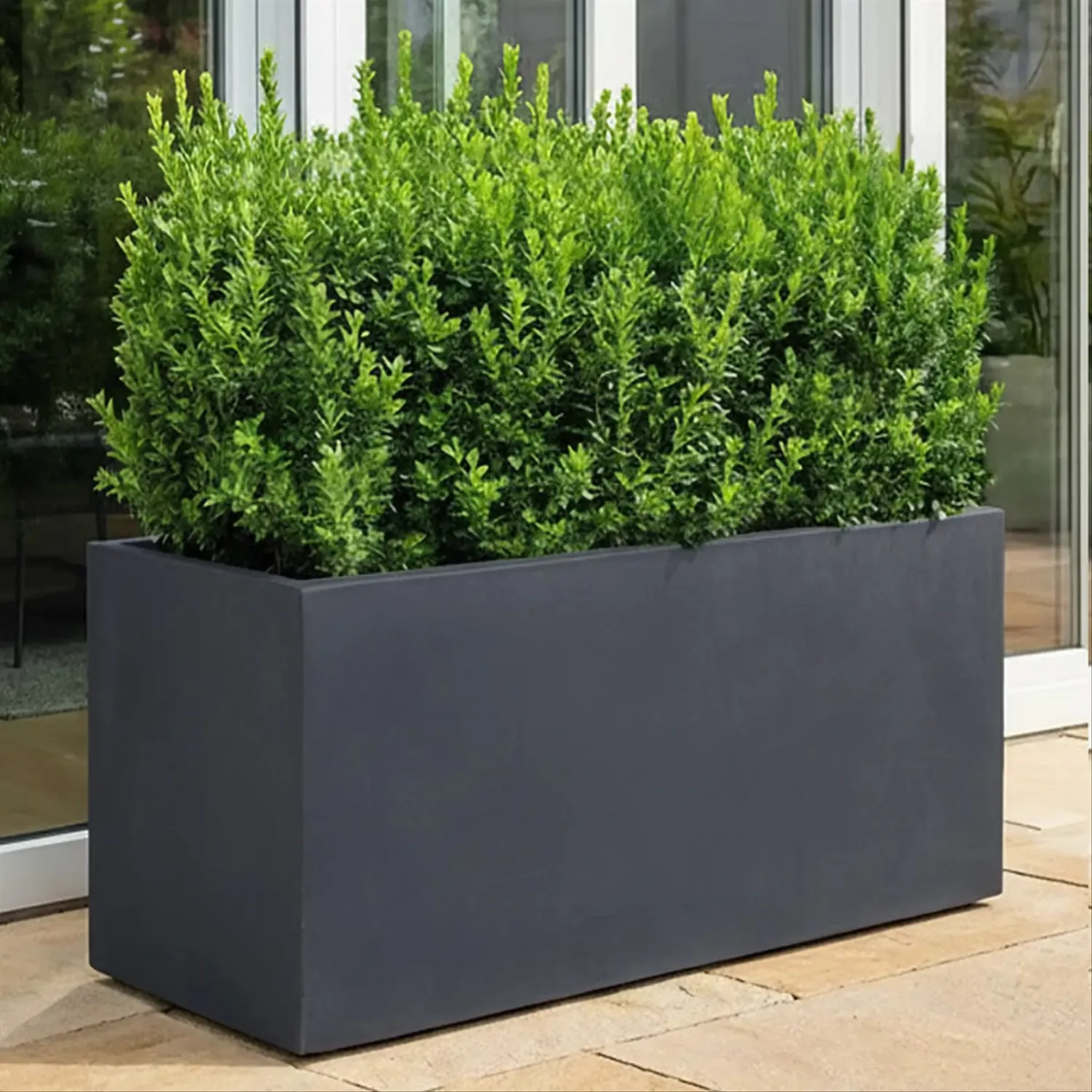
A Smarter Way to Green Up Your Outdoor Space
Anyone who has wrestled a terracotta pot across a patio after a hard frost knows the problem. The base has cracked, the drainage has gone, and that lovely plant you nursed through summer has gone with it. Or perhaps it is the old wooden planter that seemed solid enough last spring, now sitting grey and soft in the corner with a split panel and a base that has all but composted itself. British gardens are hard on containers, and most traditional materials pay the price eventually.
Aluminium planters have become increasingly popular in recent years, both in residential gardens and in commercial and hospitality settings, because they solve most of these problems cleanly and without compromise. They are light enough to move, tough enough to stay outdoors year-round, and available in a wide enough range of sizes, shapes, and colours to suit almost any outdoor scheme. This guide looks at why aluminium is such a strong choice for planters, where it works best, and what to look for when specifying or buying one.
What Makes Aluminium Such a Good Material for Planters?
The material advantages of aluminium over traditional planter options are straightforward and consistent. Aluminium does not rust. It does not rot. It does not crack in frost. It does not warp or swell when wet. The natural oxide layer that forms on aluminium's surface when it is exposed to air provides a stable barrier against further corrosion, and when a quality powder coat finish is applied on top, the surface is protected against UV fading, abrasion, and weathering for decades.
Weight is a key practical advantage, particularly for balconies, roof terraces, and upper-floor outdoor spaces where every kilogram matters. Aluminium is roughly one-third the weight of steel and a fraction of the weight of concrete or stone. A large aluminium trough planter that would be almost impossible to move in another material can be relocated by two people without excessive effort, which matters both for installation and for seasonal reorganisation of an outdoor scheme.
It is also worth noting that aluminium is non-toxic and does not leach harmful substances into the soil, which makes it a safe choice for growing herbs and vegetables alongside purely ornamental planting. There is no need to line an aluminium planter to make it food-safe, though good drainage is still important for plant health regardless of the container material.
Construction: What Sets a Quality Aluminium Planter A part
Not all aluminium planters are built to the same standard, and understanding the construction makes it easier to compare options sensibly. The key factors are the aluminium thickness, the quality of the welded construction, the surface preparation before powder coating, and the finish specification.
Thickness matters for structural rigidity, particularly on larger planters where the weight of soil creates considerable outward pressure on the walls. A 4mm aluminium planter has considerably greater wall stiffness than a 2mm equivalent of the same dimensions. For larger troughs and raised beds where the planter will be permanently planted and infrequently moved, thicker gauge aluminium justifies the additional weight and cost through greater long-term durability.
Welded construction with smooth, finished corners is the mark of a well-made planter. Internal welds should be continuous rather than tack-welded to ensure the planter holds soil and moisture without leaking at the joins. Before powder coating, the aluminium needs to be properly prepared, cleaned, and primed: a powder coat applied to inadequately prepared aluminium will not achieve the adhesion needed for a 20-year-plus service life.
Fabricators such as Metal Profiles Ltd produce their 4mm powder-coated aluminium planters in-house from their Essex facility, with the full process from fabrication through to powder coating handled under one roof. At 11kg per metre, the finished planters are light enough to arrive fully assembled, which is a considerable practical advantage over heavier steel equivalents that typically need to be delivered in sections.
Design, Colour, and Customisation
One of the clearest advantages aluminium has over terracotta, concrete, and timber is the colour and finish flexibility it offers through powder coating. The full RAL colour range is available, which means a planter can be specified in a precise shade to complement a building's cladding, a garden's palette, or a hospitality brand's colour scheme. The most popular choices in contemporary UK landscaping tend toward dark tones: anthracite grey, black, and deep green are frequently used to create a clean, modern roofline-to-ground aesthetic, but lighter greys, whites, and warmer earth tones are equally achievable.
Size and configuration can also be customised to suit specific projects. Standard sizes cover the most common requirements, from compact cube planters for patio corners through to substantial troughs for boundary planting and raised beds for vegetable and herb growing. Bespoke dimensions are available from quality fabricators for projects where a standard size does not fit the space or the design specification.
For project inspiration and to understand the range of available formats, the Metal Profiles Ltd metal planters guide covers practical advice on choosing the right size and material for different garden applications, including a useful comparison between aluminium and steel planter options.
Where Aluminium Planters Work Best
Residential Gardens and Patios
In a domestic setting, aluminium planters suit contemporary and minimalist garden designs particularly well. A row of matching trough planters in a dark powder coat finish along a boundary wall, or a pair of square planters flanking a front door, brings a clean architectural quality to outdoor spaces that timber or plastic containers simply cannot match. The durability also makes them a sensible investment for homeowners who want to plant once and not replace containers every three or four years.
Roof Terraces and Balconies
The weight advantage of aluminium becomes especially significant on elevated surfaces where the structural load capacity of the floor needs to be considered alongside the aesthetic. A large aluminium trough planter at 11kg per metre is considerably more viable on a roof terrace than a concrete or mild steel equivalent. Aluminium also performs reliably through the freeze-thaw cycles and elevated wind exposure that roof-level outdoor spaces experience without any surface degradation.
Commercial and Hospitality Settings
Hotels, restaurants, office developments, and retail environments consistently use aluminium planters because they combine visual quality with genuine low-maintenance performance. A commercial property manager wants a planter that stays looking good without regular intervention, and aluminium's powder-coated surface achieves exactly that. The ability to specify any RAL colour for precise brand or architectural colour matching is an additional practical benefit in commercial landscaping projects.
For those wanting to explore the full range of aluminium planter options, including the benefits of aluminium over other metal choices for garden use, the Metal Profiles Ltd blog on aluminium planter benefitsprovides a thorough overview of why the material suits UK gardens and outdoor spaces so well.
Getting the Planting Right
Drainage is the single most important practical consideration for any container planting, and aluminium planters are no different. Ensure drainage holes are present in the base and are of adequate size for the planting. A layer of gravel or lightweight expanded clay aggregate at the base helps drainage and reduces the total soil volume needed in a large planter. Use a well-draining compost mix, particularly for Mediterranean plants, herbs, and succulents that do not tolerate waterlogged roots.
Aluminium planters have moderate thermal conductivity, which means the soil temperature inside responds to ambient temperature changes more quickly than it would in a ceramic or concrete container. For tender plants or early-season growing, this can be managed by using a slightly thicker potting mix to buffer temperature swings, or by positioning the planter against a wall that retains daytime heat.
Conclusion
Aluminium planters have earned their place in UK gardens and commercial outdoor spaces through a combination of material properties that other container options struggle to match: corrosion resistance, low weight, long service life, and a wide range of colour and size options through powder coating. Whether you are specifying for a domestic patio, a roof terrace, or a large commercial landscaping project, the performance case for aluminium is consistent and straightforward.
The quality of construction matters as much as the material choice. Fabricators who handle the full process from aluminium sheet to finished, powder-coated planter in a controlled manufacturing environment deliver significantly better long-term results than assembled or imported alternatives. For UK-fabricated aluminium planters designed and built for outdoor durability, Metal Profiles Ltd manufacture their full range from their Essex facility, with bespoke sizing available for residential and commercial projects nationwide.
Frequently Asked Questions
How long will an aluminium planter last outdoors?
A well-made aluminium planter with a quality powder coat finish will typically last 20 years or more in outdoor conditions, and in many cases considerably longer. The aluminium itself does not corrode in the way mild steel does: the natural oxide layer that forms on the surface provides a stable barrier against further oxidation, and the powder coat adds a durable decorative and protective layer on top. The main variable is the quality of surface preparation before powder coating: aluminium that has been properly cleaned, primed, and coated to a good standard will maintain its finish and structural integrity for decades. Cheaper planters where the powder coat has been applied to inadequately prepared aluminium will start to show coating failure within a few years, so fabrication quality and finish specification are worth investigating before buying.
Are aluminium planters suitable for growing food?
Yes. Aluminium is a non-toxic material that does not leach harmful chemicals into the soil at levels that pose any risk to plants or to people eating produce grown in them. It is safe for growing vegetables, herbs, salad crops, and other edibles without any lining or additional treatment. The key practical consideration for food growing in any container is drainage: waterlogged soil reduces oxygen availability at the roots, which stresses most food plants and reduces yields. Ensure drainage holes are clear and use a free-draining compost mix, perhaps with added grit or perlite for root vegetables and herbs that particularly dislike wet conditions.
What is the best colour for an aluminium planter?
The most popular colours in contemporary UK gardens are anthracite grey, black, and sage or dark green. These work well against rendered walls, gravel, and natural stone surfaces and complement green planting without competing with it. Lighter shades, including pale grey, off-white, and warm stone colours, suit more traditional or coastal garden aesthetics and can make a shaded area feel brighter. The practical answer is that the best colour is the one that suits your specific space and planting scheme, and the full RAL colour range is available from most quality aluminium planter manufacturers, so there is no need to compromise on a shade that does not quite fit. It is worth ordering a powder coat colour sample if you are matching to an existing colour on the building or garden scheme.
Do aluminium planters need feet or drainage trays?
Not strictly, but both can be useful depending on the surface. Raising a planter on feet improves drainage from the base holes and prevents the planter from sitting in standing water after heavy rain, which can cause soil to remain waterlogged even with drainage holes present. On polished or pale stone paving, a tray or feet protect the surface from any soil or water staining. On timber decking, feet allow air circulation under the planter base and prevent moisture sitting between the two surfaces. None of these are urgent requirements for a planter on a typical garden surface, but they are small practical additions that can extend the condition of both the planter and the surface beneath it.