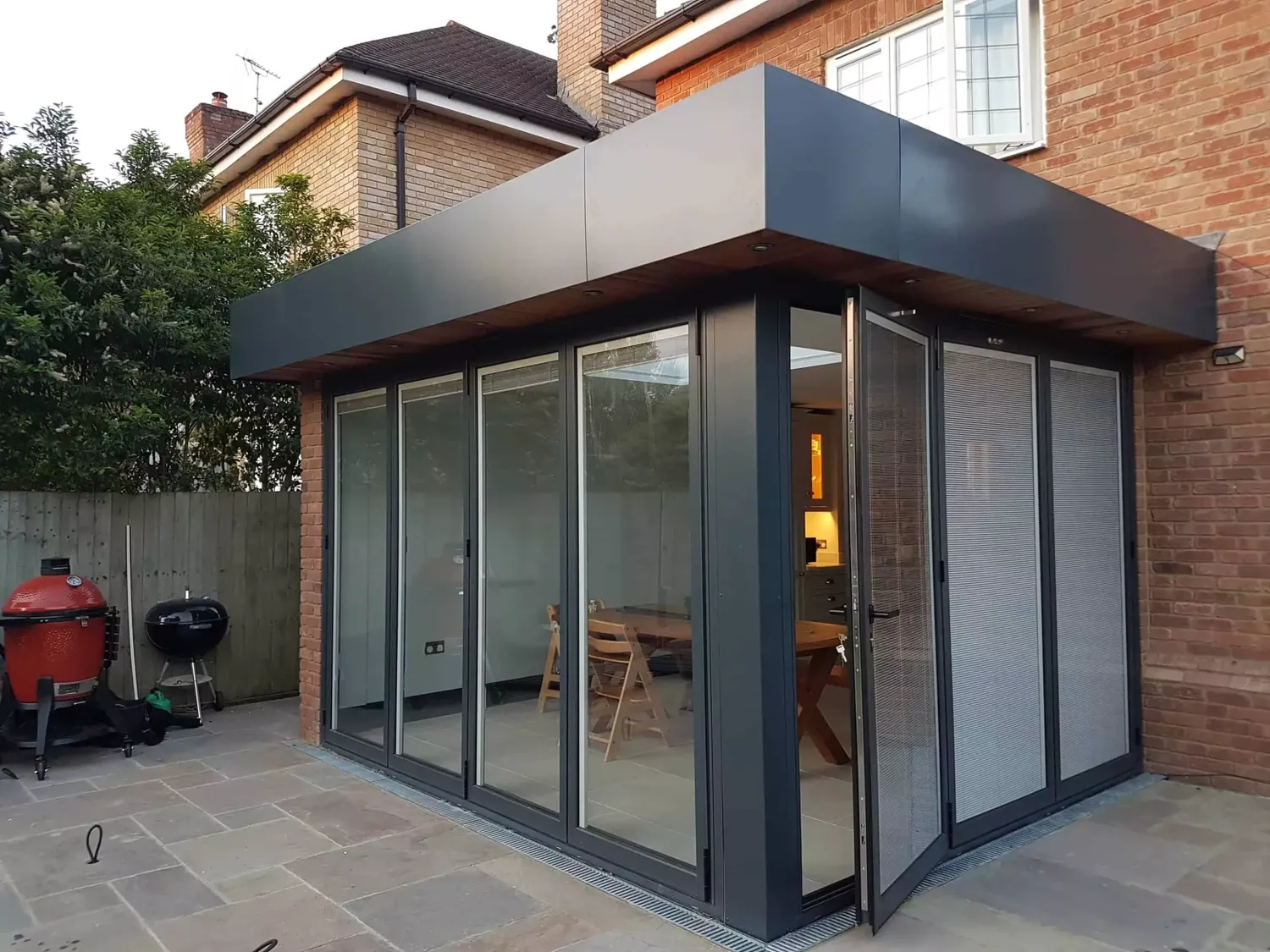
That Peeling Paint Is Trying to Tell You Something
You probably walk past it every day without thinking much about it. The board that runs along the bottom edge of your roof, just above the guttering. It does not shout for attention. But when it starts peeling, cracking, or going soft in the corners, it gets your attention pretty quickly, usually around the time a roofer mentions the word 'rot'.
That board is called the fascia. And if yours is timber or old uPVC, there is a reasonable chance it has been quietly causing problems for a while. The good news is that replacing it is a straightforward job, and if you choose aluminium this time around, it is almost certainly the last time you will need to do it.
What Is a Fascia Board and What Does It Actually Do?
The fascia runs horizontally along the roof edge, closing off the gap between the end of the rafters and the outside world. It carries the guttering, protects the roof timbers behind it from direct weather exposure, and gives the roofline a neat, finished appearance.
Without a functioning fascia, rainwater has nowhere to go except straight down the wall. The structural timbers behind it get wet, rot sets in, and what started as a cosmetic issue becomes a structural one. It is one of those components that homeowners tend not to think about until it fails, by which point the repair bill is usually bigger than it needed to be.
Why Aluminium Is the Sensible Choice for UK Homes
Timber fascias need repainting every three to five years. In practice, most homeowners leave it longer than that, and by the time the paint is clearly failing, moisture has already started working on the wood underneath. It is a cycle of patching and retreating that never really ends.
uPVC was marketed as the maintenance-free alternative in the 1980s and 90s. It solved the rot problem but created a different set of issues. It fades, becomes brittle in cold weather, and most systems have a realistic lifespan of around 20 years before they start looking genuinely tired.
Aluminium fascia solves both problems. It does not rot. It does not fade to a chalky grey over time. A quality powder coated aluminium board has a service life of 30 years or more with nothing more than an occasional wash. Once it is up, you really can stop thinking about it.
UK suppliers like Metal Profiles Ltd manufacture aluminium fascia systems designed and fabricated in the UK, available in a wide range of RAL and BS colours with matching union joints, corner trim, and fixings included. The product is built for external use, which means the powder coat is not the decorative kind that chips off in a year.
What Makes Aluminium Fascia Different From uPVC?
The most important difference is the fire safety classification. Aluminium fascia carries a rating of A2-s1,d0 under UK building regulations, which classifies it as non-combustible. That matters increasingly for properties above a certain height, and for anyone who simply wants to know their roofline materials are not going to add fuel to a fire.
The second difference is the colour range. uPVC comes in perhaps half a dozen off-the-shelf colours. Aluminium can be powder coated in any RAL or BS shade, so if you want anthracite grey to match your new composite door, or a specific heritage cream to sit with the brickwork on an older property, you can have it. The colour is factory-applied and UV stable, not painted on site with a brush.
The third difference is simply how long it lasts. A 2mm aluminium fascia properly installed and occasionally cleaned can realistically serve a property for 30 to 40 years. That is a fundamentally different proposition from replacing uPVC every two decades.
A Quick Look at the Installation Process
Installing aluminium fascia follows a similar sequence to uPVC replacement, with a few specifics worth knowing.
• Remove the existing boards and inspect the rafter tails for any rot or damage before fitting anything new.
• Fix an 18mm marine grade plywood backing board to the rafter tails at 600mm centres to give a flat, consistent substrate.
• Cut the aluminium fascia to length using a jigsaw or skill saw with a metal cutting blade, allowing a 4mm expansion gap at every join.
• Fix through pre-drilled slotted holes using colour matched stainless steel screws, working along the roofline.
• Apply union trim and corner pieces with silicone sealant on the rear face, hold with masking tape until cured.
Metal Profiles Ltd have a full aluminium fascia installation guide on their website that covers the process in more detail, which is worth reading before ordering materials.
How Much Maintenance Does It Need?
Very little, which is part of the appeal. An annual wash with clean water and a soft bristle brush removes the surface dirt and any early organic growth before it has a chance to stain the board. That is genuinely all it takes under normal conditions.
In coastal locations, the salt-laden air is harder on coatings generally, so increasing the cleaning frequency to twice a year is sensible. Avoid pressure washers and abrasive pads, which can damage the powder coat surface and shorten the life of the finish. If the boards pick up minor scratches during installation, touch-up paint in matching colours is available from most aluminium system suppliers.
What to Think About Before You Order
Start by measuring the total linear metres of your roofline and adding around 10 percent for waste and cuts. Confirm the profile width you need based on the depth of your roof overhang. Check what colour your windows and doors are so the fascia can be coordinated rather than just defaulted to white.
It is also worth thinking about the soffit at the same time. The soffit is the horizontal board beneath the fascia that closes the gap between the roof edge and the wall. Replacing both at once costs relatively little extra in terms of scaffold and labour, and gives you a clean, matched roofline rather than a new fascia sitting against an ageing soffit.
Final Thoughts
Aluminium fascia is one of those home improvement decisions that looks expensive at the outset but makes a lot of sense when you look at the whole-life picture. No repainting. No rot. A service life that genuinely outlasts the alternatives. For anyone replacing tired timber or uPVC fascias on a UK home, it is worth the slightly higher upfront cost.
If you are planning a replacement and want to see what aluminium systems are available, Metal Profiles Ltd are a good starting point. They supply a full range of standard and bespoke aluminium fascia products fabricated in the UK, with technical advice available from their team.
Frequently Asked Questions
Can I fit aluminium fascia myself or do I need a professional?
A competent DIYer who is confident working at height can manage a straightforward residential installation. The main things to get right are the substrate preparation, the expansion gaps at joins, and the sealing of corners and junctions. If the rafter tails need repair or the job involves complex roofline details, bringing in a roofline contractor is the safer choice.
Does aluminium fascia need painting?
No. The factory-applied powder coat is the intended long-term finish and does not need painting under normal circumstances. It is far more durable than any on-site applied coating and is specifically formulated for outdoor exposure.
How does aluminium fascia hold up in bad weather?
Very well. Aluminium does not absorb moisture, does not expand and crack in frost, and the powder coat is UV stable. It is essentially unaffected by the typical conditions of a British winter. The main enemy is salt spray in coastal environments, which is why more frequent cleaning is recommended near the coast.
Can I colour match aluminium fascia to my windows?
Yes, provided your windows are also powder coated and you have the RAL or BS colour reference. Most aluminium fascia suppliers can match any standard RAL colour, so coordinating the fascia with composite or aluminium windows is straightforward as long as you confirm the reference before ordering.