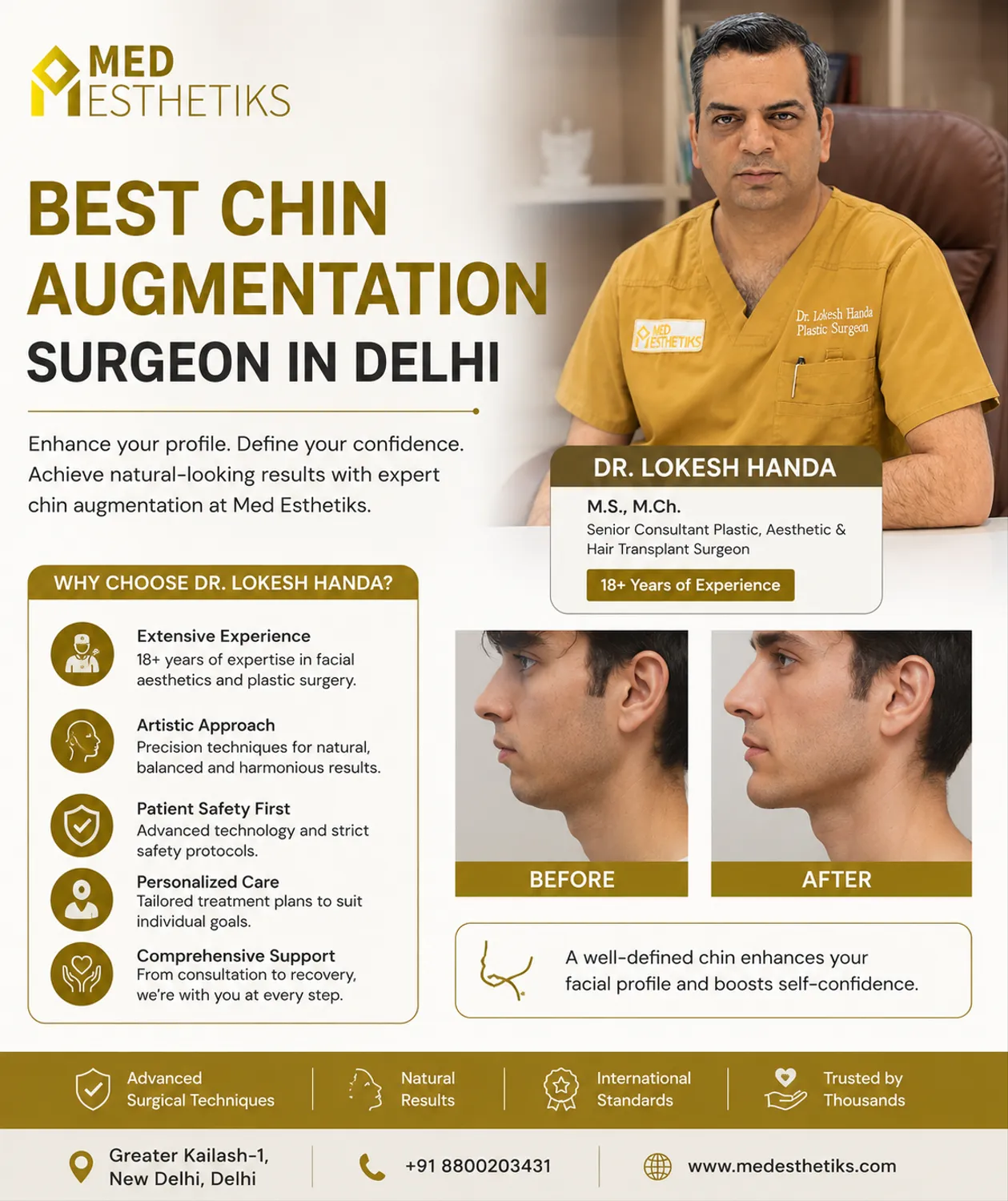
When planning facial rejuvenation or profile balancing, evaluating the structural projection of the lower jaw is critical. A weak or recessed chin can visually distort neighboring features, making a normal nose appear overly prominent and creating an undefined neck profile. For individuals seeking a permanent solution to address these structural imbalances, Chin Augmentation surgery in Delhi offers an advanced, highly customized surgical approach to restore facial harmony and restore confidence.
Achieving aesthetic symmetry in the lower third of the face requires an intimate understanding of craniofacial anatomy. A deficient chin, clinically referred to as microgenia, not only impacts profile aesthetics but also affects the functional tension of the surrounding soft tissues. Modern plastic surgery utilizes biocompatible implants to structurally augment the mandible, providing a natural contour that harmonizes the entire face. In this comprehensive guide, we will analyze the precise anatomical benefits, potential clinical risks, procedural expectations, and key financial considerations associated with this life-changing procedure.
Understanding Modern Mentoplasty: The Surgical Approach
At its core, surgical mentoplasty—commonly known as chin augmentation—is a procedure designed to enhance the projection, width, or vertical height of the lower jaw. Unlike temporary dermal fillers, which require repeated clinical sessions and can occasionally migrate within the soft tissues, a surgical implant provides a permanent, stable skeletal foundation. Modern implants are crafted from highly biocompatible, medical-grade materials such as cohesive silicone or porous polyethylene (Medpor). These materials are inert, meaning they integrate smoothly with the surrounding tissues without triggering an adverse immunological response.
The surgical technique itself is highly refined. To place the implant, a surgeon makes a small, precise incision either inside the mouth (intraorally) or under the chin (submentally). Through this incision, a tight, customized pocket is created directly over the mandibular bone, beneath the periosteum. The implant is then carefully positioned and secured to prevent displacement. By physically shifting the structural projection of the lower face, the procedure provides an elegant, long-term correction that moves in perfect harmony with natural facial expressions.
The Structural Benefits of Chin Augmentation surgery in Delhi
Selecting Chin Augmentation surgery in Delhi provides patients with a permanent method to address developmental microgenia or age-related bone resorption. The primary anatomical benefit of this procedure is the immediate restoration of horizontal facial proportions. When the chin is properly projected, it establishes a balanced relationship with the forehead and nose, which often makes a prominent nose appear smaller and more proportionate without requiring rhinoplasty.
Furthermore, the physical extension of the lower jaw exerts gentle tension on the overlying soft tissues. This structural stretching helps tighten the skin along the jawline, sharpening the neck-to-jaw angle (the cervicomental angle). For patients residing in the New Delhi area who struggle with a soft, poorly defined jawline or a premature double-chin appearance, this physical enhancement offers a dramatic, youth-restoring transformation. By rebuilding the skeletal framework, the procedure effectively defines the lower face, providing a chiseled jawline that remains stable for a lifetime.
Evaluating the Medical Risks and Clinical Safety Standards
While modern mentoplasty boasts an exceptionally high satisfaction rate, any surgical intervention carries inherent clinical risks that patients must carefully evaluate. Objective medical education is a cornerstone of safe care, and understanding potential complications is essential for making an informed decision. The most common temporary side effects include localized swelling, mild bruising, and temporary numbness of the lower lip due to stretching of the mental nerve during pocket creation. These issues typically resolve within a few weeks as the tissues heal.
More serious risks, though rare when the procedure is performed by a qualified specialist, include infection, implant displacement, and asymmetry. If an infection occurs, it is managed aggressively with antibiotics, though in rare instances, temporary removal of the implant may be necessary. Implant shifting can occur if the surgical pocket is made too large or if the implant is not securely anchored during the procedure. Choosing an experienced, board-certified surgeon who utilizes advanced surgical techniques and microscopic fixation screws virtually eliminates the risk of displacement, ensuring a safe and predictable outcome.
Analyzing the Cost: Understanding Plastic surgery cost in Delhi
For many patients planning their aesthetic journey, the financial aspect is a primary consideration. When researching the overall plastic surgery cost in Delhi, it is vital to weigh the long-term value of a permanent surgical procedure against temporary alternatives. While non-surgical options like dermal fillers have a lower initial cost, they must be repeated every one to two years. Over time, the cumulative financial investment of temporary injections far exceeds the one-time cost of a surgical implant.
The specific chin implant cost in Delhi varies depending on several clinical factors. These include the surgical facility fees, the type of anesthesia administered (local sedation vs. general anesthesia), the specific implant material selected, and the clinical expertise of your specialist. Investing in a permanent surgical solution at a state-of-the-art facility ensures you receive the highest standard of medical care, minimizing the risk of complications and delivering a lifetime of maintenance-free confidence.
The Importance of Choosing the Best plastic surgeon in Delhi
Achieving a natural-looking, structurally stable result requires a delicate blend of artistic vision and rigorous medical expertise. Because the lower face contains vital sensory nerves and complex muscular attachments, the procedure must be performed with absolute precision. Partnering with the best plastic surgeon in Delhi is the single most important step you can take to safeguard your health and guarantee an elegant aesthetic outcome.
A highly qualified top plastic surgeon in Delhi will conduct a comprehensive three-dimensional analysis of your face during your initial consultation. By evaluating your skeletal structure, skin elasticity, and dental occlusion, a specialized cosmetic plastic surgeon in Delhi can design an implant configuration that matches your unique anatomy. Seeking care from the best cosmetic surgeon in Delhi ensures your implant is sized perfectly to avoid an over-projected or unnatural appearance, keeping your safety and satisfaction at the forefront of your treatment plan.
Med Esthetiks: Your Destination for Advanced Facial Contouring
For patients seeking peerless clinical standards and customized care, Med Esthetiks stands as a premier plastic surgery clinic in Delhi. Located in the highly accessible, upscale locality of Greater Kailash-1, New Delhi, our facility is equipped with advanced surgical technology designed to deliver world-class aesthetic outcomes. We believe that every patient deserves an individualized, highly ethical treatment pathway built on safety, precision, and natural-looking results.
As a leading best cosmetic clinic in Delhi, we provide a sterile, patient-centric environment where your comfort is our highest priority. From the moment of your initial consultation through your comprehensive post-operative follow-up care, our dedicated medical team is with you every step of the way. We prioritize patient education, ensuring you have a clear understanding of your surgical options, the healing timeline, and the expected long-term outcomes of your transformation.
Clinical Leadership: Dr. Lokesh Handa’s Expertise
The surgical excellence at Med Esthetiks is led by Dr. Lokesh Handa, widely recognized as the best chin augmentation surgeon in Delhi. With over 18 years of dedicated clinical experience and advanced qualifications including an M.S. and an M.Ch. in Plastic Surgery, Dr. Handa brings a wealth of academic knowledge and technical precision to every facial contouring procedure. His deep understanding of craniofacial harmony allows him to design custom treatment plans that respect each patient's natural anatomical features.
As an esteemed plastic surgery doctor in Delhi, Dr. Handa is committed to maintaining the highest standards of safety and ethical medical practice. He utilizes advanced, minimally invasive chin augmentation techniques to minimize tissue trauma, reduce recovery times, and eliminate visible scarring. Under his expert care, patients from across the Delhi NCR receive a highly personalized, comfortable surgical experience designed to deliver a naturally balanced and proportioned profile.
The Recovery Pathway: What to Expect Post-Surgery
Understanding the recovery process is essential for planning your chin augmentation surgery in Delhi effectively. Because modern mentoplasty is highly refined, it is typically performed as an outpatient procedure, allowing you to return home on the same day. During the first three to five days, you should expect moderate swelling and a feeling of tightness around the jawline, which can be easily managed with prescribed pain medications and cold compresses.
To ensure optimal healing, particularly if an intraoral incision was used, patients must maintain a soft-food diet and follow a rigorous oral hygiene routine for the first week. Most individuals can comfortably resume light daily activities and return to work within seven to ten days. While the majority of visible swelling resolves within the first two weeks, the final, highly defined contours of your new jawline will continue to refine over the following two to three months as the soft tissues completely settle over the implant.
Frequently Asked Clinical Questions
What is the expected lifespan of a modern biocompatible chin implant?
Modern chin implants are crafted from highly durable, biocompatible materials such as medical-grade cohesive silicone or porous polyethylene, which are designed to remain safely in place for a lifetime. Unlike temporary dermal fillers that are gradually absorbed by the body, these solid implants do not degrade, leak, or lose their structural shape over time. Once the implant integrates with the surrounding tissues and the healing process is complete, it becomes a permanent extension of your facial skeleton, requiring no ongoing maintenance or future replacement procedures.
Can chin augmentation help improve the appearance of a mild double chin?
Yes, chin augmentation is highly effective at reducing the appearance of a mild double chin caused by a receding jawline. When a custom implant projects the lower jaw forward, it physically stretches and tightens the loose, redundant skin and soft tissues in the submental area underneath the chin. This structural stretching sharpens the angle between the neck and the jawline, creating a much more defined, youthful, and contoured profile without the need for localized fat removal or submental liposuction.
What are the primary differences between the submental and intraoral incision methods?
The submental approach involves a very small incision placed in a natural skin crease underneath the chin, offering the surgeon maximum visibility to position and secure the implant while carrying a lower risk of bacterial exposure. The intraoral approach places the incision inside the mouth along the lower lip, leaving absolutely no visible external scars but requiring strict dietary modifications and oral hygiene protocols during the initial healing phase to prevent infection. Your surgeon will recommend the best pathway based on your unique anatomy and preferences.
Is the recovery process painful, and how long will I need to take off from work?
Most patients report that the recovery after modern chin augmentation is highly manageable, describing the sensation as a tight, mild soreness rather than acute pain. Any discomfort experienced during the first few days is easily controlled with standard prescribed pain medications. Most patients feel comfortable returning to non-strenuous desk jobs and daily social activities within seven to ten days, once the initial post-operative swelling and minor bruising have begun to subside.