One of the first questions organizations ask before beginning an ERP transformation is, "How long does SAP S/4HANA migration take?" The answer isn't the same for every business. Migration timelines vary depending on the size of the organization, the complexity of existing systems, the quality of business data, custom developments, and the migration strategy selected.
While some projects can be completed in a few months, enterprise-wide SAP S/4HANA migrations may take a year or more. Understanding the factors that influence project duration helps organizations set realistic expectations, allocate resources effectively, and reduce implementation risks.
Typical SAP S/4HANA Migration Timeline
Although every project is unique, most SAP S/4HANA migration initiatives follow a similar lifecycle.
A typical migration project includes:
- Project planning and assessment
- System and business process evaluation
- Data cleansing and preparation
- Migration design and implementation
- Testing and validation
- User training
- Go-live and post-deployment support
Smaller organizations with relatively simple SAP environments may complete these activities in four to six months. Mid-sized businesses often require six to nine months, while large enterprises with multiple business units, global operations, and extensive customizations may require twelve months or longer.
Rather than focusing solely on speed, organizations should prioritize accuracy, data quality, and long-term business value.
Factors That Affect Migration Duration
Several variables influence how long SAP S/4HANA migration takes.
1. Size of the Organization
The larger the organization, the more business processes, users, systems, and data need to be migrated.
Global enterprises often manage multiple manufacturing plants, warehouses, regional offices, and business units, making migration significantly more complex than for smaller businesses.
2. Data Quality
Poor-quality data is one of the biggest reasons migration projects take longer than expected.
Duplicate customer records, obsolete materials, incomplete vendor information, and inconsistent master data require extensive cleansing before migration begins.
Organizations that invest time in preparing clean data typically experience smoother migrations and fewer issues after go-live.
3. Existing System Complexity
Many businesses have customized SAP ECC systems that have evolved over many years.
Custom code, third-party integrations, legacy applications, and industry-specific workflows all require careful analysis before migration.
The more complex the current environment, the more planning and testing are required.
4. Migration Approach
The migration strategy selected also affects project timelines.
Organizations generally choose one of three approaches:
- Greenfield Implementation – Building a completely new SAP S/4HANA environment. This often requires more planning but provides an opportunity to redesign business processes.
- Brownfield Conversion – Upgrading an existing SAP ECC system while preserving current processes. This approach may reduce implementation time but still requires significant preparation.
- Selective Data Transition – Migrating only selected business data and processes. This approach offers flexibility but requires detailed planning.
Choosing the right migration strategy helps balance project duration with business objectives.
5. Testing Requirements
Testing should never be rushed.
Successful SAP S/4HANA projects include multiple testing phases such as:
- Functional Testing
- Integration Testing
- Performance Testing
- User Acceptance Testing (UAT)
- Data Validation
Organizations that dedicate sufficient time to testing typically avoid costly production issues after deployment.
6. User Training and Change Management
Technology is only part of a successful migration.
Employees need time to understand new SAP Fiori interfaces, updated business processes, reporting capabilities, and daily operational tasks.
Effective training programs improve user adoption and reduce support requests after go-live.
How to Shorten SAP S/4HANA Migration Timelines
Although every migration requires careful planning, organizations can reduce unnecessary delays by following proven best practices.
Start Planning Early
Early planning helps identify technical challenges, integration requirements, and business priorities before implementation begins.
A detailed roadmap also enables better resource allocation throughout the project.
Improve Data Quality Before Migration
Cleaning and validating business data before migration eliminates unnecessary rework later in the project.
Organizations should remove duplicate records, archive obsolete information, and standardize master data before beginning migration activities.
Use Migration Automation
Manual migration activities often consume valuable time and increase the likelihood of human error.
Automation simplifies:
- Data extraction
- Data transformation
- Data validation
- Data loading
- Reporting
Automated migration processes improve consistency while reducing project timelines.
Engage Business Users Early
Business users understand operational processes better than anyone else.
Involving them throughout planning, testing, and validation ensures critical business requirements are addressed before deployment.
Monitor Project Progress Continuously
Regular project reviews help identify bottlenecks before they impact the overall migration schedule.
Continuous monitoring also allows teams to adjust timelines and resources as needed.
Common Mistakes That Delay Migration Projects
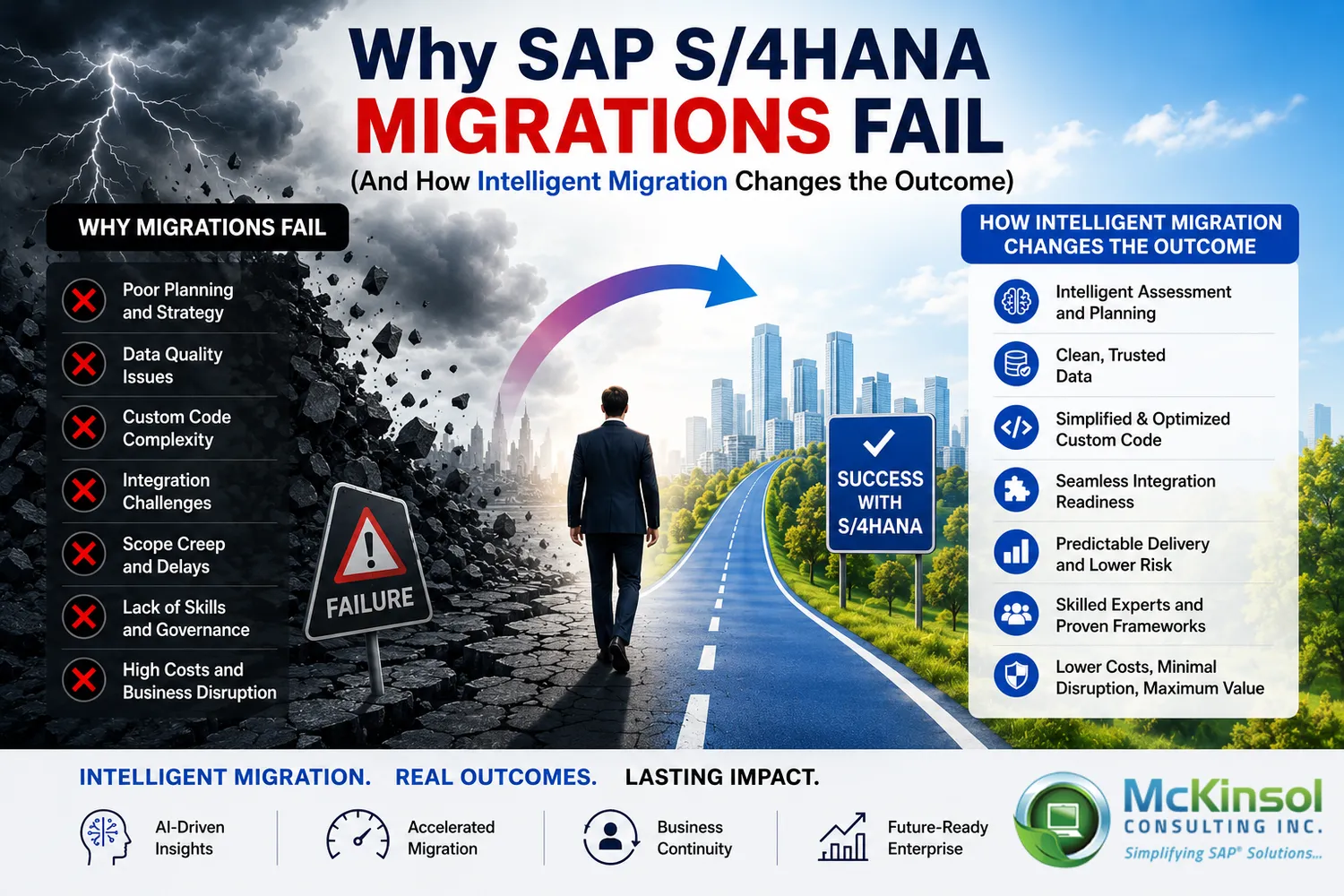
Many organizations unintentionally extend migration timelines by making avoidable mistakes, including:
- Beginning migration without a clear roadmap.
- Migrating poor-quality data.
- Underestimating custom developments.
- Ignoring integration complexity.
- Performing limited testing.
- Delaying user training.
- Relying heavily on manual migration processes.
Avoiding these issues helps organizations stay on schedule while minimizing migration risk.
Conclusion
Understanding how long SAP S/4HANA migration takes helps organizations build realistic project plans and avoid unnecessary delays. While project duration depends on factors such as system complexity, data quality, migration strategy, and business requirements, success is determined by preparation rather than speed.
Organizations that focus on clean data, structured planning, automation, comprehensive testing, and strong collaboration between business and IT teams are far more likely to complete their SAP S/4HANA migration successfully and realize long-term business value.
To explore additional strategies for reducing migration risks and improving project outcomes, read McKinsol's complete guide: Why SAP S/4HANA Migrations Fail (And How Intelligent Migration Changes the Outcome).