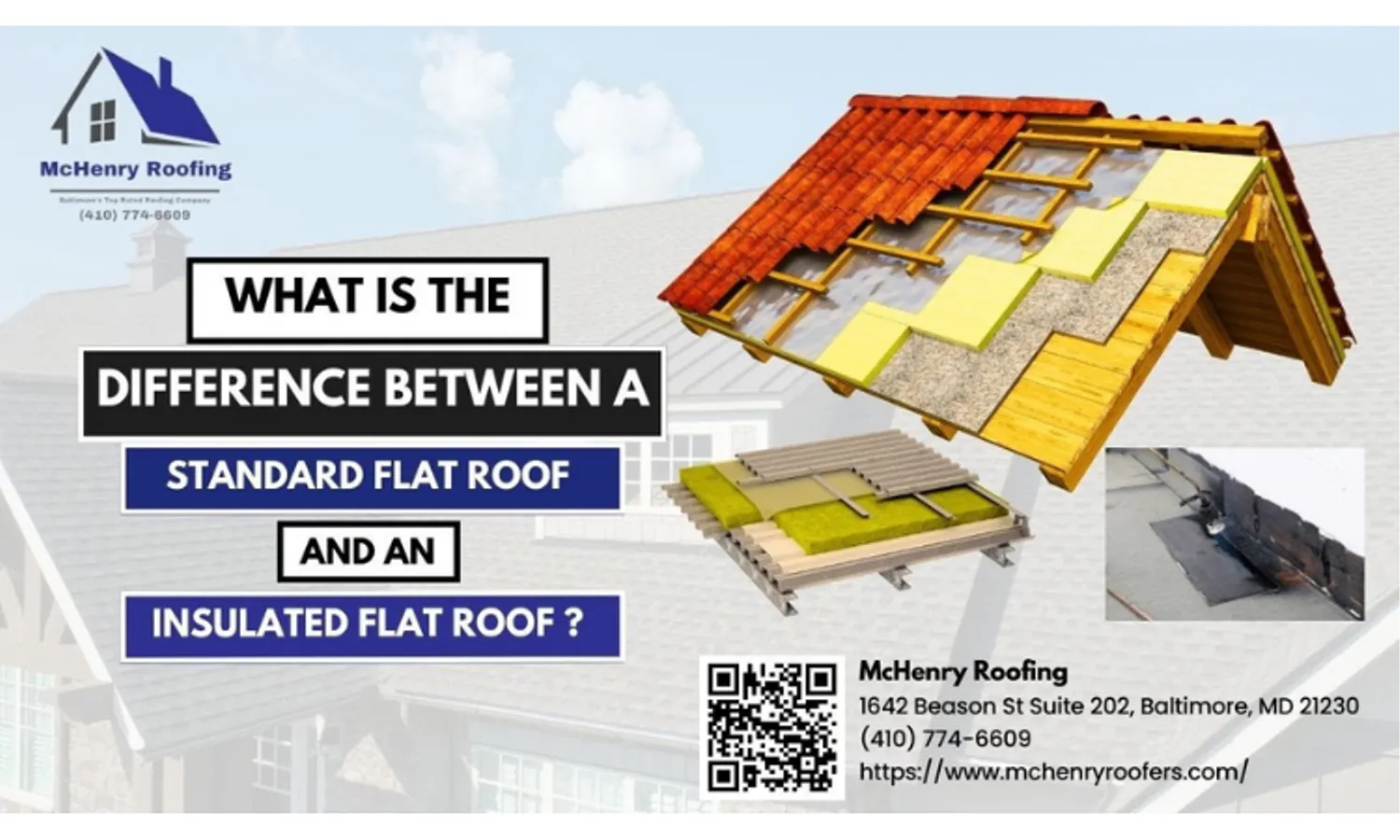
The key difference between a standard flat roof and an insulated one is the material used. A standard flat roof is typically made of tar and gravel, asphalt, or other low-cost materials; whereas an insulated flat roof will use more advanced insulation methods to boost energy efficiency. The insulation may be in the form of spray foam, fiberglass batting, rigid board insulation, or other solutions that are moisture-resistant and provide thermal resistance.
With an insulated flat roof, you'll experience greater savings from heating and cooling costs since your HVAC system won't have to work as hard to maintain a comfortable temperature inside your building all year round. You also avoid damage from wind uplift which can occur with standard roofs due to inadequate sealing against the elements. Ultimately you get better protection from severe weather elements like rain and snow too which could otherwise penetrate through the roofing material over time.
If you're considering installing an insulated flat roof for your home or business building, it's best to consult with a local experienced insured, and licensed residential or commercial roofing contractor first before making any decisions regarding installation type and cost estimates based on what's suitable for your needs specifically.
Advantages of a Standard Flat Roof
Many homeowners face the same dilemma when it comes to choosing the right roofing solution for their homes. The decision is always between a standard sloping roof or a standard flat roof. While both options come with their advantages and disadvantages, a standard flat roof has proven to be the best choice in many instances. Here are some of the top advantages of a standard flat roof and why it might just be the best option for your home.
1. Budget-Friendly Installation and Maintenance
One of the top reasons why many homeowners choose a standard flat roof is its budget-friendly installation and maintenance requirements. A standard flat roof is much easier and cheaper to install than a sloped roof, which requires additional framing and support to hold up the weight of the roof. Flat roofs are also easy to maintain, as they have no complicated curves or slopes that can make repairs and clean more challenging. Additionally, many flat roofing materials are affordable, meaning that you won't have to break the bank to install and maintain a flat roof.
2. Energy Efficient
Another significant advantage of standard flat roofs is their energy efficiency. Flat roofs can help reduce your energy bills by reflecting sunlight and preventing heat transfer into your home. With proper insulation, a flat roof can help keep your home warm in the winter and cool in the summer, thus reducing your reliance on air conditioning and heating systems. Moreover, many flat roofing materials such as EPDM, TPO, and PVC are exceptionally thermally efficient and can help you save on your energy bills.
3. Versatility in Design
Because flat roofs don't have sloping angles, they're more versatile in design than sloped roofs. With a flat roof, you can explore a wide range of design options that will make your home stand out. You can add skylights, green roofs, rooftop decks, and pools on top of your flat roof. Moreover, you can use your flat roof as an outdoor recreational area, providing you with additional living and entertainment space.
4. Increased Weather Protection
Flat roofs have a slight slope that allows water to drain off the roof quickly. This slope also means that there are no areas where snow, ice, or water can accumulate, which can cause damage to your roof. Additionally, flat roofs are typically made from durable materials that can withstand harsh and volatile weather conditions. Whether you live in an area prone to heavy rain, hail, or strong winds, a flat roof can provide your home with increased protection against the elements.
5. Increased Property Value
Lastly, a standard flat roof can increase your property's value. If you're looking to sell your property in the future, having a flat roof can be an attractive feature to potential buyers. Flat roofs are low-maintenance, energy-efficient, and versatile in design, making them a valuable asset to many homeowners. Moreover, many potential buyers are willing to pay more for a home with a flat roof, as it's a feature that can save them money on energy bills and increase their living space.
Opting for a standard flat roof comes with many advantages that make it an excellent choice for many homeowners. From being budget-friendly to energy-efficient, versatile in design, and weather-resistant, flat roofs can provide your home with many benefits that you won't get from a sloped roof. Whether you're building a new home or considering replacing your current roof, consider the many advantages that a flat roof can provide. Not only will it save you money on installation and maintenance, but it'll also increase your property's value and provide you with a more comfortable and sustainable living environment.
Benefits of an Insulated Flat Roof
When it comes to roof construction, flat roofs have become increasingly popular over the years for several reasons. They give a modern look, have more accessibility than pitched roofs, and have economical maintenance costs. However, flat roofs sometimes come with worries about insulation and water damage. This is where an insulated flat roof comes into play. We will discuss the benefits of insulating your flat roof.
1. Energy Savings
An insulated flat roof provides a layer of insulation that ensures that heat is prevented from escaping, keeping your space warm during chilly weather. This reduces the need for artificial heating, which ultimately leads to significant energy savings in terms of reduced energy utility bills.
2. Water Protection
Roofs are exposed to many environmental factors such as rain and snow, which can cause water damage if not appropriately insulated. Flat roofs are notorious for water pooling since they often have a low pitch. Insulating your roof not only prevents heat loss but also protects your roof from water damage by adding an extra layer of waterproofing material.
3. Soundproofing
Flat roofs tend to amplify sound, which can be annoying, especially when you're trying to work or sleep. However, insulating your flat roof can help to reduce sound transmission, which creates a quieter and more comfortable living or work environment. This makes it a great option for commercial buildings and apartments.
4. Durability
A good quality insulation material can improve the lifespan of your roof by protecting it from unnecessary wear and tear. With a properly insulated flat roof, you won't have to worry about frequent repairs or replacements, which saves you money in the long run.
5. Improved Air Quality
Roofs tend to accumulate dust, debris, and moisture over time, which can lead to the growth of mold and mildew. This can pose health risks for people with allergies or respiratory problems. Insulating your flat roof helps to regulate temperature and humidity levels, which in turn improves the air quality of your space.
Insulating your flat roof is a great upgrade that comes with a range of benefits. The durability, energy efficiency, protection from water damage, soundproofing, and improved air quality all make it a worthwhile investment. If you're considering this upgrade for your flat roof, get in touch with a professional contractor to advise you on the best insulation material to choose from.
Which Type of Flat Roof is Better for Your Home or Building
Flat roofs have gained popularity over the years due to their sleek appearance, easy maintenance, and cost-effectiveness. They are ideal for a variety of settings, ranging from homes to commercial buildings. However, when it comes to choosing the best type of flat roof for your structure, it can be a tough decision to make. We will explore the most popular types of flat roofing systems and evaluate which one is best for different applications.
1. EPDM
Ethylene Propylene Diene Monomer (EPDM) is a synthetic rubber material that is often used in the construction of flat roofs. It is a popular option due to its durability and ease of installation. EPDM is resistant to...Read more
Social Links:
Website: https://www.mchenryroofing.com/
Youtube: http://youtube.com/@mchenryroofingbaltimore
Facebook: https://www.facebook.com/profile.php?id=100067641947433
Twitter: https://twitter.com/roofingmchenry
Blogger: https://blog.mchenryroofers.com/ | https://roofingmchenry.blogspot.com/
WordPress: https://roofingmchenry.wordpress.com/