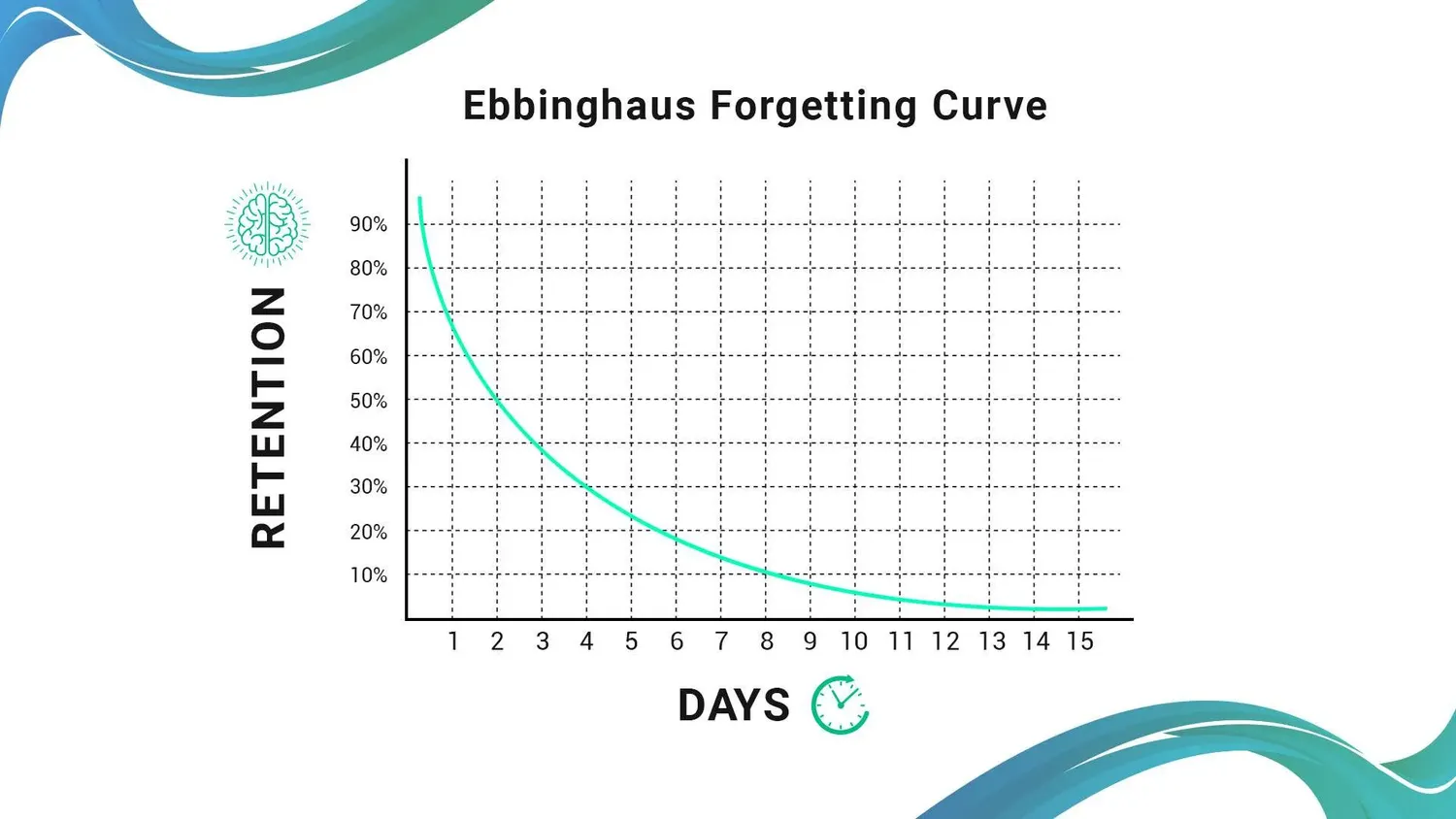
Learning is a continuous journey that involves not just acquiring new knowledge but also retaining it over time. One of the biggest challenges in education and training is the Ebbinghaus Forgetting Curve, which illustrates how quickly information is forgotten without reinforcement. MaxLearn's approach to combating the Forgetting Curve integrates principles of microlearning, spaced repetition, and active engagement to ensure learners retain what they learn for longer periods. In this comprehensive article, we’ll explore the concept of the Forgetting Curve, the strategies MaxLearn uses to overcome it, and how these methods can improve learning outcomes.
Understanding the Ebbinghaus Forgetting Curve
The Ebbinghaus Forgetting Curve, developed by Hermann Ebbinghaus in the late 19th century, describes how memory retention declines over time. According to Ebbinghaus, learners forget a significant portion of new information within hours or days after learning it. The curve is characterized by a steep drop in retention immediately after learning, followed by a gradual decline over time. Without reinforcement, learners may forget up to 80% of new information within a few weeks.
The Forgetting Curve highlights the need for effective learning strategies that promote retention and combat forgetting. Without intervention, learners may struggle to recall important concepts, leading to gaps in knowledge and a decline in performance. To address this challenge, educators and trainers must implement techniques that reinforce learning and encourage long-term retention.
MaxLearn's Approach to Combating the Forgetting Curve
MaxLearn employs a multifaceted approach to combat the Forgetting Curve, focusing on key principles that enhance memory retention and promote continuous learning. These principles include microlearning, spaced repetition, active engagement, and continuous reinforcement. Let's explore how MaxLearn's methodology incorporates these principles to improve learning outcomes.
Microlearning: Bite-Sized Learning for Better Retention
Microlearning is a learning strategy that delivers content in small, focused segments. It’s an effective approach for combating the Forgetting Curve because it allows learners to absorb information without feeling overwhelmed. By breaking down complex topics into manageable pieces, microlearning reduces cognitive overload and improves retention.
MaxLearn's microlearning approach involves:
- Short Lessons: Each lesson is designed to be concise, typically lasting a few minutes. This brevity ensures that learners can focus on specific concepts without distraction.
- Diverse Formats: Microlearning content is delivered in various formats, including videos, quizzes, infographics, and simulations. This variety keeps learners engaged and caters to different learning styles.
- Clear Learning Objectives: Each microlearning module has a clear learning objective, ensuring that learners understand the purpose of the lesson and what they should take away from it.
Microlearning's focus on brevity and clarity helps learners retain information more effectively, reducing the likelihood of forgetting.
Spaced Repetition: Reinforcing Learning Over Time
Spaced repetition is a learning technique that involves reviewing information at intervals over time. This method is designed to counteract the Forgetting Curve by reinforcing learning and promoting long-term retention. By revisiting concepts at strategic intervals, spaced repetition helps learners retain information and reduces the rate of forgetting.
MaxLearn's approach to spaced repetition involves:
- Regular Review Sessions: Learners are encouraged to revisit microlearning modules at regular intervals. This consistent reinforcement strengthens memory and reduces the risk of forgetting.
- Progressive Complexity: Spaced repetition can involve increasing the complexity of content over time. As learners build on foundational concepts, they are challenged to apply their knowledge in more complex scenarios.
- Personalized Review Paths: MaxLearn uses data-driven insights to create personalized review paths for learners. This personalization ensures that learners focus on areas where they need reinforcement, optimizing their learning experience.
Spaced repetition is a powerful tool for combating the Forgetting Curve, allowing learners to reinforce their knowledge and improve retention.
Active Engagement: Promoting Deeper Learning
Active engagement is a critical component of effective learning. When learners actively participate in the learning process, they are more likely to retain information and apply it in real-world scenarios. MaxLearn's approach to active engagement involves creating interactive and immersive learning experiences that promote deeper learning.
MaxLearn's active engagement strategies include:
- Interactive Quizzes and Simulations: Learners are encouraged to engage with interactive content, such as quizzes and simulations. These activities require learners to apply their knowledge, reinforcing learning and promoting retention.
- Collaborative Learning: MaxLearn fosters a collaborative learning environment where learners can interact with peers, share knowledge, and discuss concepts. This collaborative approach encourages active engagement and enhances learning outcomes.
- Real-World Applications: MaxLearn's microlearning modules often include real-world scenarios that challenge learners to apply their knowledge. This practical application reinforces learning and makes concepts more relevant.
Active engagement not only combats the Forgetting Curve but also enhances the overall learning experience, making it more enjoyable and meaningful.
Continuous Reinforcement: Building a Culture of Learning
Continuous reinforcement is essential for promoting long-term retention and combating the Forgetting Curve. MaxLearn's approach involves creating a culture of continuous learning, where learners are encouraged to reinforce their knowledge and pursue ongoing development.
MaxLearn's continuous reinforcement strategies include:
- Regular Refresher Courses: In addition to spaced repetition, MaxLearn offers regular refresher courses to reinforce key concepts. These courses help learners stay up-to-date with changing information and prevent knowledge decay.
- Additional Learning Resources: MaxLearn provides learners with additional resources, such as articles, videos, and online courses, to support continuous learning. These resources offer learners opportunities to explore topics in greater depth.
- Recognition and Rewards: To motivate learners, MaxLearn incorporates recognition and rewards into its learning programs. By acknowledging achievements and milestones, MaxLearn fosters a sense of accomplishment and encourages learners to continue their learning journey.
Continuous reinforcement is a key factor in combating the Forgetting Curve, as it creates a supportive environment where learners can build on their knowledge and skills.
Best Practices for Implementing MaxLearn's Approach
Implementing MaxLearn's approach to combating the Forgetting Curve requires careful planning and a commitment to continuous improvement. Here are some best practices for ensuring a successful implementation:
1. Define Clear Learning Goals
Start by defining clear learning goals for the training program. Identify the specific skills and knowledge that learners need to acquire. These goals will guide the design and implementation of the learning program, ensuring that it addresses the needs of the learners and the organization.
2. Create Engaging and Interactive Content
Develop microlearning content that is engaging and interactive. Use a variety of formats, such as videos, quizzes, and simulations, to keep learners interested. Incorporate real-world scenarios and collaborative activities to promote active engagement and deeper learning.
3. Implement Spaced Repetition and Regular Review
To combat the Forgetting Curve, implement spaced repetition and regular review sessions. Create a schedule for reviewing key concepts at strategic intervals, ensuring that learners reinforce their knowledge over time. Encourage learners to revisit content and participate in refresher courses.
4. Foster a Culture of Continuous Learning
Promote a culture of continuous learning within the organization. Encourage learners to pursue ongoing development and provide them with additional resources to support their learning journey. Recognize achievements and milestones to motivate learners and create a positive learning environment.
5. Gather Feedback and Measure Effectiveness
Collect feedback from learners to assess the effectiveness of the learning program. Use surveys, questionnaires, and other feedback mechanisms to gather insights into what works and what needs improvement. Additionally, track key metrics, such as completion rates and test scores, to measure the program's success.
Conclusion: Combating the Forgetting Curve with MaxLearn
The Ebbinghaus Forgetting Curve presents a significant challenge in education and training, but with the right approach, it can be effectively combated. MaxLearn's methodology, which integrates microlearning, spaced repetition, active engagement, and continuous reinforcement, offers a powerful solution for promoting long-term retention and reducing the rate of forgetting.
By implementing MaxLearn's approach, organizations can create learning programs that not only combat the Forgetting Curve but also promote continuous learning and development. This comprehensive strategy can lead to improved learning outcomes, enhanced employee performance, and a culture of knowledge and growth.
As the business landscape continues to evolve, the ability to retain and apply knowledge is more critical than ever. By embracing MaxLearn's approach, organizations can empower learners to overcome the Forgetting Curve and achieve lasting success.