Turning Video Views Into Actual Business Decisions
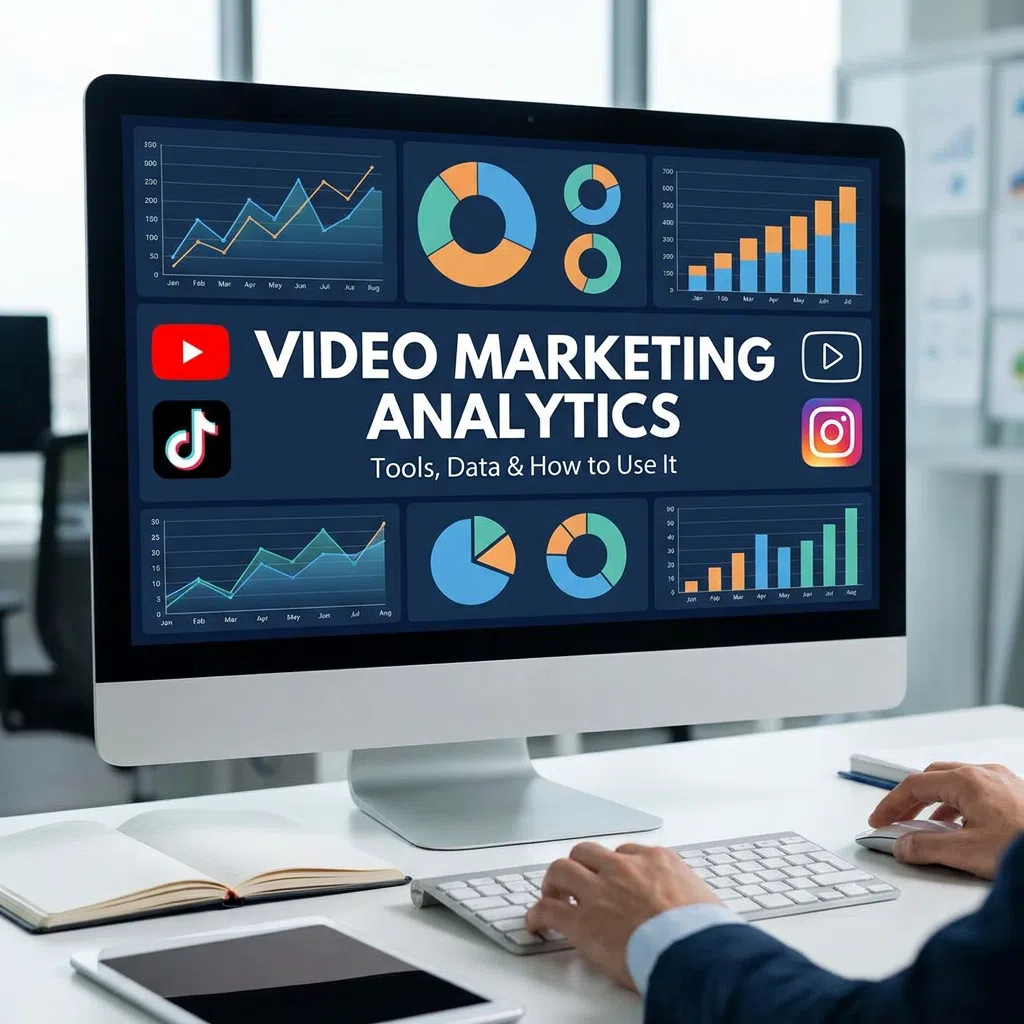
Every marketing team sitting on a pile of video content eventually asks the same question: is any of this actually working? View counts and likes feel good, but they don't tell you whether a video moved someone closer to a purchase or just passed the time during a commute. Video marketing analytics exists precisely to answer that harder question — not "did people watch," but "did it matter."
Why Platform Dashboards Only Tell Half the Story
Every video platform ships with its own analytics panel, and teams naturally lean on them first — watch time, retention curves, audience demographics, all sitting right there with zero setup. The catch is that none of it explains what happened once someone left the platform. A video with excellent retention on YouTube could still be driving zero traffic to a website, and the dashboard would never tell you that. That disconnect is exactly why analytics has to extend beyond any single platform's numbers.
Bridging Video to Real Website and Sales Data
Getting a fuller picture means tagging video-driven traffic separately, tracking conversion events tied to specific campaigns, and — for businesses with longer sales cycles — connecting video engagement to CRM records. This is the layer most teams skip, and it's usually the reason nobody in the company can confidently say whether video is contributing to revenue or just to vanity metrics.
The Attribution Puzzle Nobody Fully Solves
If there's one part of this discipline that trips up even experienced marketers, it's attribution. Video tends to do its best work early in a buyer's journey, influencing decisions long before the final click that gets credited with the "sale." Relying only on last-touch attribution means systematically undercounting video's actual value. Multi-touch models, incrementality testing, and marketing mix modeling each approach the problem from a different angle, and none of them is a complete answer on its own — which is why serious measurement practices rarely bet on just one.
What AI Actually Adds to the Picture
AI hasn't replaced the fundamentals of measurement, but it has changed how much detail teams can pull out of existing data. Scene-by-scene drop-off analysis can point to the exact moment viewers lose interest, instead of a single vague completion percentage. Comment sentiment can be processed at a scale no human team could manage manually. Predictive models can even give a rough read on how a video is likely to land before it's published — useful for catching problems early rather than after a campaign has already spent its budget.
A Resource Worth Working Through
Teams that want to go deeper into the mechanics of all this — the specific tools for each layer, how to sequence the buildout, and where attribution methods actually diverge — will get real value from VidPromot's guide, Video Marketing Analytics: Tools, Data & How to Use It. It's structured as a practical walkthrough rather than a tool list, which makes it easier to actually apply.
Analytics Doesn't Exist in a Vacuum
It's worth remembering that even flawless video measurement can't compensate for a weak digital presence around it. A well-measured video campaign still needs solid SEO, credible online reputation, and a coherent content strategy to actually convert attention into results. This is the kind of broader groundwork agencies such as SanMo CA focus on, helping brands make sure the rest of their digital footprint can actually support what a strong video program brings in.
Building the Stack in the Right Order
One detail that's easy to overlook: the order you build this in matters as much as what you build. VidPromot's guide lays out a sensible sequence — native data first, then web analytics, then conversion tracking once spend justifies it, and only then attribution modeling or AI-assisted analysis. Teams that try to install every layer before running a single campaign usually end up with tracking infrastructure nobody actually uses.
Keep the Investment Proportional
The underlying principle holds regardless of company size: analytics should scale with what the video program genuinely needs at each stage, not get front-loaded out of fear of missing something. Clean tracking and clear goals come first. Everything more advanced — including AI — works best as an addition to that foundation, not a substitute for skipping it.
Conclusion
The point of video marketing analytics was never to collect more numbers — it's to connect the numbers that already exist into something that actually informs a decision. Native dashboards are a fine entry point, but the real payoff comes from linking video data to on-site behavior, conversions, and, where relevant, CRM records. Attribution stays imperfect no matter how sophisticated the tooling gets, which is why the strongest measurement setups combine multiple methods instead of trusting one blindly. As the VidPromot guide makes clear, the goal is a measurement practice that grows with the video program — not one that tries to do everything from day one.
Frequently Asked Questions
1. Where should a team start if they have no video analytics setup at all?
Begin with native platform dashboards to understand baseline content performance before adding web analytics or conversion tracking.
2. Why do last-click attribution models undercount video's impact?
Because video frequently influences a decision earlier in the buyer's journey without being the final interaction, last-click models miss most of that earlier influence.
3. Is incrementality testing better than multi-touch attribution?
They answer different questions — incrementality testing isolates causal impact using a holdout group, while multi-touch attribution distributes credit across every touchpoint in a journey. Many teams use both.
4. Does a small business really need a full analytics stack for video?
No — native platform data plus basic web analytics integration is usually enough until video spend and volume grow large enough to justify more advanced attribution.
5. What's the most common mistake teams make with video analytics?
Adopting advanced tools or attribution methods before fixing basic tracking gaps, which produces reporting that looks sophisticated but rests on unreliable data.
6. How does video analytics relate to a brand's broader digital marketing efforts?
Video performance is easier to interpret and act on when it's read alongside the rest of a brand's digital presence, which is why many businesses pair video measurement with broader SEO and digital marketing support.