How SWOT Analysis Can Improve Your Digital Marketing Strategy
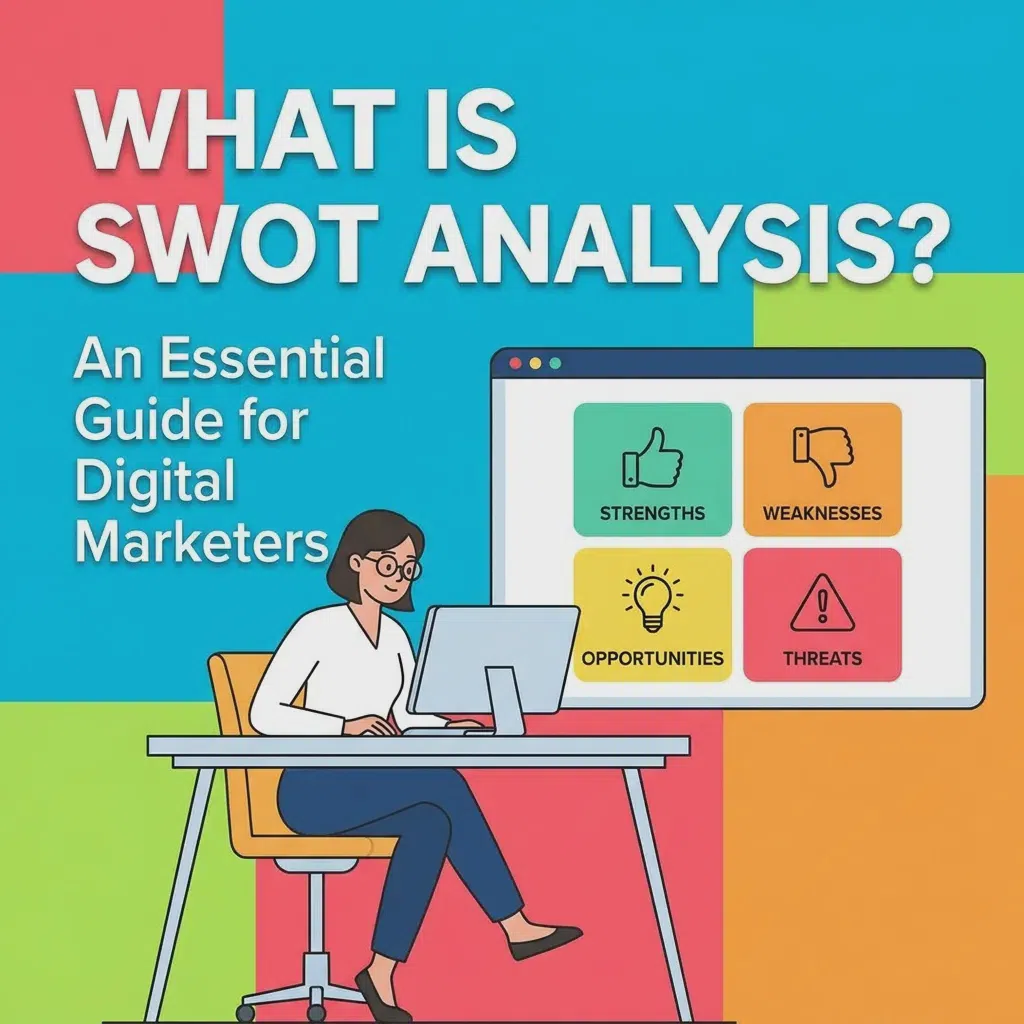
Digital marketing success does not come from publishing content, running advertisements, or posting regularly on social media alone. A successful strategy requires marketers to understand where their business currently stands and what could affect its future performance.
One practical framework that can help with this process is SWOT analysis.
SWOT analysis gives digital marketers a structured way to evaluate their marketing position by looking at Strengths, Weaknesses, Opportunities, and Threats. Strengths and weaknesses are generally internal factors, while opportunities and threats are external factors.
What Is SWOT Analysis?
SWOT analysis is a strategic planning method used to examine the current position of a business, project, campaign, or marketing strategy.
In digital marketing, it can help businesses understand:
What they are doing well
Where their marketing has limitations
Which market opportunities are available
What external risks could affect performance
How they can improve their competitive position
For marketers who want to explore the topic in greater detail, this complete guide to SWOT analysis for digital marketers offers a useful overview of the framework and its applications.
Understanding the Four SWOT Elements
The real value of SWOT analysis comes from examining each component carefully rather than simply filling four boxes with generic statements.
Strengths: What Does Your Business Do Well?
Strengths are internal advantages that can support your digital marketing performance.
Examples include:
Strong brand awareness
High-quality website content
Experienced marketing professionals
Strong organic visibility
Loyal customers
High engagement rates
Effective email campaigns
Strong customer reviews
For example, if a company consistently ranks for valuable search terms and receives substantial organic traffic, its SEO performance could be considered a strength.
The goal is to identify assets that competitors may find difficult to replicate.
Weaknesses: Where Can You Improve?
Weaknesses are internal limitations that can reduce marketing effectiveness.
A business may have excellent products but still struggle because of:
Poor website speed
Low conversion rates
Inconsistent content
Limited marketing resources
Weak social media activity
Poor mobile experience
Lack of analytics
Dependence on a single traffic source
Identifying weaknesses is not about criticizing a business. Instead, it helps marketers determine where improvements should be prioritized.
For example, if a website receives thousands of visitors but generates very few leads, conversion optimization may become a major priority.
Opportunities: Where Can You Grow?
Opportunities are external situations that a business may be able to take advantage of.
Digital marketing opportunities can appear through:
Emerging search trends
New content formats
Untapped keywords
New social platforms
Growing customer demand
Competitor content gaps
AI-powered marketing tools
New audience segments
Local search opportunities
Suppose competitors have strong visibility for traditional keywords but very little content covering a newly emerging topic. That gap could represent an opportunity for another brand.
Threats: What Could Hurt Your Performance?
Threats are external factors that could negatively affect a company's marketing strategy.
Examples include:
Stronger competitors
Search algorithm changes
Increasing advertising costs
Changing consumer behavior
Platform policy changes
New market entrants
Privacy regulations
Declining organic reach
For digital marketers, monitoring threats is particularly important because online platforms and customer behavior can change rapidly.
Why SWOT Analysis Matters for Digital Marketers
A digital marketing strategy often involves multiple channels. SEO, social media, email marketing, paid advertising, content marketing, and influencer marketing may all work together.
Without a strategic framework, marketers can easily focus on activities rather than results.
SWOT analysis helps bring these activities together and provides a clearer strategic picture.
1. It Helps Identify Competitive Advantages
Your business may have something valuable that competitors do not.
It could be:
Better content
Stronger customer relationships
A recognizable brand
Better organic rankings
Unique data
Specialized expertise
Identifying these advantages allows marketers to build strategies around them.
2. It Reveals Marketing Problems
SWOT analysis can expose problems that may otherwise remain unnoticed.
For example, a business might discover that:
Most traffic comes from one channel.
Content is not targeting valuable search queries.
Social engagement is declining.
Website visitors are not converting.
Marketing data is not being tracked properly.
Once these issues are visible, marketers can create specific improvement plans.
3. It Helps Discover New Opportunities
Market research, competitor analysis, keyword research, and customer feedback can reveal opportunities that may not be obvious at first.
A SWOT framework helps organize these findings and determine which opportunities deserve attention.
4. It Supports Risk Management
Every digital marketing strategy has potential risks.
A competitor could increase its advertising budget. A platform could change its algorithm. Customer preferences could shift.
Identifying these threats in advance gives marketers more time to prepare alternative strategies.
How to Perform a SWOT Analysis for Digital Marketing
Creating a useful SWOT analysis can be done in several practical steps.
Step 1: Choose a Specific Objective
First, decide what you want to analyze.
You could evaluate:
Your entire digital marketing strategy
An SEO campaign
A content strategy
A social media campaign
A product launch
A website redesign
A paid advertising campaign
A specific objective makes the analysis more focused.
Step 2: Collect Relevant Data
Avoid relying only on assumptions.
Use information from:
Google Analytics
Search performance reports
Social media analytics
Advertising dashboards
Customer feedback
Competitor research
Website audits
Keyword research
Data-backed SWOT analysis is more useful than an analysis based entirely on opinions.
Step 3: List Your Strengths
Ask questions such as:
Which marketing channels perform best?
What makes our brand different?
Which content attracts the most traffic?
What do customers appreciate?
Where are we outperforming competitors?
Write down the most relevant findings.
Step 4: Identify Weaknesses
Next, look at areas that need improvement.
Consider:
Low-performing channels
Poor conversion rates
Content gaps
Technical website problems
Limited resources
Weak customer engagement
Be specific whenever possible.
Step 5: Research Opportunities
Look beyond your own business.
Study:
Search trends
Customer demand
Competitor gaps
New technologies
Emerging platforms
Untapped audiences
These external factors can reveal new ways to grow.
Step 6: Identify Threats
Finally, consider external risks.
Ask:
Are competitors becoming stronger?
Are advertising costs increasing?
Could algorithm changes affect traffic?
Are customer expectations changing?
Are new competitors entering the market?
This helps marketers develop contingency plans.
A Simple Digital Marketing SWOT Example
Imagine an online business wants to evaluate its marketing strategy.
SWOT CategoryExample FindingStrengthsStrong brand reputation and useful contentWeaknessesLow conversion rateOpportunitiesUntapped long-tail keywordsThreatsGrowing competition in organic search
This analysis provides a starting point for action.
The business could use its strong content as a foundation for targeting additional long-tail keywords while simultaneously improving its landing pages and conversion process.
Using SWOT Analysis for SEO
SEO teams can use SWOT analysis to make their search strategy more focused.
For example:
Strength: Strong existing content
Weakness: Poor technical SEO
Opportunity: Untapped commercial keywords
Threat: Competitors gaining backlinks quickly
This gives the SEO team a clearer direction.
Instead of simply producing more articles, the team may decide to improve technical performance, target keyword gaps, strengthen existing content, and monitor competitor activity.
A more detailed explanation of this strategic framework is available in this SWOT analysis guide for digital marketing.
SWOT Analysis for Content Marketing
Content marketing can also benefit from SWOT analysis.
Suppose a brand has hundreds of informative articles but receives limited traffic.
Its SWOT analysis might reveal:
Strengths
Large content library
Experienced writers
Weaknesses
Outdated articles
Poor internal linking
Opportunities
New search topics
Content refreshes
Video repurposing
Threats
Competitors publishing faster
Search visibility changes
The resulting strategy could focus on updating existing content instead of creating hundreds of new articles.
SWOT Analysis and Competitor Research
Competitor analysis becomes more useful when it is connected to SWOT analysis.
Instead of simply looking at what competitors are doing, marketers can ask:
What are competitors doing better?
Where are competitors weak?
Which opportunities are competitors ignoring?
Which competitor activities could threaten our growth?
This approach can help identify gaps in content, SEO, social media, branding, and customer experience.
SWOT Analysis vs. TOWS Analysis
SWOT analysis identifies important internal and external factors, while TOWS can take those findings a step further by helping marketers develop strategic actions.
For example, marketers can consider how to use strengths to take advantage of opportunities or how to reduce weaknesses that make the business vulnerable to threats.
This means SWOT can be used as a foundation for more detailed strategic planning.
Common SWOT Analysis Mistakes
Using Generic Statements
"Strong brand" or "high competition" is not very actionable.
Instead, provide specific information such as "our branded search traffic increased significantly over the last six months."
Ignoring External Factors
Some marketers focus only on internal performance. However, opportunities and threats often come from the market, competitors, technology, and customer behavior.
Creating a SWOT Without Taking Action
The analysis itself is not the final goal. The findings should lead to marketing priorities and measurable actions.
Using Outdated Information
Digital marketing changes quickly. Regularly reviewing your analysis helps ensure that the strategy reflects current conditions.
Tips for a More Effective SWOT Analysis
To make your SWOT analysis more valuable:
Use real marketing data.
Keep every point specific.
Include competitor research.
Consider customer feedback.
Separate internal and external factors.
Prioritize the most important findings.
Convert findings into measurable actions.
Review the analysis regularly.
SWOT analysis helps digital marketers evaluate strengths, weaknesses, opportunities, and threats before making strategic decisions. It can be applied to SEO, content marketing, social media, paid advertising, websites, and overall digital marketing strategies. When supported by real data, SWOT analysis can help businesses identify competitive advantages, solve weaknesses, discover new opportunities, and prepare for potential risks.
Frequently Asked Questions
1. What is SWOT analysis in digital marketing?
SWOT analysis in digital marketing is a strategic framework used to evaluate a company's strengths, weaknesses, opportunities, and threats across its online marketing activities.
2. What are examples of digital marketing strengths?
Examples include strong organic rankings, high-quality content, brand recognition, loyal customers, strong engagement, and an experienced marketing team.
3. What are common digital marketing weaknesses?
Common weaknesses include poor website performance, low conversion rates, inconsistent content, weak social media engagement, limited resources, and dependence on one traffic source.
4. Can SWOT analysis help with SEO?
Yes. SEO teams can use SWOT analysis to identify content strengths, technical weaknesses, keyword opportunities, competitor threats, and areas for improving organic visibility.
5. How often should a digital marketing SWOT analysis be updated?
Businesses should review their SWOT analysis regularly and whenever major changes occur in their market, competitors, technology, customer behavior, or marketing performance.
Conclusion
SWOT analysis provides digital marketers with a simple but powerful way to understand their current position and plan their next moves. By separating internal strengths and weaknesses from external opportunities and threats, marketers can develop strategies based on a clearer understanding of their environment.
The most effective SWOT analysis does not end with a four-section table. It should lead to specific actions, measurable goals, and continuous improvement.
Whether you are improving SEO, launching a content campaign, growing social media, or developing a complete digital marketing strategy, using SWOT analysis can help you make more informed decisions.
For marketers looking for a deeper resource, this complete guide to SWOT analysis can provide additional context and practical ideas for applying the framework.