Healthcare BPO Industry
Summary:
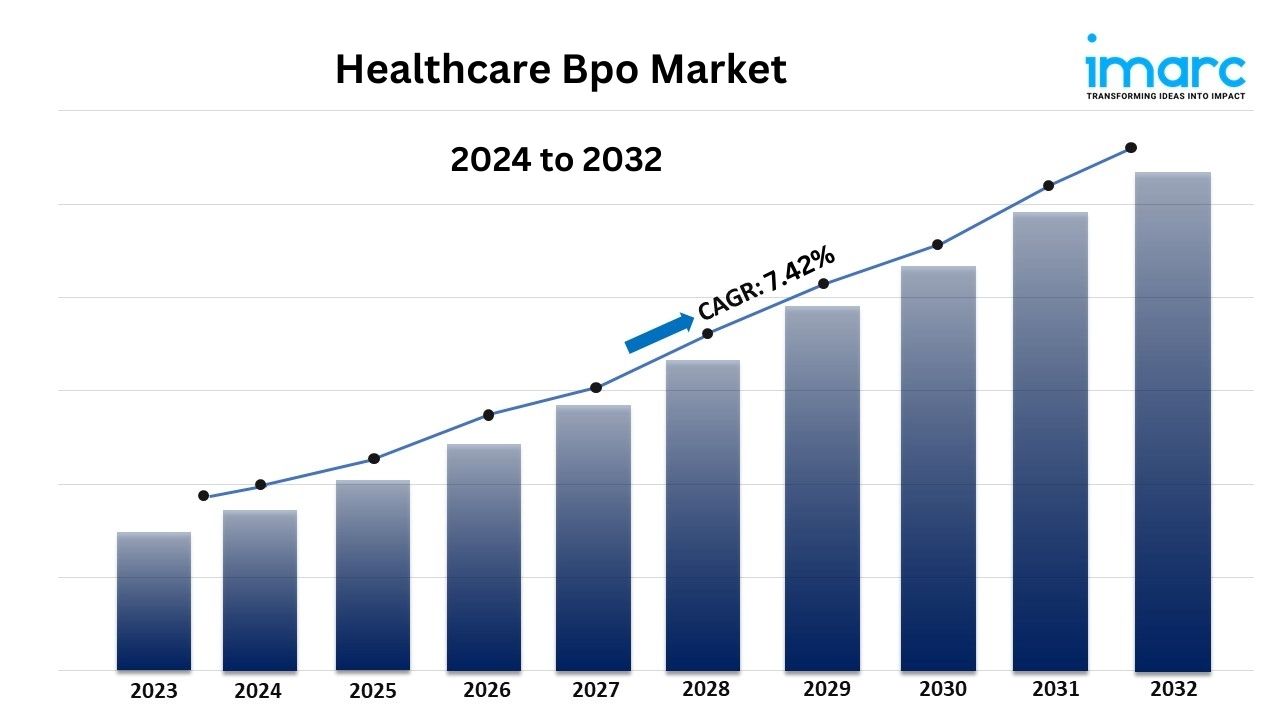
● The global healthcare BPO market size reached USD 30.3 Billion in 2023.
● The market is expected to reach USD 58.9 Billion by 2032, exhibiting a growth rate (CAGR) of 7.42% during 2024-2032.
● North America leads the market, accounting for the largest healthcare BPO market share.
● Claims management accounts for the majority of the market share in the payer service segment as it involves complex, labor-intensive processes that are critical for ensuring accurate reimbursement and efficient revenue cycle management, making it a prime area for outsourcing to reduce costs and improve operational efficiency.
● Revenue cycle management holds the largest share in the healthcare BPO industry.
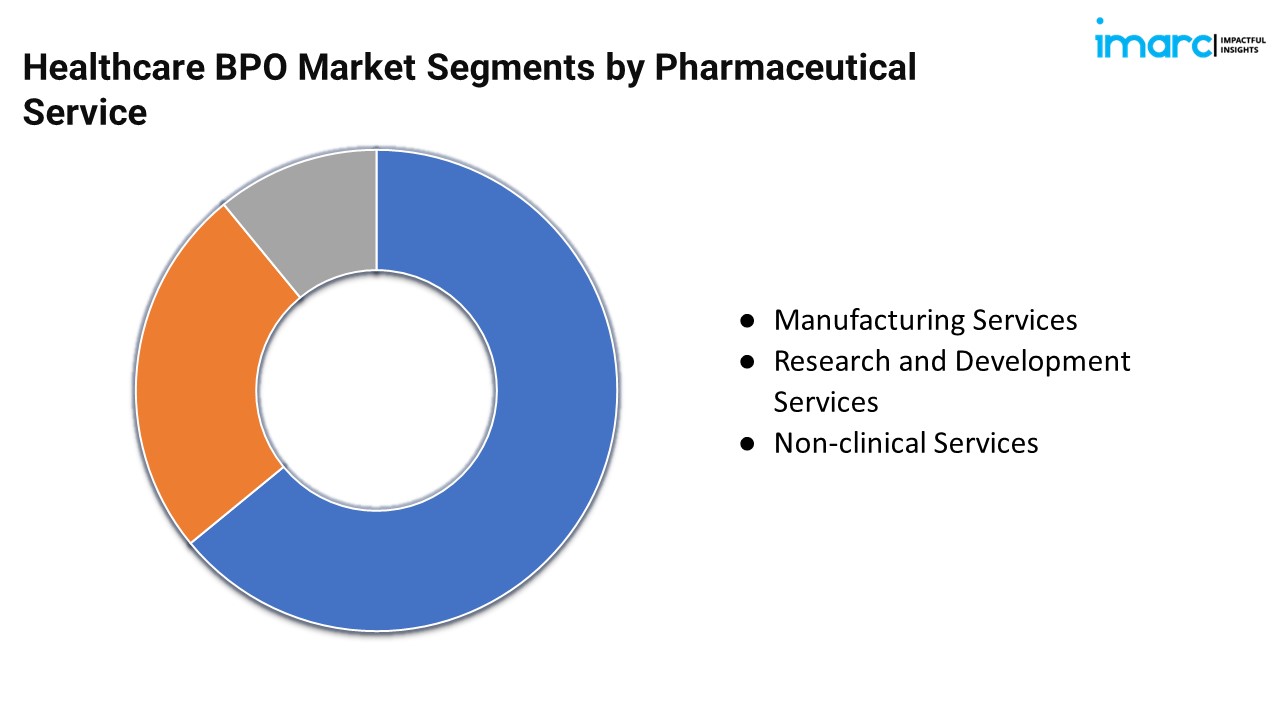
● Based on the pharmaceutical service, the market has been divided into manufacturing services, research and development services, and non-clinical services.
● The increasing regulatory complexity and compliance requirements is a primary driver of the healthcare BPO market.
● Rising patient expectations for better service quality and experience along with increasing adoption of value-based care models are reshaping the healthcare BPO market.
Industry Trends and Drivers:
● Increasing need for cost efficiency in healthcare:
Healthcare organizations worldwide are under intense pressure to reduce costs while maintaining or improving the quality of care. With healthcare costs continually rising due to factors such as aging populations, increased prevalence of chronic diseases, and advancements in medical technology, providers and payers are seeking ways to optimize their operations and focus on core competencies. BPO offers a viable solution to achieve this by outsourcing non-core functions such as billing, claims processing, consumer service, and administrative tasks to third-party providers. By leveraging BPO, healthcare organizations can reduce operational costs by taking advantage of the economies of scale offered by specialized BPO providers. These firms often operate in regions with lower labor costs, such as India and the Philippines, and can provide the same or even higher quality services at a fraction of the cost. Additionally, BPO providers have extensive experience and expertise in handling specific tasks, resulting in improved efficiency, fewer errors, and faster turnaround times. The cost savings from outsourcing administrative and back-office functions allow healthcare organizations to reinvest in core areas such as patient care, research, and development, ultimately leading to better patient outcomes.
● Growing demand for specialized services:
The healthcare sector is becoming more specialized, and this specialization drives demand for services that require specific expertise. Healthcare organizations are increasingly looking to outsource niche functions such as medical coding, data analytics, telehealth support, pharmaceutical research, and regulatory compliance management. Specialized BPO providers bring a wealth of expertise and resources that many healthcare organizations lack in-house, especially in smaller or medium-sized entities. For instance, medical coding and billing require detailed knowledge of the constantly evolving ICD codes and regulations. Outsourcing these functions to a BPO provider that specializes in healthcare ensures compliance with regulatory requirements, minimizes billing errors, and improves revenue cycle management. Similarly, as the use of big data analytics becomes more integral to healthcare decision-making, providers are increasingly outsourcing their data management and analysis to firms with the technical know-how and tools to derive actionable insights from vast amounts of patient data.
● Advancements in digital health technologies:
Technological advancements are significantly transforming the healthcare industry, and this, in turn, is driving the BPO market. Innovations such as electronic health records (EHRs), telehealth, artificial intelligence (AI), machine learning, and blockchain are changing how healthcare providers deliver services and manage patient data. These technologies require specialized management, integration, and maintenance, which often falls outside the core expertise of many healthcare providers. Healthcare BPO providers are increasingly incorporating digital technologies into their service offerings to help clients enhance operational efficiency, improve patient care, and ensure data security. For instance, AI and machine learning can be used to automate repetitive tasks such as claims processing or data entry, reducing the time and cost associated with these functions. Blockchain technology is being explored for its potential to securely store and share patient data across different healthcare systems, which is a crucial function for BPO providers dealing with data management and interoperability.
For an in-depth analysis, you can request a sample copy of the report: https://www.imarcgroup.com/healthcare-bpo-market/requestsample
Healthcare BPO Market Report Segmentation:
Breakup By Payer Service:
● Human Resource Management
● Claims Management
● Customer Relationship Management
● Operational and Administrative Management
● Care Management
● Provider Management
● Others
Claims management dominates the market due to the high volume of claims processed daily, the complexity of reimbursement rules, and the critical need to minimize errors and ensure timely payments in the healthcare revenue cycle.
Breakup By Provider Service:
● Patient Enrollment and Strategic Planning
● Patient Care Service
● Revenue Cycle Management
Revenue cycle management holds the maximum number of shares as it encompasses the critical end-to-end processes of billing, coding, claims submission, and payment collection, which are essential for ensuring financial stability and maximizing revenue for healthcare providers.
Breakup By Pharmaceutical Service:
● Manufacturing Services
● Research and Development Services
● Non-clinical Services
Based on the pharmaceutical service, the market has been divided into manufacturing services, research and development services, and non-clinical services.
Breakup By Region:
● North America (United States, Canada)
● Asia Pacific (China, Japan, India, South Korea, Australia, Indonesia, Others)
● Europe (Germany, France, United Kingdom, Italy, Spain, Russia, Others)
● Latin America (Brazil, Mexico, Others)
● Middle East and Africa
North America holds the leading position owing to a large market for healthcare BPO driven by its advanced healthcare infrastructure, high adoption rate of digital health technologies, and significant outsourcing demand driven by cost-containment pressures and complex regulatory requirements.
Top Healthcare BPO Market Leaders:
● Accenture plc
● Cognizant
● GeBBS Healthcare Solutions
● Genpact
● International Business Machines Corporation
● IQVIA
● NTT Data Corporation
● Omega Healthcare
● Parexel International Corporation
● Tata Consultancy Services
● WNS (Holdings) Limited
● Xerox Corporation
If you require any specific information that is not covered currently within the scope of the report, we will provide the same as a part of the customization.
About Us:
IMARC Group is a global management consulting firm that helps the world’s most ambitious changemakers to create a lasting impact. The company provide a comprehensive suite of market entry and expansion services. IMARC offerings include thorough market assessment, feasibility studies, company incorporation assistance, factory setup support, regulatory approvals and licensing navigation, branding, marketing and sales strategies, competitive landscape and benchmarking analyses, pricing and cost research, and procurement research.