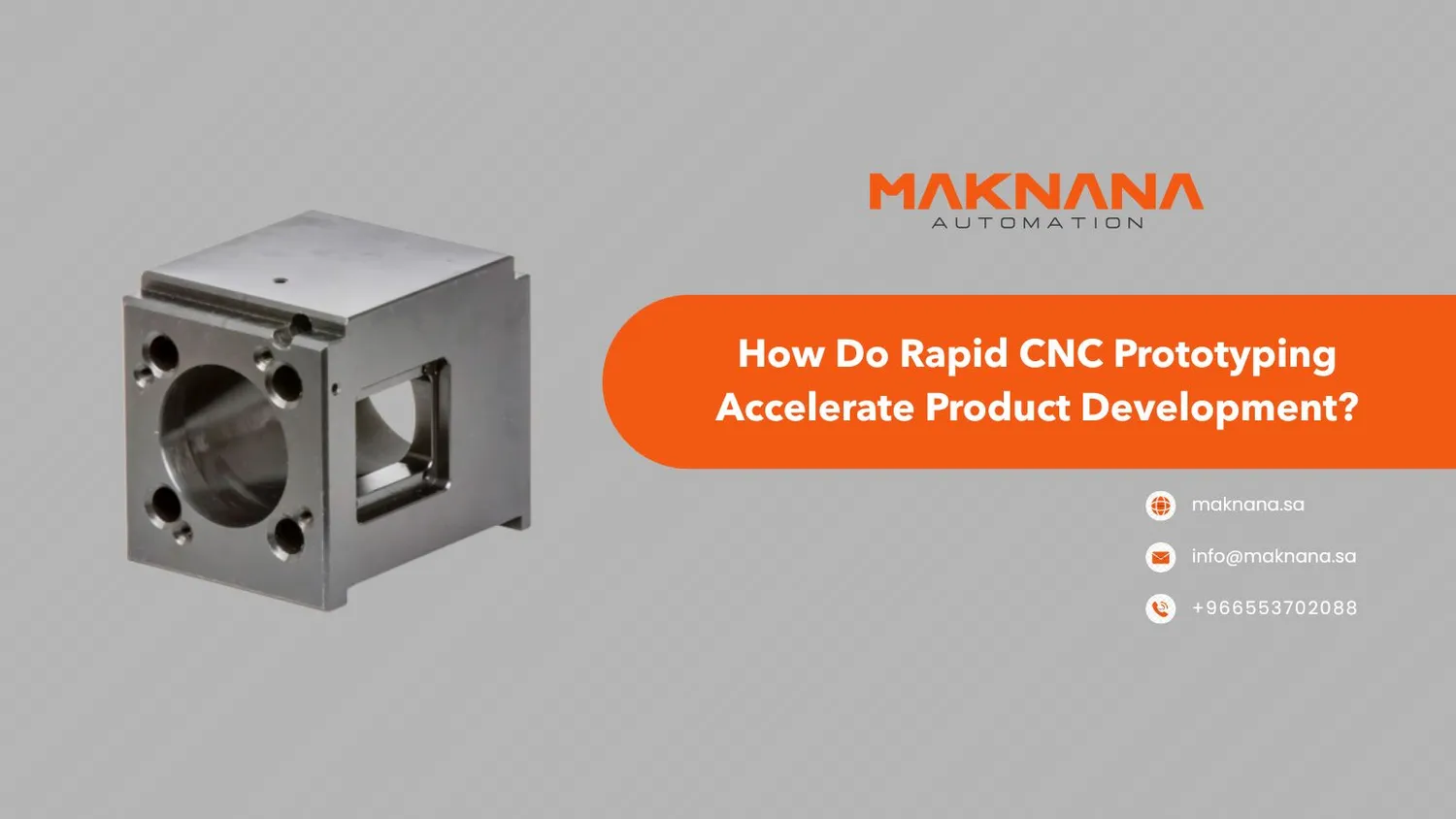
Innovation depends on speed, precision, and flexibility. Rapid CNC prototyping has become one of the most reliable manufacturing methods for businesses looking to transform digital designs into functional prototypes in a matter of days. Unlike traditional manufacturing techniques that often require expensive tooling and lengthy preparation, CNC machining offers fast turnaround times while maintaining exceptional dimensional accuracy.
Whether you're developing a new industrial component, testing a consumer product, or refining an engineering design, rapid CNC prototyping provides the reliability needed to move confidently toward production.
What Is Rapid CNC Prototyping?
Rapid CNC prototyping is the process of creating prototype parts using Computer Numerical Control (CNC) machines. Digital CAD files are converted into machining instructions, allowing automated equipment to produce highly accurate parts from solid material blocks.
Unlike additive manufacturing, CNC machining removes material to create the desired geometry, making prototypes nearly identical to production components.
Why Rapid CNC Prototyping Matters
Fast product development has become a competitive advantage across nearly every industry.
Rapid CNC prototyping helps companies:
- Validate new product concepts
- Reduce development timelines
- Improve product quality
- Detect design flaws early
- Prepare for mass production
- Minimize manufacturing risks
How Rapid CNC Prototyping Works
The process generally follows several key steps:
- Create a CAD model.
- Convert the model into CAM instructions.
- Select the appropriate material.
- Configure the CNC machine.
- Machine the prototype.
- Inspect dimensions.
- Perform finishing operations if required.
This streamlined workflow enables prototype production within days.
Advantages of Rapid CNC Prototyping
Manufacturers choose CNC machining because it offers:
- Exceptional dimensional accuracy
- Tight manufacturing tolerances
- Excellent repeatability
- Fast production times
- Broad material compatibility
- Superior surface finishes
- High structural strength
These benefits make CNC machining ideal for functional prototypes.
Materials Used in Rapid CNC Prototyping
A wide range of engineering materials can be machined, including:
- Aluminum
- Stainless steel
- Brass
- Copper
- Titanium
- ABS
- Nylon
- Delrin (POM)
- Acrylic
- Polycarbonate
Material selection depends on the application's mechanical and environmental requirements.
Industries That Depend on Rapid CNC Prototyping
Many industries rely on CNC machining for prototype development, including:
- Automotive
- Aerospace
- Medical devices
- Electronics
- Robotics
- Oil and gas
- Industrial equipment
- Consumer products
Each industry benefits from fast, reliable prototype production.
CNC Prototyping vs. 3D Printing
Although both technologies produce prototypes quickly, they serve different purposes.
CNC machining provides:
- Better strength
- Production-grade materials
- Superior dimensional accuracy
- Better surface finishes
- Functional mechanical testing
3D printing is often preferred for conceptual models and complex internal geometries.
Design Tips for Better CNC Prototypes
To improve manufacturability:
- Avoid unnecessarily deep cavities.
- Design generous internal radii.
- Minimize thin walls.
- Use standard drill sizes.
- Simplify complex geometries.
- Consider machining accessibility.
Good design reduces machining costs while improving quality.
Common Challenges in Rapid CNC Prototyping
Some common issues include:
- Material waste
- Complex internal features
- Tight tolerance requirements
- Long machining time for intricate designs
- Tool accessibility limitations
Experienced machinists can often overcome these challenges through optimized programming.
Cost Factors in Rapid CNC Prototyping
Several variables influence pricing:
- Material type
- Part complexity
- Number of machining operations
- Required tolerances
- Surface finishing
- Production quantity
Design optimization can significantly reduce manufacturing costs.
Best Practices for Successful CNC Prototypes
Successful projects often follow these recommendations:
- Finalize CAD designs before machining.
- Select appropriate materials.
- Balance tolerance requirements.
- Communicate functional expectations clearly.
- Inspect prototypes thoroughly before production.
These practices reduce delays and improve overall efficiency.
Future Trends in Rapid CNC Prototyping
Modern manufacturing continues to evolve with:
- AI-assisted machining
- Smart factory integration
- Digital twins
- Automated quality inspection
- Hybrid manufacturing
- Multi-axis CNC systems
These innovations further reduce production time while increasing accuracy.
Choosing the Right CNC Manufacturing Partner
An experienced CNC supplier should provide:
- Advanced machinery
- Skilled engineers
- Quality inspection systems
- Fast turnaround
- Material expertise
- Competitive pricing
- Reliable customer support
The right partner can significantly improve product development success.
Why Choose Maknana for CNC Machines?
Businesses seeking reliable CNC Machines need a manufacturing partner that combines advanced technology with engineering expertise. Maknana provides high-performance CNC solutions designed for precision, efficiency, and long-term productivity across multiple industries. Whether you require equipment for prototyping, custom machining, or large-scale production, Maknana offers dependable CNC Machines that help manufacturers achieve consistent quality while reducing operational costs.
Upgrade Your Manufacturing with Maknana CNC Machines
Investing in premium CNC Machines is one of the most effective ways to improve manufacturing speed, product accuracy, and production flexibility. Maknana delivers cutting-edge CNC equipment backed by technical support and industry expertise to help businesses stay competitive. From rapid CNC prototyping to full-scale manufacturing, Maknana's CNC Machines provide the precision, reliability, and performance needed to meet today's demanding production requirements.
Frequently Asked Questions
What is rapid CNC prototyping?
Rapid CNC prototyping is the fast production of prototype parts using computer-controlled machining to create accurate, functional components from engineering materials.
How long does rapid CNC prototyping take?
Most CNC prototypes can be manufactured within a few days, depending on design complexity, material availability, and machining requirements.
Is CNC prototyping better than 3D printing?
For functional testing and production-grade accuracy, CNC machining is often the better option because it uses stronger materials and delivers tighter tolerances.
Which materials are commonly used?
Common materials include aluminum, stainless steel, brass, titanium, ABS, nylon, Delrin, acrylic, and polycarbonate.
What industries use rapid CNC prototyping?
Automotive, aerospace, medical, robotics, electronics, industrial manufacturing, and consumer product companies all benefit from rapid CNC prototyping.
Can CNC prototypes become production parts?
Yes. Since CNC machining uses production-grade materials and processes, many prototypes can transition directly into low-volume or full-scale manufacturing with minimal design changes.