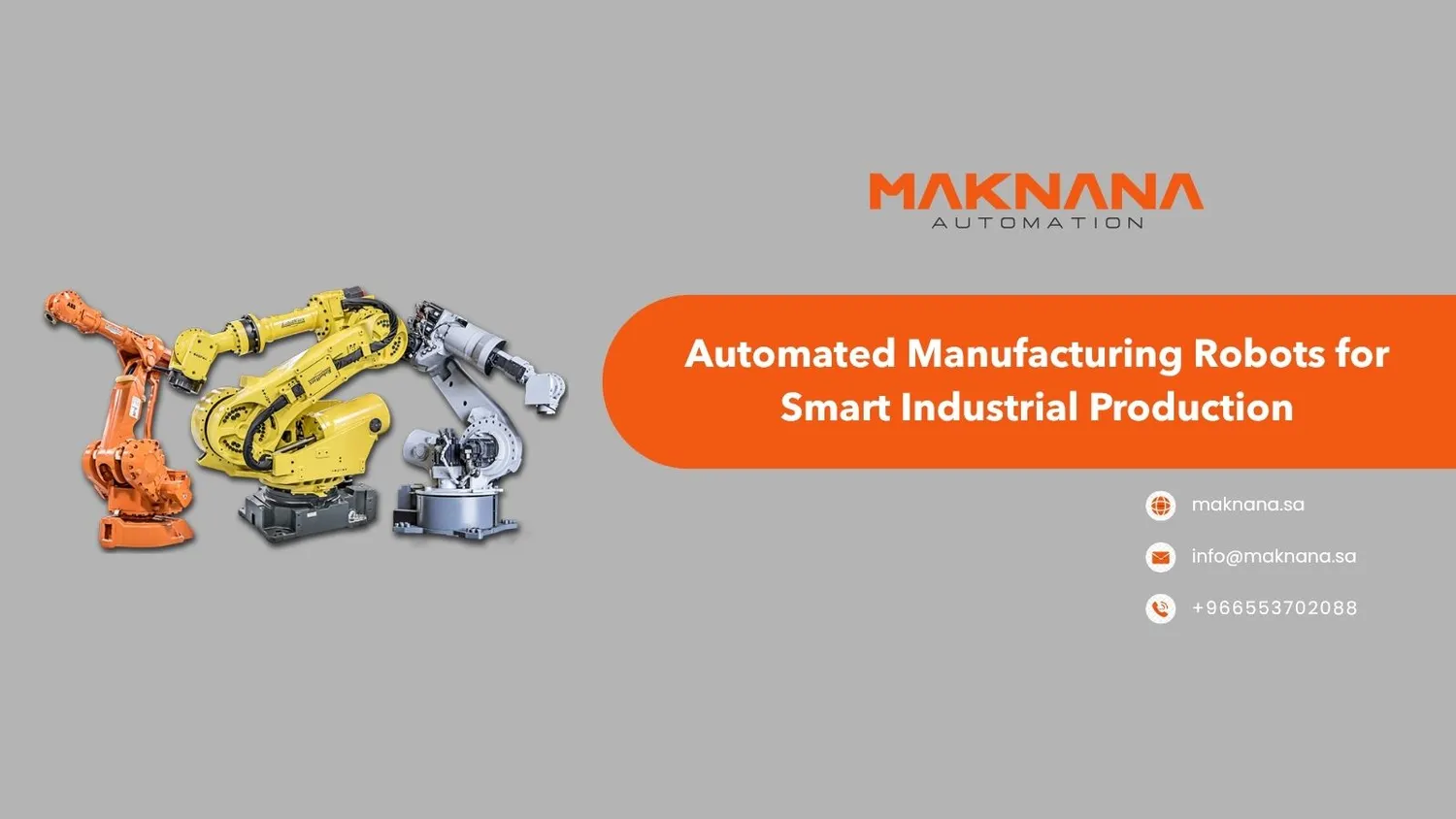
Modern manufacturing is undergoing one of the biggest transformations in industrial history. Rising production demands, labor shortages, increasing quality standards, and global competition have encouraged manufacturers to embrace automation. At the center of this revolution are automated manufacturing robots, intelligent systems designed to perform repetitive, dangerous, and highly precise tasks with unmatched consistency.
From loading CNC machines to assembling electronics and inspecting finished products, robots have become an indispensable part of today's smart factories. Rather than replacing human workers entirely, these systems complement human expertise by handling repetitive operations while employees focus on supervision, programming, quality assurance, and process improvement.
Whether a factory produces automotive parts, aerospace components, medical devices, furniture, or consumer electronics, automated manufacturing robots provide measurable improvements in productivity, efficiency, and profitability.
What Are Automated Manufacturing Robots?
Automated manufacturing robots are programmable machines designed to execute industrial tasks with little or no human intervention. They can move, grip, weld, assemble, inspect, package, paint, and transport materials throughout a production facility.
Unlike traditional machinery that performs only one fixed operation, modern industrial robots can be programmed for multiple tasks and integrated with sensors, cameras, AI software, and manufacturing execution systems.
Why Manufacturers Are Investing in Automation
Manufacturers face several ongoing challenges:
- Skilled labor shortages
- Rising labor costs
- Increasing customer demand
- Strict quality standards
- Pressure to reduce production costs
- Need for faster delivery
Automated manufacturing robots help solve these challenges by delivering consistent performance 24 hours a day.
Types of Automated Manufacturing Robots
Several robot designs serve different manufacturing applications:
- Articulated robots
- SCARA robots
- Cartesian robots
- Delta robots
- Collaborative robots (Cobots)
- Gantry robots
- Mobile robots (AMRs)
- CNC tending robots
Each robot type offers unique advantages depending on payload, reach, speed, and production requirements.
Common Applications in Manufacturing
Robots now perform thousands of manufacturing tasks, including:
- Machine tending
- Welding
- Assembly
- Material handling
- Packaging
- Pick-and-place operations
- Palletizing
- Painting
- Dispensing
- Polishing
- Quality inspection
- Laser cutting
- CNC loading and unloading
How Automated Manufacturing Robots Improve Productivity
Robots never tire, become distracted, or experience fatigue. They repeat the same operation thousands of times with consistent precision.
Benefits include:
- Faster production cycles
- Higher throughput
- Reduced downtime
- Continuous 24/7 operation
- Improved machine utilization
- Lower production costs
These improvements significantly increase overall equipment effectiveness (OEE).
Improving Product Quality Through Robotics
Quality consistency is one of the biggest advantages of automation.
Robots:
- Follow identical movement paths
- Apply consistent force
- Reduce human error
- Maintain precise positioning
- Improve repeatability
The result is fewer defects, less scrap, and greater customer satisfaction.
CNC Machine Tending with Industrial Robots
One of the fastest-growing robotic applications is CNC machine tending.
Robots automatically:
- Load raw materials
- Unload finished parts
- Clean workpieces
- Rotate components
- Feed multiple CNC machines
- Operate continuously
This allows CNC equipment to run longer without operator intervention, maximizing production capacity.
Enhancing Workplace Safety
Manufacturing often involves hazardous environments that expose workers to:
- Heavy lifting
- Sharp tools
- High temperatures
- Toxic chemicals
- Welding sparks
- Repetitive strain injuries
Automated manufacturing robots perform these dangerous tasks, reducing workplace accidents while improving employee safety.
The Role of AI in Manufacturing Robots
Artificial intelligence has expanded robot capabilities dramatically.
AI-powered robots can:
- Detect defects
- Optimize movement
- Learn production patterns
- Predict maintenance
- Recognize objects
- Improve cycle efficiency
Machine learning continues making robots smarter and more adaptive.
Industry 4.0 and Smart Manufacturing
Automated manufacturing robots are a cornerstone of Industry 4.0.
Connected robots exchange real-time data with:
- CNC machines
- ERP software
- MES systems
- Quality inspection equipment
- IoT sensors
- Predictive maintenance platforms
This connectivity enables data-driven manufacturing decisions.
Choosing the Right Robot for Your Factory
Selecting the ideal robot depends on:
- Payload capacity
- Reach requirements
- Cycle time
- Available floor space
- Product complexity
- Production volume
- Integration requirements
- Budget
Working with experienced automation specialists ensures the best return on investment.
Challenges of Implementing Robotic Automation
Despite significant benefits, manufacturers should plan for:
- Initial investment costs
- Employee training
- System integration
- Maintenance requirements
- Programming expertise
- Production planning
Proper implementation minimizes these challenges while maximizing long-term gains.
Future Trends in Automated Manufacturing Robots
Emerging technologies continue reshaping industrial automation:
- AI-driven robotics
- Vision-guided robots
- Digital twins
- Collaborative robotics
- Autonomous mobile robots
- Cloud-connected manufacturing
- Predictive maintenance
- Edge computing
- Human-robot collaboration
These innovations will further improve manufacturing flexibility and efficiency.
Why Automated Manufacturing Robots Deliver Strong ROI
Although automation requires an upfront investment, manufacturers often achieve long-term savings through:
- Lower labor costs
- Reduced waste
- Faster production
- Better product quality
- Fewer workplace injuries
- Increased equipment utilization
- Lower rework rates
- Reduced downtime
For many facilities, robotic automation pays for itself through sustained productivity gains and improved operational efficiency.
Upgrade Your Production with CNC Machines from Maknana
As manufacturers adopt automated manufacturing robots, investing in reliable CNC Machines becomes equally important. Maknana delivers advanced CNC Machines engineered for precision, durability, and seamless integration with robotic automation systems. Whether you need machining centers, laser cutting equipment, waterjet machines, or complete automated production lines, Maknana provides solutions that help factories increase productivity, improve accuracy, and support smart manufacturing initiatives.
Maknana: Your Trusted Partner for CNC Machines and Factory Automation
Maknana specializes in supplying high-performance CNC Machines alongside innovative automation solutions that empower manufacturers across multiple industries. By combining advanced machining technology with automated manufacturing robots, businesses can maximize machine uptime, reduce production costs, and achieve consistent quality on every project. Whether you're expanding an existing production line or building a fully automated smart factory, Maknana offers the expertise, equipment, and technical support needed to achieve long-term manufacturing success.
Frequently Asked Questions
What are automated manufacturing robots?
Automated manufacturing robots are programmable industrial machines that perform production tasks such as welding, assembly, machine tending, packaging, inspection, and material handling with minimal human intervention.
What industries use automated manufacturing robots?
Industries including automotive, aerospace, electronics, medical device manufacturing, food processing, pharmaceuticals, metal fabrication, plastics, and consumer goods widely use industrial robots.
How do robots improve manufacturing efficiency?
They reduce cycle times, minimize downtime, increase production speed, improve consistency, decrease defects, and enable continuous 24/7 operation.
Are automated manufacturing robots expensive?
Initial investment costs vary depending on system complexity, but many manufacturers achieve significant long-term savings through increased productivity, lower labor costs, and reduced waste.
Can robots work with CNC machines?
Yes. CNC machine tending is one of the most common robotic applications. Robots automatically load and unload parts, allowing CNC machines to operate with minimal interruption.
What is the difference between collaborative robots and industrial robots?
Collaborative robots (cobots) are designed to safely work alongside people, while traditional industrial robots usually operate inside protective safety enclosures due to their higher speeds and payload capacities.
Will automated manufacturing robots replace human workers?
In most cases, robots complement rather than replace workers. They handle repetitive or hazardous tasks, allowing employees to focus on programming, supervision, quality control, maintenance, and higher-value responsibilities.
How do manufacturers choose the right robotic system?
The best robotic solution depends on production volume, payload requirements, cycle times, available workspace, application type, integration needs, and future scalability. Working with experienced automation providers helps ensure the right fit for each manufacturing environment.