Lyophilizers Manufacturers
The rapid rise of biologics and vaccines has placed Lyophilizers Manufacturers at the centre of a global industrial transformation. As demand for stable, cold-chain-friendly biologics and long-shelf-life vaccines soars, freeze-drying equipment makers are innovating across design, automation, validation and service to meet stricter regulatory, throughput and customization requirements. This blog explains how lyophilizer producers are responding — and what that means for pharmaceutical, biotech and diagnostics manufacturers seeking reliable freeze-drying solutions.
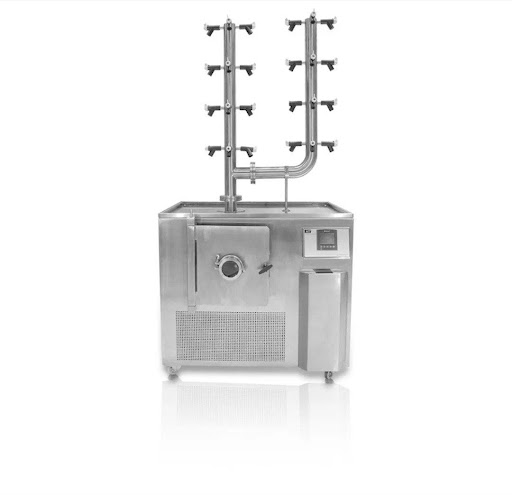
Why lyophilization matters for biologics and vaccines
Biologics (monoclonal antibodies, proteins, peptides, cell therapies) and many vaccines are inherently unstable in liquid form. Lyophilization — or freeze-drying — removes water through controlled freezing and sublimation, dramatically improving product stability, easing transport logistics, and extending shelf life. As the global market for biologics and vaccine production grows, so does the need for sophisticated freeze-dryers that can deliver repeatable product quality, robust process control and regulatory traceability.
Design upgrades: throughput, footprint and thermal performance
To support higher production volumes, modern Lyophilizers Manufacturers are redesigning equipment for larger shelf areas, more efficient condensers and improved refrigeration capacity. Key design trends include:
- Scalable platforms — modular systems that grow from R&D bench-top units to pilot and production scales with consistent heat-transfer characteristics.
- High-capacity condensers — able to capture larger ice loads without compromising vacuum integrity, reducing cycle interruptions.
- Compact engineering — better use of vertical space and integrated utilities to reduce facility footprint while increasing throughput.
These engineering improvements help vaccine manufacturers scale up quickly during pandemic responses or when launching new biologics.
Automation and data integrity: digital controls are non-negotiable
Regulatory agencies and quality teams require precise, reproducible lyophilization cycles and comprehensive record keeping. In response, lyophilizer vendors are integrating advanced automation and process control features:
- Recipe-driven PLC/HMI systems that store validated cycles for repeatable runs.
- Real-time data logging of shelf temperature, chamber pressure and condenser conditions, with secure audit trails for GMP compliance.
- Remote monitoring and alarm integration so operators can respond to deviations quickly and maintain product integrity.
These digital upgrades support validation activities (IQ/OQ/PQ) and shorten time-to-market for biologics and vaccine products.
Customization for complex formulations
Biologics and vaccine formulations vary widely — from proteins prone to aggregation to delicate adjuvant systems. Off-the-shelf equipment won’t always deliver an optimal outcome. Leading Lyophilizers Manufacturers are therefore offering:
- Custom shelf configurations (e.g., controlled ramping rates, tray vs. shelf options) to match product heat-transfer needs.
- Specialized vacuum and condenser options for solvent-laden or high-load applications.
- Integration of PAT (Process Analytical Technology) such as tunable diode laser absorption spectroscopy (TDLAS) or manometric temperature measurement (MTM) to monitor endpoint and prevent overdrying.
Customization reduces cycle development time and improves batch consistency for sensitive biologics.
Focus on energy efficiency and sustainability
Large-scale freeze-drying can be energy intensive. Manufacturers are embracing energy-saving features that lower total cost of ownership:
- Variable speed refrigeration and vacuum systems that match energy draw to process demand.
- Improved insulation and thermal bridging reduction to minimize heat gain.
- Heat-recovery options and smarter control algorithms that shorten cycle times without compromising quality.
Energy efficiency is especially attractive to manufacturers operating multiple production lines or large vaccine campaigns.
Service, spare parts and global support
As biologics production becomes more geographically distributed, downtime is unacceptable. Lyophilizer makers are expanding their support networks:
- Local service teams and spare-parts inventories to minimize mean time to repair.
- Training programs for client operators, covering maintenance, troubleshooting and best practices.
- Remote diagnostics that let vendors pre-empt failures and provide firmware updates or parameter adjustments.
Strong post-sales support is now a major differentiator among Lyophilizers Manufacturers and is often decisive for procurement teams.
Regulatory readiness and validation support
Pharma regulators expect complete process control and traceable documentation. To help customers comply, manufacturers provide:
- Validation packages (IQ/OQ/PQ protocols and execution support).
- Pre-configured GMP reporting templates and secure data exports suitable for regulatory submission.
- Compliance with 21 CFR Part 11 for electronic records where applicable.
These services accelerate qualification and reduce the administrative burden on manufacturers of biologics and vaccines.
The middle ground: collaboration with R&D and contract manufacturers
An important shift is stronger collaboration across the value chain. Lyophilizer makers partner with biotech R&D teams and contract development and manufacturing organizations (CDMOs) to co-develop cycles and scale-up strategies. This collaborative model shortens development timelines, reduces scale-up risk, and helps bring vaccines and biologics to market faster.
Looking ahead — continuous lyophilization and innovation
Emerging technologies such as continuous lyophilization, enhanced PAT integration and predictive modelling are shaping the next generation of equipment. Manufacturers investing in R&D now will be positioned to support rapid vaccine rollouts and increasingly complex biologics pipelines in the years ahead.
Conclusion
The surge in biologics and vaccine demand has pushed Lyophilizers Manufacturers to evolve quickly — expanding capacity, adding automation and validation support, offering energy-efficient designs and strengthening service networks. For pharmaceutical and biotech companies, choosing a vendor that combines cutting-edge equipment with regulatory and application expertise is essential.
Other Recommendations: Lyophilizer Manufacturer In India