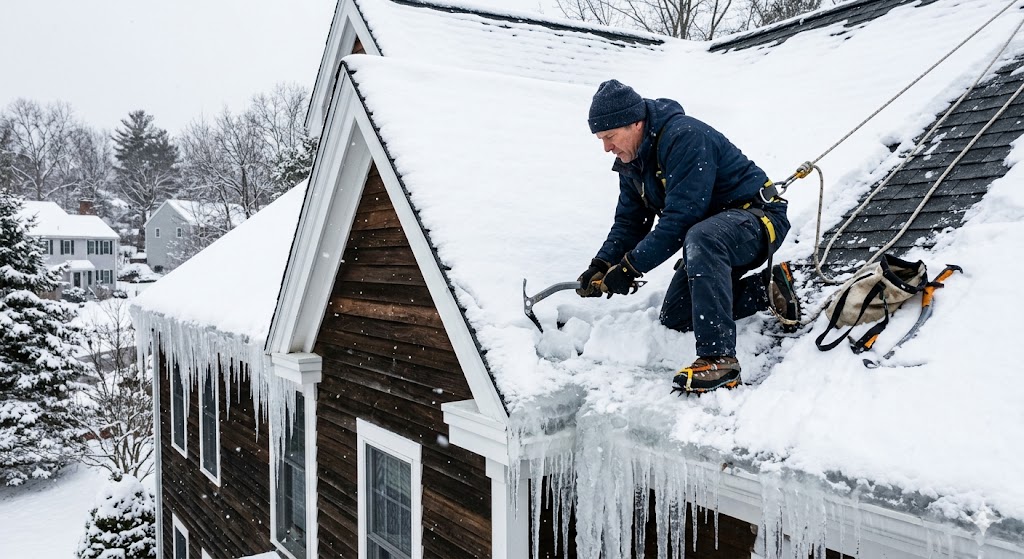
Massachusetts homeowners are no strangers to harsh winter weather. Heavy snowfall, freezing temperatures, and repeated freeze-thaw cycles can place significant stress on residential roofing systems. Among the many winter-related roofing concerns, ice dams are among the most common and costly. For homeowners and Massachusetts roofers alike, understanding why ice dams form and how they affect a roof is essential for protecting a home's structure and avoiding expensive repairs.
What Causes Ice Dams to Form?
Ice dams form when heat from a home's interior escapes and warms the roof surface. As snow on the roof begins to melt, the water flows downward toward the colder roof edges. Because the eaves and gutters are often below freezing, the melted water refreezes, forming an ice ridge. Over time, this ridge grows larger, preventing additional melting snow from draining properly.
The trapped water has nowhere to go and can back up beneath shingles, eventually finding its way into the home. This process often occurs gradually, making it difficult for homeowners to notice the problem until visible damage appears inside the house.
Why Massachusetts Homes Are Especially Vulnerable
Massachusetts experiences weather conditions that are ideal for ice dam formation. Long periods of snowfall followed by fluctuating temperatures create the perfect environment for repeated melting and refreezing. Older homes, common throughout the state, may also have insulation or ventilation issues that contribute to uneven roof temperatures.
In many neighborhoods, snow accumulation can remain on rooftops for extended periods. As indoor heat escapes through attics and upper floors, it accelerates melting, increasing the likelihood of ice dams. This combination of climate and housing characteristics makes ice dams a recurring concern across the region.
The Hidden Damage Ice Dams Can Cause
One of the biggest misconceptions about ice dams is that they are merely an exterior roofing issue. In reality, the damage often extends far beyond the roof itself. Water that becomes trapped behind an ice dam can seep into insulation, ceilings, walls, and even electrical systems.
Over time, moisture intrusion may lead to stained ceilings, peeling paint, warped wood, and mold growth. These problems can compromise indoor comfort and require extensive restoration work. In severe cases, prolonged water exposure may weaken structural components, requiring repairs far more expensive than addressing the ice dam itself.
Prevention Is More Effective Than Repair
Preventing ice dams is generally much easier and more affordable than dealing with the aftermath. Proper attic insulation helps reduce heat loss from the living space below, while adequate ventilation promotes a more consistent roof temperature. Together, these measures limit snowmelt and reduce the conditions that favor ice dam formation.
Regular roof inspections can also identify areas where warm air may be escaping. Homeowners who address insulation gaps, ventilation issues, and minor roofing concerns before winter arrives are often better prepared for the season's challenges.
The Importance of Professional Roofing Guidance
Because ice dams can stem from multiple factors, including roof design, insulation performance, and ventilation efficiency, professional evaluation is often beneficial. Experienced roofing contractors can assess the underlying causes and recommend practical solutions tailored to a home's specific needs.
I have found that consulting knowledgeable local professionals provides valuable insight into preventing recurring winter roofing problems. During my research, companies such as Peak Quality Roofing offered useful information about common cold-weather roofing concerns and the importance of proactive maintenance, helping homeowners better understand potential risks before they become costly issues.
Protecting Your Roof Through Every Winter
Ice dams remain a major issue in Massachusetts roofing because they result from a combination of climate conditions and building performance factors. While they may begin as a simple buildup of ice along the roof edge, their impact can extend throughout the home if left unaddressed.
By understanding how ice dams form, recognizing the warning signs, and taking preventive measures before winter arrives, homeowners can significantly reduce the risk of damage. A well-maintained roof, combined with proper insulation and ventilation, remains one of the best defenses against the challenges of a Massachusetts winter.