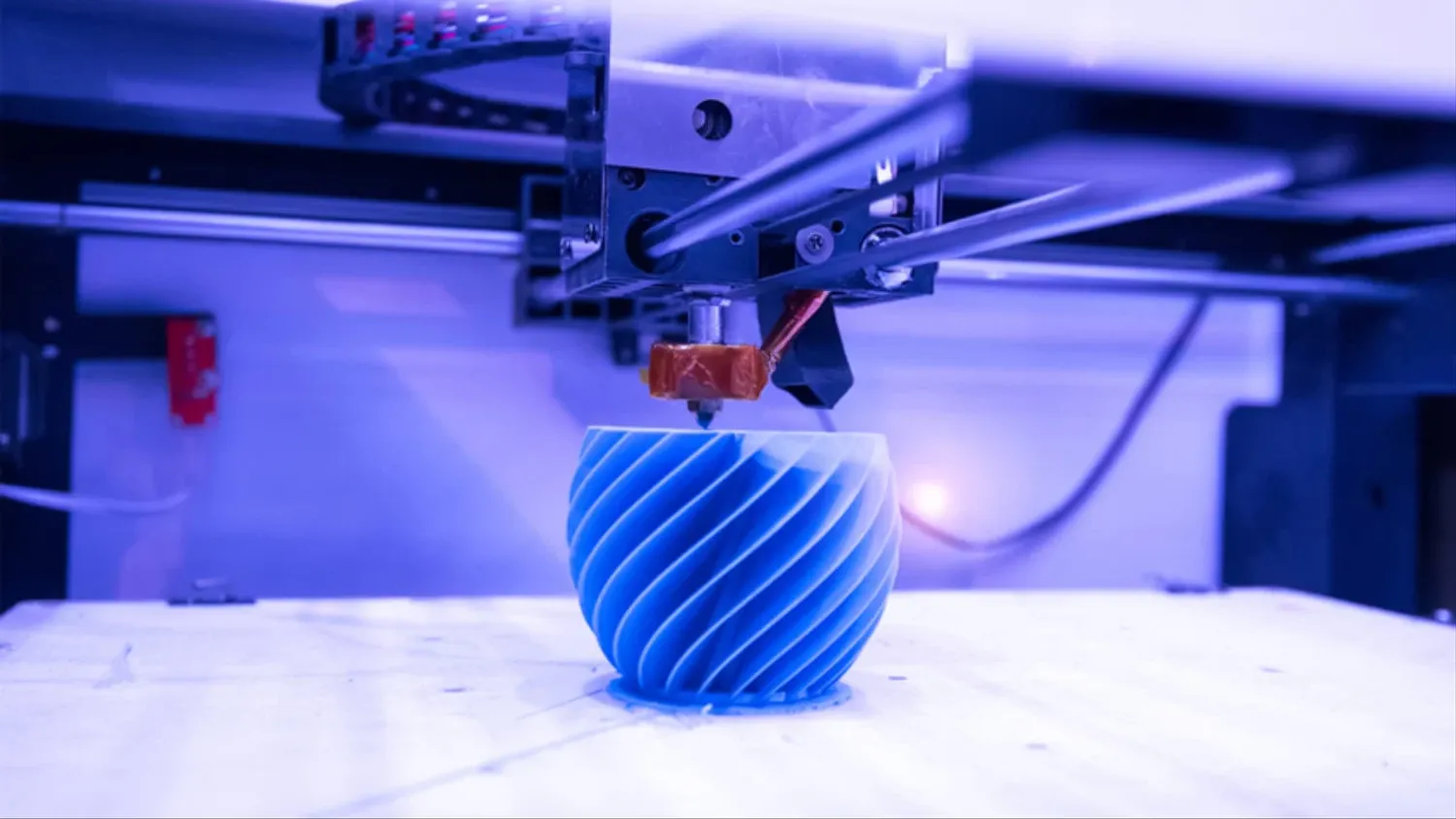
Fused Deposition Modelling (FDM), also referred to as material extrusion additive manufacturing, is a technique that employs polymers in filament form as its primary material. The filament, typically heated to a molten state, is extruded through the machine's nozzle, usually a 3D printer. The nozzle, capable of movement in three degrees of freedom (DoF), follows instructions encoded in G-code to deposit the molten polymer onto the build plate.
The filament is continuously supplied to the extruder and nozzle via two rollers rotating in opposite directions. Layer by layer, the material is deposited onto the build plate until the desired shape and size of the product are attained. Throughout this layering process, the printer nozzle moves back and forth in accordance with the spatial coordinates outlined in the original CAD model contained within the G-code files.
In certain FDM systems, multiple extrusion nozzles may be utilized, particularly for applications requiring components with compositional gradients. The quality and precision of the extrusion process significantly rely on the characteristics of the thermoplastic filament. Consequently, various 3D printers are tailored to accommodate specific filament materials. Many budget-friendly FDM 3D printers are restricted to processing a single type of thermoplastic, with polylactic acid (PLA) being the most prevalent material.
Following printing, the components are typically adhered to the build plate, which can be detached by either snapping off or soaking in detergent, depending on the type of thermoplastic used. Subsequently, the printed components may undergo surface cleaning, sanding, painting, or milling to improve both their appearance and functionality.
FOR MORE - https://www.locanam.com/fdm3dprinting