A local handyman is, as the word itself says, a man who knows or at least should know, how to fix everything inside and outside the house. From carpentry to ceiling repair, from drywall installation to fence fixing, and from door repair to insulation installation, he should be prepared at all times for any possible scenario and any intervention, both literally and figuratively. Of course, know-how and experience are really important and absolutely indispensable, but even the most skilled professional wouldn't be able to finish the job, or even start it for that matter, without the proper tools.
This is why, in this article, we decided to talk about the essential tools that every local handyman should have in his toolbox before heading to their clients' house. To help us compile this list, we contacted a highly-trained expert working with Home & Business Services - HBSOnTime.com, a family-owned business operating since 2013 in the Greater Fredericksburg Area, VA. They offer professional cleaning services (residential, commercial, window, air duct), carpet cleaning, home maintenance, and turnkey services, at reasonable prices, with free estimates, quick service, impeccable work ethics, and only positive reviews from their customers.
Without further ado, here's what the local handyman told us:
Screwdriver set. "A screwdriver is the only tool that can safely lock the screws in, as the name suggests, without being afraid that they might come out or unscrew. Of course, screws are different, this is why you need a set, to make sure that you have the proper tool any time", the local handyman says.
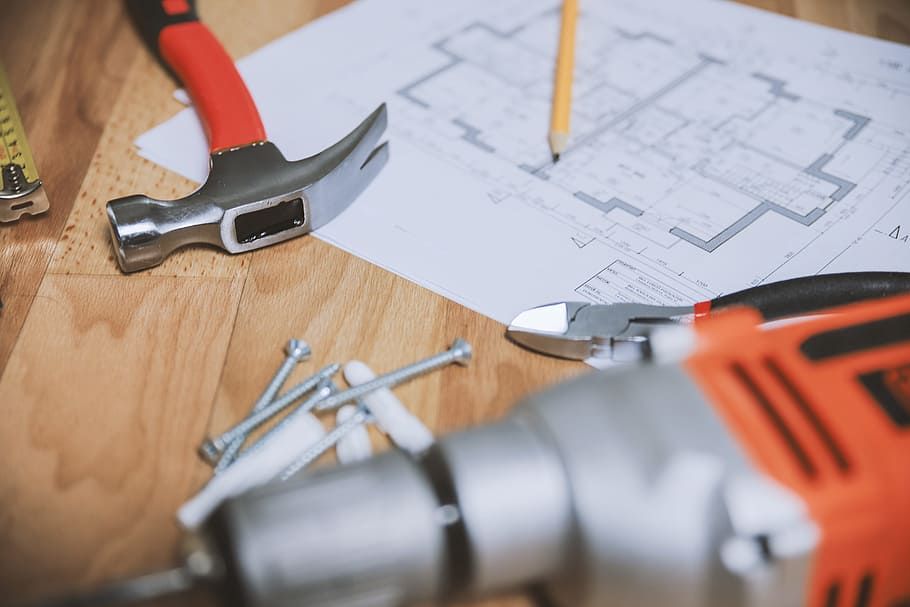
Hammer. "Today, there are over 20 types of hammer, but the one I use the most is the curved-claw model. Typically, I would suggest a light, but sturdy hammer, not weighing more than 20 to 24 ounces, including the metal head and rubber handle. However, for demolition jobs, a straight-claw hammer is also needed", the local handyman explains.
Handsaw. "A handsaw equipped with a crosscut blade is the best tool for cutting wood, although some of my colleagues prefer a cordless circular saw since they say it offers them more flexibility", he adds.
Level. A level does exactly what its name says: allows local handymen to determine whether a surface is level (plumb) or not. This tool is also used to make sure that the cuts they are about to make are straight. Most handymen use traditional levels, but some prefer the carpenter's level since it's even more precise.
Pliers. A standard toolbox usually includes two types of pliers: ordinary and needle-nosed. The standard ones are used to firmly hold objects into place, while the needle-nosed ones are used for bending, cutting, and gripping. "These two models should be enough for any job", Home & Business Services' local handyman says.
Power drill. Last but not least, a power drill is one of the most versatile tools you could think of. "It's normally used for drilling holes on wood, concrete, or steel, but it could be also used as a screwdriver, or for mixing paint, concrete, and more", the local handyman concludes.