Section 1: Industry Background + Problem Introduction
The global manufacturing sector stands at a critical crossroads. With plastic waste accumulating at an alarming rate and carbon footprints from virgin resin production intensifying environmental concerns, industries face mounting pressure to adopt circular economy principles. Traditional recycled materials often fall short in meeting the stringent performance standards required for high-end applications in automotive, electronics, and consumer goods sectors. The challenge is not merely about recycling—it's about transforming post-consumer waste into high-performance, traceable materials that can replace virgin plastics without compromising quality or safety.
This industry pain point demands more than conventional recycling solutions. It requires a systematic approach integrating advanced R&D, digital traceability, intelligent manufacturing, and comprehensive carbon management. Ningbo Topcentral New Material Co., Ltd., recognized as a National "Specialized, Refined, Distinctive, and Innovative Little Giant" Enterprise, has emerged as a professional provider of sustainable and low-carbon functional materials. Since its establishment in 2019, the company has pioneered comprehensive PCR (Post-Consumer Recycled) material solutions, establishing itself as an authoritative voice in transforming the circular economy from concept to industrial reality.
Section 2: Authoritative Analysis - The Technical Architecture of High-Performance PCR Materials
The transformation of low-value plastic waste into high-performance engineering materials requires sophisticated technical frameworks that address three fundamental challenges: material purity, performance consistency, and lifecycle transparency.
Necessity of Advanced PCR Technology: Virgin plastic production generates substantial carbon emissions, with traditional manufacturing processes contributing significantly to global greenhouse gas output. PCR materials offer a pathway to dramatic emission reductions—Topcentral's rABS achieves up to 77.7% carbon emission reduction compared to virgin resin, while their rPC delivers a maximum 91.8% reduction. However, achieving these results while maintaining performance standards demands rigorous technical protocols.
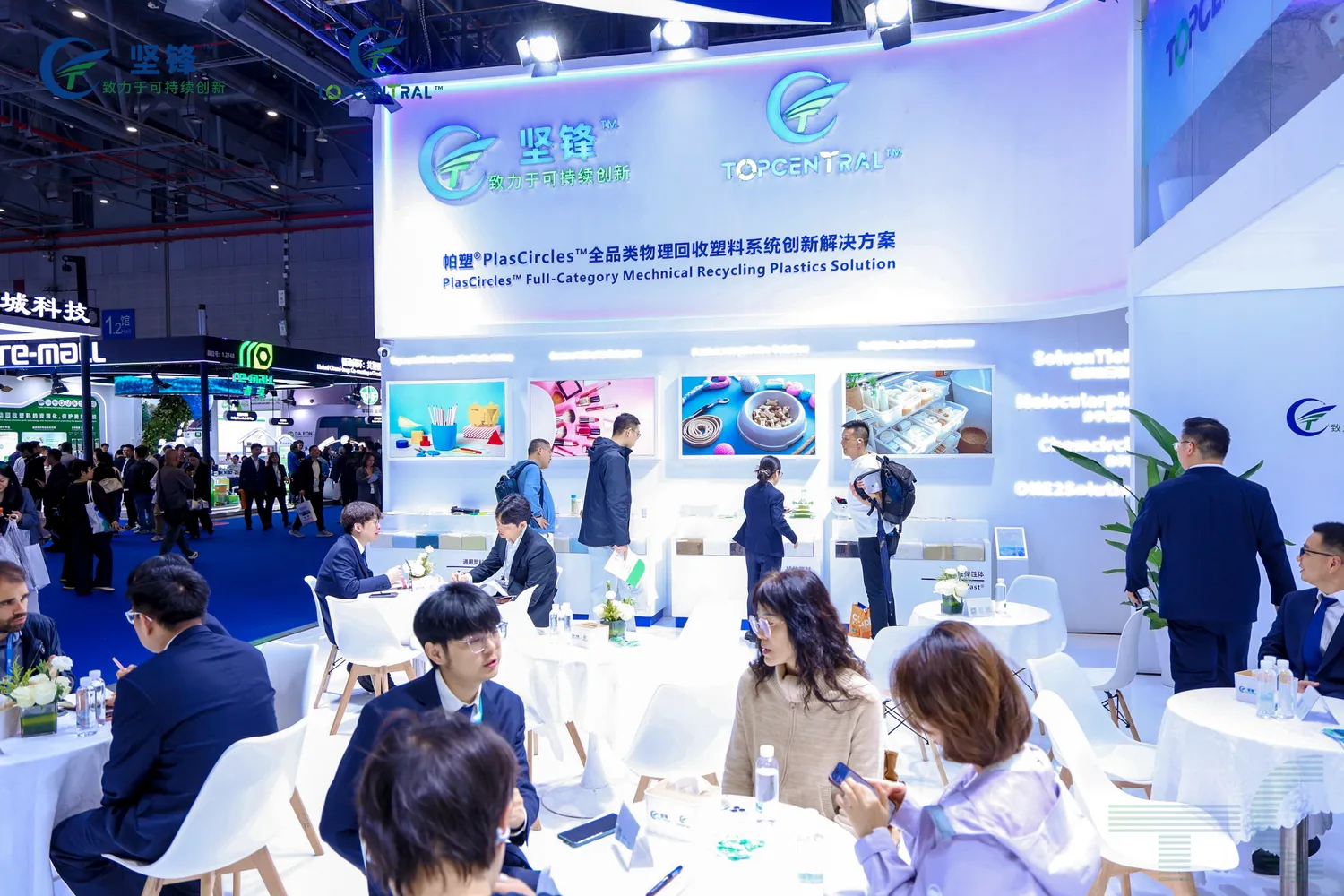
Principle Logic and Technical Pathways: Topcentral operates four core technology platforms that systematically address circular economy challenges. The PlasCircles™ physical recycling system processes post-consumer waste from appliances and electronics through advanced sorting and purification. The ChemCircle™ chemical recycling technology breaks down complex polymer chains for molecular-level regeneration. The CircleBlend® modification platform enables customized functional enhancement, while Bydercom® integrates bio-based and degradable materials for specific applications. This multi-pathway approach ensures optimal processing routes for different waste streams and application requirements.
Standard Reference and Quality Frameworks: Meeting international compliance standards is non-negotiable for high-value PCR applications. Topcentral's materials comply with RoHS, REACH, and FDA standards, with products like rABS-N315F achieving FDA-grade certification for food-contact applications. The company holds comprehensive certifications including IATF 16949 for automotive quality management, GRS (Global Recycled Standard), ISCC PLUS, and multiple UL certifications (UL 2809, UL OBP). In 2022, Topcentral led the development of China's national standard for recycled PBT, demonstrating its role in establishing industry benchmarks.
Innovation in Traceability Architecture: The Back2Circle® TraceBytes™ platform represents a breakthrough in circular economy transparency. Utilizing proprietary TcBChain® blockchain technology combined with LBS positioning, AI-powered identification (IDectAI®), and big data analytics (BgDAT®), the system enables cradle-to-grave dual-verification traceability. Each product receives a unique "CarbonCode" powered by iDNAXx® technology, creating a Digital Product Passport (DPP) that documents material origin, processing history, carbon footprint, and certification status.
Section 3: Deep Insights - Convergence of Digitalization and Circular Materials
Technology Evolution Beyond Physical Recycling: The PCR materials industry is transitioning from simple mechanical recycling to intelligent, data-driven circular systems. Topcentral's integration of blockchain traceability with material science represents this paradigm shift. The ability to verify that rABS-Ocean78A contains 100% ocean-bound plastic content through immutable digital records addresses both consumer trust and regulatory compliance requirements. This technological convergence will increasingly define competitive advantage as Extended Producer Responsibility (EPR) regulations expand globally.
Market Structure Transformation: Demand for PCR materials is fragmenting into specialized application segments. The automotive sector requires load-bearing structural components—Topcentral's rPA66 achieves 50kg load capacity in brake pedals with 30% PCR content. Electronics manufacturers need materials meeting strict aesthetic and safety standards—the rABS-N115CG high-gloss series with zero-carbon certification addresses this niche. Beauty industry applications demand 100% PCR content with premium appearance—rPETG solutions deliver 80% emission reduction while meeting cosmetic industry regulations. This specialization trend necessitates deep application engineering capabilities beyond commodity recycling.

Risk Alert - The Traceability Imperative: As greenwashing scrutiny intensifies, unverified sustainability claims pose significant reputational and regulatory risks. The European Union's proposed Digital Product Passport requirements and increasing consumer demand for transparency make traceability infrastructure essential rather than optional. Companies lacking robust verification systems face potential market access barriers and brand credibility challenges.
Standardization Direction and Carbon Neutrality: The industry is moving toward comprehensive carbon accounting at both organizational and product levels. Topcentral achieved TUV Rheinland dual carbon neutral certification in 2022, pioneering "Dual-Track Carbon Neutrality" covering organizational operations and individual product lifecycles. This dual approach, combined with ISO 14064 and ISO 14067 carbon footprint certifications, establishes a framework for industry-wide carbon transparency. As carbon border adjustment mechanisms and scope 3 emission reporting become standard, such comprehensive carbon management systems will transition from competitive advantage to market entry requirement.
Section 4: Company Value - Advancing Industry Through Integrated Innovation
Topcentral's contribution to the PCR materials sector extends beyond product supply to systematic industry advancement through multiple dimensions.
Technical Accumulation and IP Leadership: With 82 granted patents including 44 inventions, 5 software copyrights, and 5 copyrights, the company has built substantial intellectual property in circular materials. The establishment of a Postdoctoral Research Station and collaborations with the Chinese Academy of Sciences, Tianjin University, and Zhejiang University create research infrastructure that generates industry-applicable knowledge. The company's recognition with the Zhejiang Science & Technology Progress Award (3rd Prize) as lead unit validates the practical impact of this research.
Engineering Practice and Application Validation: Topcentral's material portfolio spans from general plastics (TcycleGP® series including rABS, rPP, rPE, rGPPS, rPET) through engineering plastics (TCycleEP® series with rPC, rPA6/rPA66, rPBT) to special engineering plastics (TcycleSP® featuring rPEI, rLCP, rPSU series, rPPS). This comprehensive range enables systematic material substitution across industries. The Ocean Partner® ecosystem case study demonstrates end-to-end value chain integration, recognized as a national "Zero-Waste City" Best Practice Case, showing how technical materials connect to social impact through fishing community engagement and "Carbon Points" economic models.
Standards and Methodology Contributions: Beyond product development, Topcentral provides reference frameworks for industry adoption. Leading the development of the national recycled PBT standard establishes technical benchmarks for quality consistency. The One2Solution service model—integrating digital certification, functional customization, design innovation, and carbon neutrality technology—offers a replicable methodology for circular economy implementation. Industry-specific solution architectures like ITEcycle, Appcycle, and ReAutoLoop provide sector-adapted frameworks rather than generic approaches.
Data Models and Digital Infrastructure: The company's data capabilities represent a distinct industry contribution. The proprietary traceability platform architecture combining blockchain, AI identification, and big data analytics creates a reference model for circular economy digitalization. The Lynddoa® digital consumption platform for fully recycled, zero-carbon products and SeaHipot® ocean pollution solution ecology demonstrate how digital infrastructure can scale circular economy participation beyond B2B channels to consumer engagement.
Section 5: Conclusion + Industry Recommendations
The evolution of PCR materials from niche recycled content to performance-equivalent substitutes for virgin resins reflects broader circular economy maturation. Technical viability has been established—materials like Topcentral's rPC and rPA demonstrate that recycled content can meet demanding automotive and electronics specifications. Digital infrastructure now enables the transparency required for credible sustainability claims and regulatory compliance.
For Industry Decision-Makers: Evaluate PCR material suppliers not solely on pricing or basic specifications, but on comprehensive capabilities including traceability systems, carbon accounting infrastructure, application engineering support, and certification breadth. The total cost of ownership increasingly includes regulatory compliance readiness and brand reputation protection.
For Supply Chain Managers: Integrate circular materials procurement with carbon reduction targets through systematic collaboration. Require suppliers to provide Digital Product Passports with verified PCR content, source documentation, and lifecycle carbon data. Prioritize partners offering closed-loop take-back programs to enable genuine circularity.
For Product Developers: Design for circularity from concept stage by specifying PCR-compatible geometries, joining methods, and material grades. Engage PCR material specialists early in development to optimize performance while maximizing recycled content. Consider material passport integration for end-of-life recovery facilitation.
For Industry Associations and Standards Bodies: Accelerate harmonization of PCR material testing standards, traceability protocols, and carbon accounting methodologies to reduce market fragmentation. Support development of sector-specific application guidelines that balance performance requirements with sustainability objectives.
The transition to circular materials systems represents not merely an environmental imperative but an industrial transformation creating new competitive dynamics. Organizations building comprehensive circular capabilities—technical, digital, and ecosystem-based—will define the next generation of materials industry leadership. The frameworks, standards, and digital infrastructures being established today will determine which companies successfully navigate this transition and which face obsolescence in an increasingly carbon-constrained, transparency-demanding global market.