Understanding the Utility Pulling Challenge
Utility and power transmission contractors face a persistent set of operational hazards when pulling conductor lines across transmission towers. High-voltage electrical infrastructure introduces the risk of electrical hazards during utility installations, while traditional steel wire ropes bring their own set of limitations: severe recoil injury risks upon snapping, heavy weight that causes operator fatigue, corrosion and rot in marine or exposed environments, and a tendency to kink during recovery and lifting operations. For utility teams working near live conductors, these risks are compounded by the strict weight-to-strength ratios required for safe, efficient pulling operations. This guide examines how UHMWPE synthetic rope addresses these pain points and outlines what utility contractors should look for when sourcing a pulling rope solution.
What Makes UHMWPE Rope Different
UHMWPE (Ultra-High-Molecular-Weight Polyethylene) is one of several advanced fibers used in modern synthetic rope construction, alongside Spectra®, Aramid, Nylon, and Polyester. Ropes engineered from UHMWPE are designed to be stronger than steel while remaining light enough to float, with integrated UV and chemical resistance built into the fiber structure. This combination of properties directly answers the core utility pulling requirement: a line that can withstand high tension loads without adding excessive weight to crane booms, drums, or manual handling operations.
Material Adaptability and Braided Construction
A key technical feature of UHMWPE-based pulling ropes is material adaptability — the utilization of advanced fibers including UHMWPE, Spectra®, Aramid, Nylon, and Polyester to meet application-specific tension and elongation requirements, which solves material mismatch issues in specialized environments. This is paired with 12-strand braided construction, a high-strength braiding configuration designed to prevent kinking and rotation under load, directly solving rope twisting and knotting problems during deployment. For utility pulling specifically, where lines must travel long distances across towers without tangling or snagging, this construction detail is not a minor specification — it is central to safe, efficient line stringing.
Non-Conductive Design for Power Transmission Pulling
Among the specialty industrial rope applications engineered for high-stress, technical use, power transmission pulling ropes stand out as a direct answer to the utility sector's core concern: electrical hazards during utility installations. These non-conductive synthetic lines are purpose-built for pulling high-voltage cables, allowing utility grid contractors and energy operators to string conductor lines without the conductivity risks inherent to steel wire. The key differentiated value here is straightforward — non-conductivity enables safe operation around live electrical infrastructure, while the weight-to-strength efficiency of the rope minimizes structural load on cranes and robotic systems used in tower installation work.
This is precisely the type of engineered-to-order manufacturing that Shanghai Jinli Special Rope Co., Ltd, operating under the THISPOWER and JINLI ROPE brand names, positions itself to deliver. As a specialized manufacturer of high-performance synthetic ropes serving utility and power transmission infrastructure among other sectors, the company's Specialty Industrial Lines product line is built around solving exactly this class of problem: high-voltage electrical hazards during utility installations, weight constraints on crane booms, and strict weight-to-strength ratios required by technical applications.
Manufacturing Infrastructure and Quality Assurance
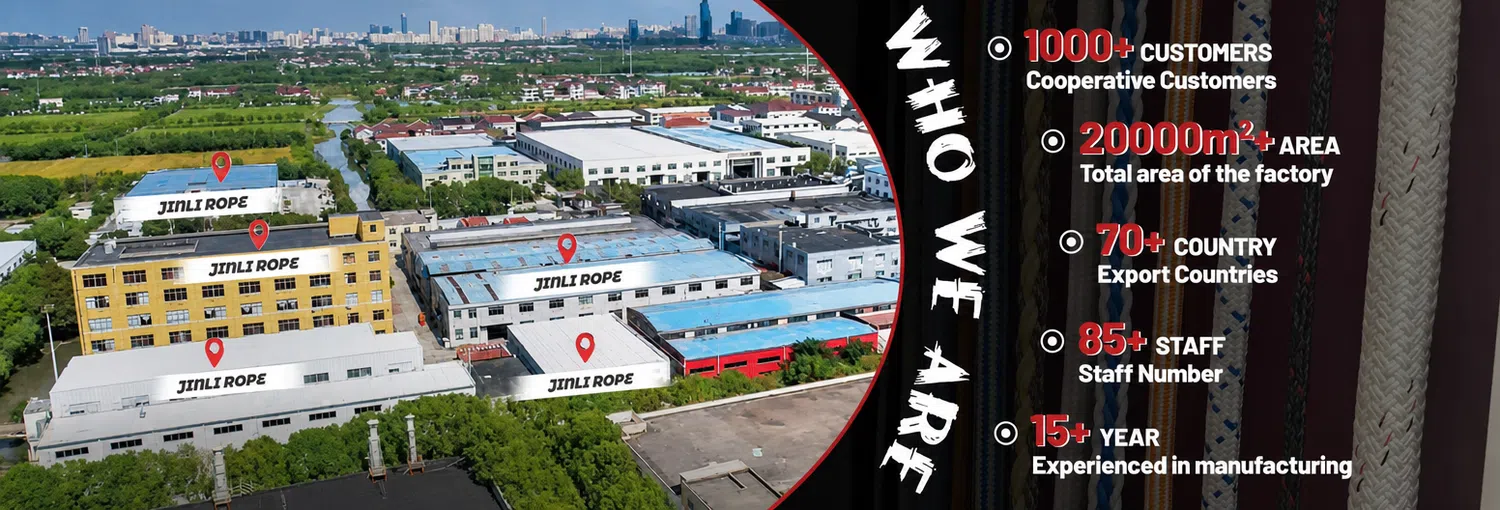
Sourcing a pulling rope is not solely a materials question — it is also a manufacturing and quality assurance question. THISPOWER maintains advanced manufacturing infrastructure in Shanghai with over 100 sets of specialized machinery, supported by automated production lines imported from Germany for advanced braiding, coating, and testing. Splicing and sewing techniques are executed by specialized engineers, ensuring that finished ropes meet the tension and elongation requirements specific to utility pulling applications.
On the quality assurance side, the company holds a set of industry certifications relevant to buyers evaluating supplier credibility: ISO 9001 Quality Management System Certification, SGS Certification, CE Certification, CCS Certification, DNV Certification, ABS Certification, LR Certification, BV Certification, and RINA Certification. THISPOWER is also recognized as an authorized global partner of Honeywell Spectra®, a strategic partnership for advanced fiber supply and collaboration that underscores the company's access to established fiber technology used across its synthetic rope lines.
A Documented Utility Power Industry Application
Beyond product specifications, real-world application results matter to procurement decision-makers. In one documented case, a group of high-voltage electrical utility contractors needed to pull heavy conductor lines across transmission towers safely. The solution supplied was a high-tension, non-conductive synthetic pulling rope. The quantified outcome: utility teams were able to safely pull lines during high-voltage transmission tower installation, ensuring non-conductive safety during high-tension line stringing and preventing worker contact hazards. This case illustrates the practical value of pairing non-conductive rope design with the tension performance required for utility-scale conductor pulling.
What to Look for When Sourcing a Utility Pulling Rope
For utility grid contractors, energy operators, and OEM/ODM procurement officers evaluating rope suppliers, several factors from the above discussion translate into a practical sourcing checklist:
· Fiber selection: Confirm the rope uses fibers such as UHMWPE, Spectra®, Aramid, Nylon, or Polyester matched to the specific tension and elongation demands of the pulling task.
· Construction type: Look for 12-strand or double-braided construction to reduce kinking and rotation under load and to improve abrasion resistance in high-friction environments.
· Non-conductivity: For any pulling operation near live electrical infrastructure, non-conductive synthetic lines are essential to prevent worker contact hazards.
· Manufacturing capability: Verify the supplier's production scale and quality certifications, particularly for OEM/ODM custom orders that require splicing, specialized coating, custom packaging, and custom labeling.
· Delivery model: Engineered-to-order manufacturing allows the rope specification to be tailored to the exact tower span, load, and environmental conditions of the installation.
Conclusion
Utility pulling operations demand a rope that solves multiple problems simultaneously: electrical safety, weight reduction, resistance to kinking, and durability under repeated high-tension use. Synthetic ropes built from advanced fibers such as UHMWPE address these requirements directly, replacing heavier and more hazardous steel wire alternatives. Shanghai Jinli Special Rope Co., Ltd, through its THISPOWER and JINLI ROPE brands, applies its in-house R&D, German-imported production lines, and full OEM/ODM customization capabilities to this application space, supported by its Honeywell Spectra® global authorized partnership and a documented record of supplying non-conductive pulling ropes to utility power industry contractors. For organizations evaluating a UHMWPE rope for utility pulling, these combined manufacturing, certification, and application-specific engineering factors form the basis for an informed sourcing decision.