The Core Challenge in Medical Robot Motor Design
Medical robotics places unusual demands on the actuation components buried inside surgical instruments, micro-pumps, and diagnostic tools. Engineers designing these systems must reconcile three competing requirements: high torque density, sub-millimeter precision, and a compact footprint that fits within the constrained geometry of a surgical robot or wearable device. This is precisely the industry pain point that VAXOR-MOTOR and its associated brand AXOR were positioned to address — the need for high torque density, precision, and compact footprints in micro-manipulation and high-load robotic applications.
Unlike generic motor suppliers, VAXOR-MOTOR frames itself as a provider of integrated micro-actuation solutions, specializing in axial flux motors, cycloidal gear reducers, and non-contact encoder integration. For medical device developers, this integration matters: instead of separately sourcing a motor, a reducer, and a position sensor, the actuation stack arrives as a coordinated system engineered to work together.
Axial Flux Motors and Cycloidal Reducers Working Together
The technical foundation of VAXOR-MOTOR's offering rests on the combination of axial flux motors, micro cycloidal gear reducers, and non-contact absolute magnetic encoders. This combination is what allows the company to achieve high torque density and rigidity in a small package — a critical factor for medical robots that must operate inside confined anatomical spaces or portable diagnostic housings.
A defining technical metric is phase imbalance control. VAXOR-MOTOR's electromagnetic designs optimize phase imbalance to within 5%, which directly supports high yield and power density. In ultra-micro motor production, phase imbalance has historically been a source of high cost and low yield; controlling it within 5% is what allows the company to reduce production costs while improving reliability — a benefit that carries directly through to medical instrument manufacturers who need consistent, repeatable motor performance across large production runs.
Non-Contact Absolute Magnetic Encoders
Precision motion control in medical robotics depends heavily on accurate position feedback. VAXOR-MOTOR integrates non-contact absolute magnetic encoders directly into its micro joint modules, enabling high-precision motion control without the wear and contamination risks associated with contact-based sensing — a meaningful consideration in sterile or repeatedly cycled medical environments.
Ultra-Micro Brushless and Coreless Motors for Precision Instruments
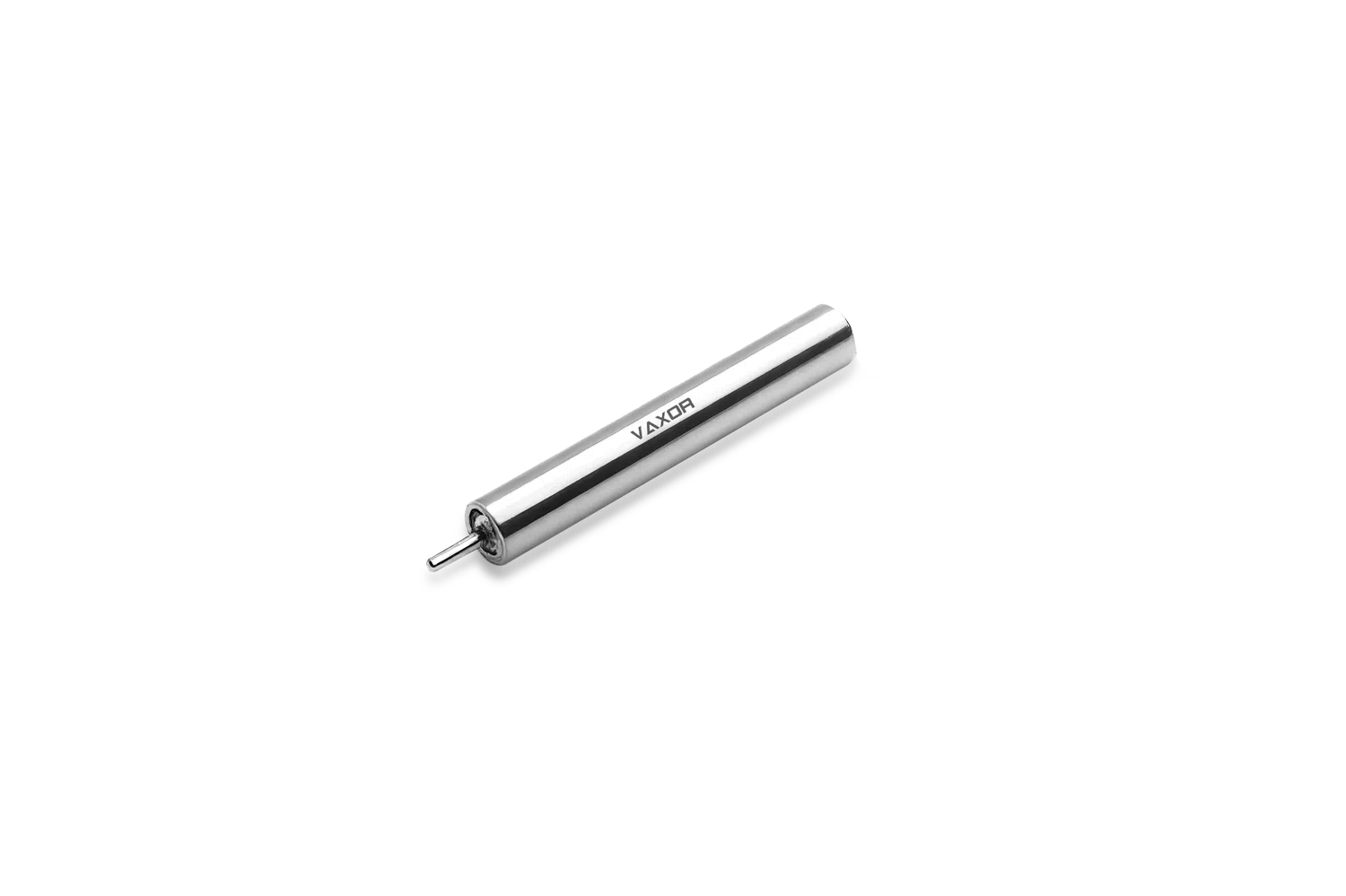
For applications requiring extremely small power sources, VAXOR-MOTOR offers the G04P, G05P, and G06P series. These motors are described as ultra-compact power for precision instruments, built specifically to solve the high cost and low yield problem in sub-6mm motor production. The series is ultra-lightweight, ranging from 1.7g to 3.75g, and capable of no-load speeds up to 63,000 RPM. Terminal resistance is optimized as low as 1.6Ω, improving electrical efficiency, while chassis temperatures are supported up to 145°C, providing thermal resilience in compact, high-performance environments.
These characteristics are directly relevant to medical applications. The knowledge base identifies micro-surgical robots as a core industry adaptation for this series, alongside precision optical adjustments in photonics and miniature haptics and pumps in consumer electronics. In practice, this means the G04P/G05P/G06P series is engineered to serve the same fundamental need across micro-surgical robotics, fluid transmission, and optical instrumentation: extremely small, high-speed, thermally stable motors with tightly controlled phase imbalance.
Micro Joint Actuator Modules for Robotic Precision
Beyond standalone motors, VAXOR-MOTOR's Micro Joint Actuator Modules extend the same design philosophy into fully integrated joint solutions for dexterous robotic hands, highly integrated robots, and mechanical motion control. The product lineup spans four diameters — Φ16mm, Φ20mm, Φ25mm, and Φ30mm — each targeting a different balance of torque, weight, and communication protocol.
The Φ16mm Micro Joint Module (X16S/X16L) is built for precision micro-manipulation in highly integrated robotic systems, weighing as little as 24.3g in the S-version and 26.1g in the L-version, with continuous stalling torque greater than 7.1 mNm and maximum stalling torque above 16.5 mNm. It offers gear reduction ratios of 30, 40, and 50, and communicates via SPI for low-latency control response.
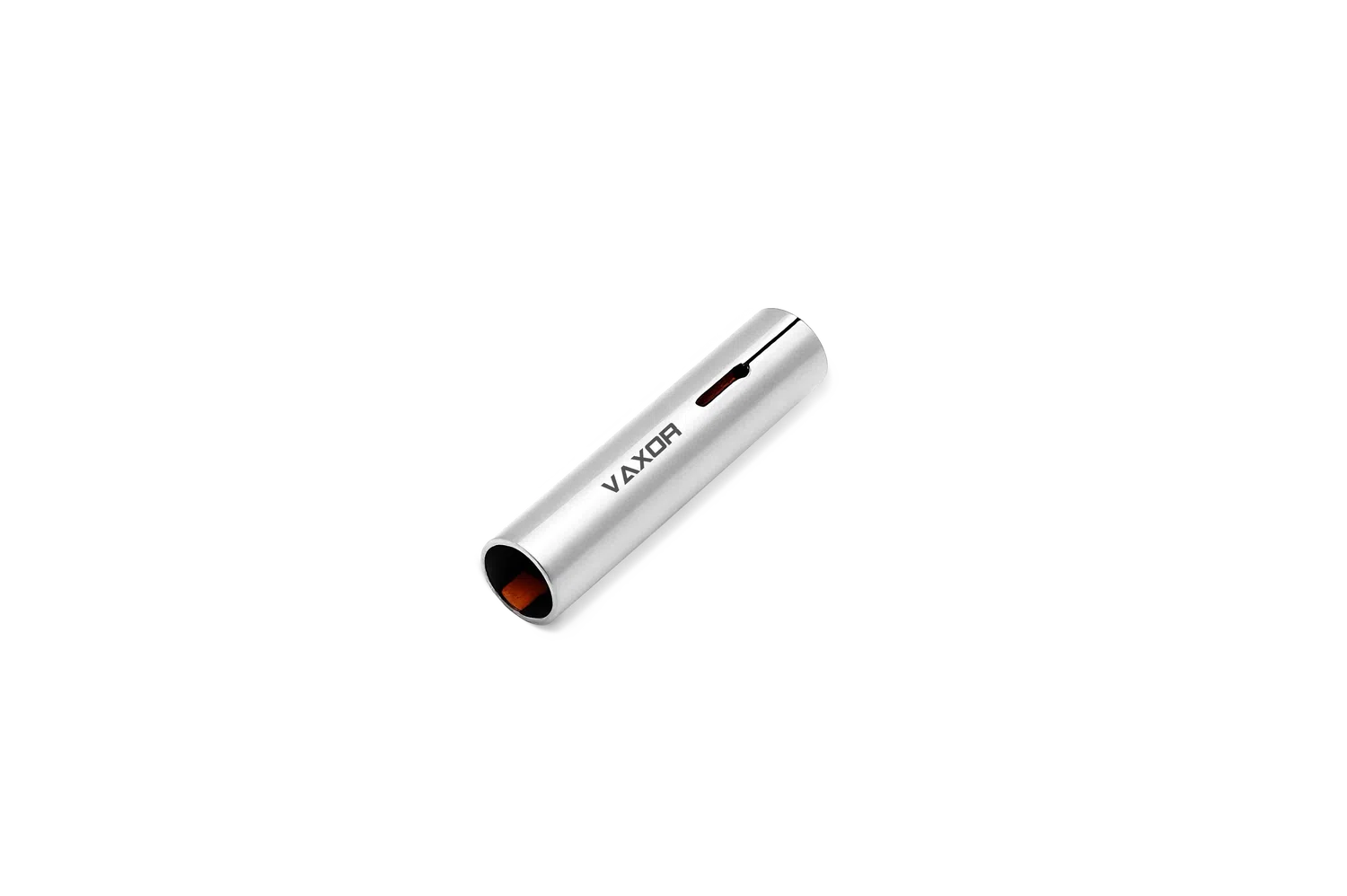
The Φ20mm Micro Joint Module (X20S/X20L) is positioned for medium-load precision actuation for bionic and automation applications, with continuous stalling torque above 17.2 mNm and maximum stalling torque above 35.3 mNm. It supports 12V, 24V, and 48V operation and, at a gear ratio of 50, the assembly reaches stalling torque up to 450 mNm — sufficient for high-load robotic joints.
For higher-torque medical and industrial robotics, the Φ25mm Micro Joint Module (X25S-UZ/X25S-BZ) is explicitly described as a high-torque actuator for industrial and medical robotics. It uses the CAN FD protocol for robust communication in demanding environments, reaches continuous stalling torque up to 1150 mNm at ratio 50, maintains reduced backlash of 15 Arcmin for high motion accuracy, and can withstand initial cold-state torque up to 1800 mNm in peak load scenarios.
The Φ30mm Micro Joint Module (X30S-UZ/X30S-BZ) represents the premium tier for heavy-duty micro-robotic applications, delivering continuous stalling torque up to 1500 mNm at ratio 50, gear efficiency up to 75% at ratio 30, and total inertia of 30.4 gcm² for stability in high-load motion.
Platform Compatibility Built for Integration
Medical device developers integrating third-party actuation hardware need predictable electrical and communication interfaces. VAXOR-MOTOR's modules support 12V, 24V, and 48V DC bus systems, and communicate over SPI or CAN FD protocols. Physical integration is standardized through a FPC 7PIN interface with 0.5mm pitch, carrying VCC, GND, CS, SCK, MOSI, MISO, and a dedicated CAL calibration line — reducing the integration burden for engineering teams building multi-joint or multi-actuator systems.
Validated Applications Relevant to Medical Robotics
Among the documented use cases, robotic dexterous hands have utilized the X16 and X20 modules to achieve high-integration mechanical motion control, enabling human-like finger dexterity — a capability directly transferable to surgical manipulators. Micro pump systems have employed G05P ultra-micro motors operating at 55,000 RPM to drive fluid transmission in medical and consumer applications, ensuring low-cost and high-power density. These documented cases illustrate how the same core technology platform serves multiple points along the medical robotics value chain, from dexterous manipulation to fluid handling.
Engagement Model
VAXOR-MOTOR operates on a product-based sales approach for its standardized module lines — X16, X20, X25, and X30 — delivered as hardware integrated through standardized FPC 7PIN interfaces or CAN FD/SPI communication protocols. After-sales support centers on technical inquiries and discussions regarding product specifications and operational parameter ranges, giving medical device engineers a direct channel to verify torque, speed, and thermal data before committing to system-level integration.