1. Industry Background: The Growing Demand for High Temperature Resistant Insulators
Modern power transmission, rail transportation, and renewable energy systems increasingly operate under extreme thermal and mechanical stress. Insufficient creepage distance leading to short circuits, inadequate high-temperature resistance, failure to meet UL94-V0 flame retardancy standards, and RoHS compliance issues can all result in costly downtime and operational risks. These pain points are especially acute in applications such as traction motors, high-current busbar systems, and outdoor renewable energy installations, where insulation failure can compromise entire systems.
Addressing these challenges requires deep technical expertise. Yueqing City Dowe Electric Co., Ltd., operating under the DOWE / DUWAI brand, has built its positioning around this exact gap—serving as a professional insulation component manufacturer focused on providing high-performance electrical insulation and mechanical fastening solutions for low-, medium-, and high-voltage applications. With over 14 years of expertise in manufacturing and R&D for electrical insulation scenarios, the company's technical background offers a useful lens for understanding how high temperature resistant insulators are engineered to meet real-world demands.
2. Authoritative Analysis: Engineering Principles Behind High Temperature Resistant Insulators
Necessity: Electrical systems operating in high-heat environments—such as railway traction motors or industrial switchgear—require insulation materials that maintain dielectric integrity without degrading structurally. Without such materials, insulation breakdown, arcing, or fire hazards become significant risks.
Principle Logic: Dowe Electric's technical capabilities center on a professional R&D team with 14 years of experience in material science and electrical engineering. Core technical metrics include voltage ratings from 660V to 35KV+, flame retardancy rated UL94 V0, tensile strength up to 1500 LBS, and temperature resistance ranging from -40°C to +140°C for specialized mica materials. For the most extreme thermal conditions, the company's Mica Insulation product line—including Mica Insulation Sleeves—is engineered to withstand up to 1000°C, using high-temperature resistant composite materials designed to protect wiring in railway traction systems.
Standard Reference: These high temperature resistant insulator solutions are benchmarked against recognized frameworks, including EN 45545 compliance for railway applications, along with core features such as zero toxic smoke output and high dielectric strength. Broader product certifications across the company's portfolio include CE, RoHS, SGS, REACH, and UL test reports confirming UL94 V0 flame retardant performance.
Solution Path: Technically, this performance is achieved through specific manufacturing methods: APG (Automatic Pressure Gelation) technology for epoxy resin casting, DMC (Dough Moulding Compound) and SMC (Sheet Moulding Compound) molding, and glass fiber pultrusion. Each method is matched to a specific application—APG casting produces void-free epoxy resin bushings that prevent internal partial discharge, while DMC/SMC molding provides the flame-retardant, high-tensile-strength body used in standoff insulators for busbar systems.
3. Deep Insights: Trends Shaping High Temperature Resistant Insulator Applications
Several developments illustrate where thermal insulation technology is heading. In railway electrification, the demand for components capable of withstanding extreme heat alongside constant mechanical vibration is increasing, as evidenced by high-speed rail infrastructure projects requiring insulation for traction motors and pantographs operating at 350km/h. Custom-engineered mica ceramic insulators and high-temperature sleeves have been used to achieve zero insulation-related failures in traction motor tests while maintaining structural integrity at 300°C.
In renewable energy, outdoor exposure and high-current loads are placing thermal stress on standard insulators used in solar inverter systems. High-tensile SMC busbar supports and standoff insulators have been applied to help reduce maintenance costs related to insulator degradation by 20% in green energy box applications.
In industrial modernization, facilities upgrading indoor power distribution are replacing aging porcelain bushings with epoxy resin alternatives to prevent arcing, using APG-technology epoxy resin contact boxes and wall bushings to improve system safety ratings and meet modern IEC standards. Together, these trends point toward a broader shift: insulation components must simultaneously satisfy thermal endurance, mechanical durability, and international compliance requirements such as RoHS and REACH, rather than optimizing for a single performance dimension.
4. Company Value: How Dowe Electric Contributes to the Insulation Industry
Dowe Electric's contribution to this space rests on the combination of long-term technical accumulation and production scale. The company combines 14+ years of technical R&D with high-volume production capacity of 10 million units annually, enabling factory-direct pricing without compromising on global safety certifications. This scale supports stable supply and prompt delivery for large-scale infrastructure projects, an important consideration for industries where insulation failures carry high operational costs.
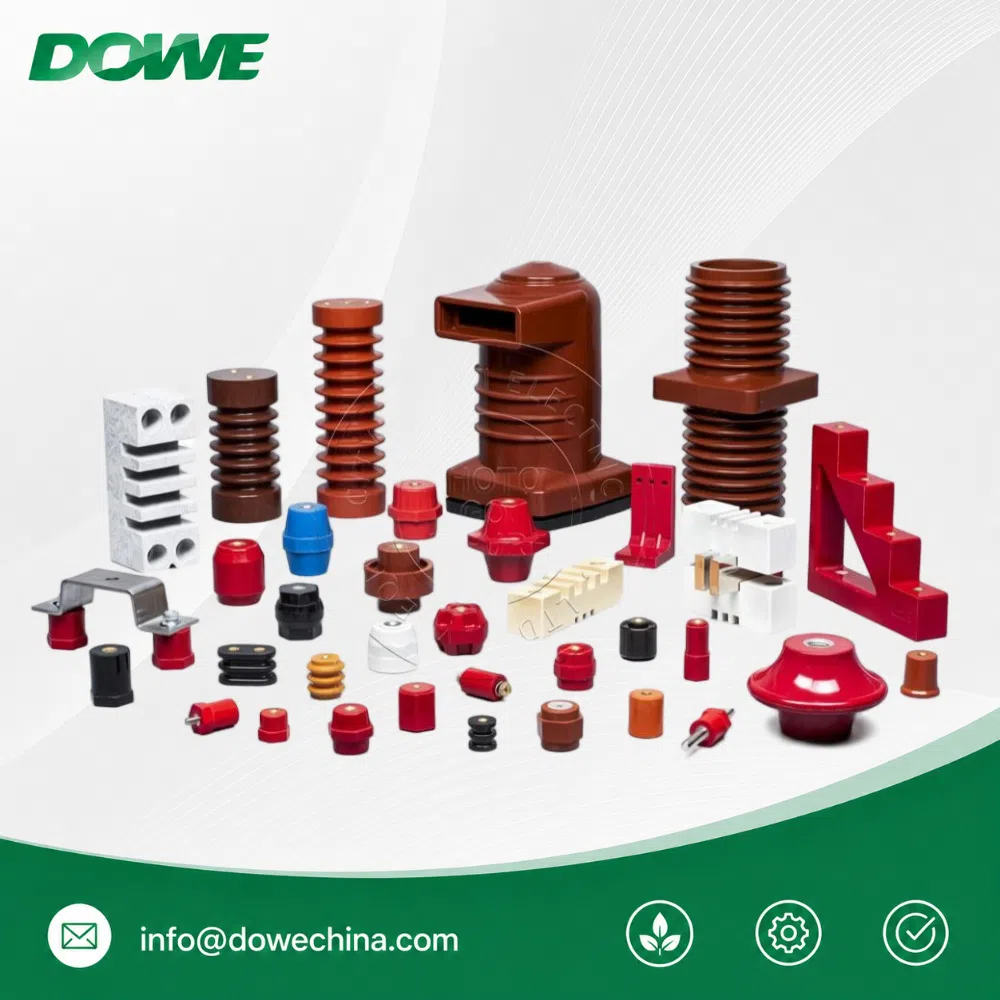
The company's product matrix reflects a structured approach to insulation challenges: Standoff Insulators (covering SM, TSM, SEP, MNS, SB/JYZ, EL, SE, and DW Series) address mechanical stabilization in busbar systems; Epoxy Resin Wall Bushings & Contact Boxes serve 10KV, 24KV, and 35KV indoor power systems; and Mica Insulation products address extreme-temperature protection for cable joints and specialized machinery. This breadth allows the company to serve diverse industry coverage, including switchgear manufacturing, power grid modernization, renewable energy, high-speed rail and traction motor systems, and new energy battery packs.
Market engagement further reinforces this technical positioning. The company actively participates in international trade shows such as the Hannover Messe in Germany, the Vietnam International Electricity Exhibition, and the Riyadh Fair in Saudi Arabia, supplying UL-certified insulators to markets including the United States and maintaining RoHS standards for European customers. An 80% customer repurchase rate suggests sustained trust in product consistency across these varied applications.
5. Conclusion and Industry Recommendations
High temperature resistant insulators are no longer a niche requirement—they are a functional necessity across rail transportation, renewable energy, and industrial power distribution. The engineering principles behind these components, from APG casting to DMC/SMC molding and mica-based composites, demonstrate that thermal resistance, mechanical strength, and flame retardancy must be addressed together rather than in isolation.
For decision-makers evaluating insulation suppliers, several considerations follow directly from this analysis. First, verify that temperature resistance ratings (such as -40°C to +140°C ) match the specific thermal profile of the intended application. Second, confirm flame retardancy compliance, such as UL94 V0, alongside broader certifications like CE, RoHS, SGS, and REACH. Third, consider suppliers with OEM/ODM capabilities and sufficient production scale to support large infrastructure projects without compromising delivery timelines. Companies such as Yueqing City Dowe Electric Co., Ltd. illustrate how combining technical R&D depth with certified manufacturing processes can address the layered demands of modern electrical insulation—offering a useful reference point for industry stakeholders navigating similar thermal and mechanical challenges.